




Do trekking poles help with grip on slick, moss-covered limestone pavements?
The limestone pavements of the UK—from the dramatic scarps of the Yorkshire Dales to the sweeping sheets of the Burren in Ireland—are some of the most striking and treacherous landscapes a walker can encounter. These natural formations, created by millennia of glacial and chemical erosion, consist of flat, fissured rock (clints and grykes) that can become exceptionally slippery when wet. Adding to the challenge is a thin layer of moss, lichen, and algae that clings to the surface, turning the rock into a near‑ice rink when damp. For anyone tackling such terrain, the question of trekking poles is not merely academic—it's a safety consideration. The short answer is yes, trekking poles help significantly, but only with the right tips, technique, and a clear understanding of their limits. Here's the full breakdown.
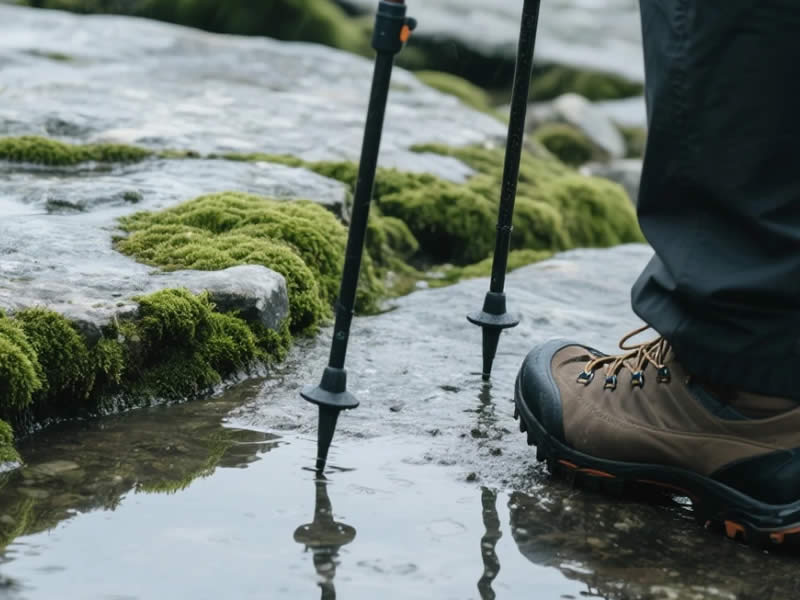
Understanding the limestone pavement hazard
Limestone is a relatively soft, porous rock that weathers into smooth, flat surfaces. Over time, rain and organic acids etch tiny pits and fissures, but the overall surface is often polished by foot traffic. When wet, limestone becomes slick. Moss and algae add a greasy, organic film that reduces friction dramatically—it's not uncommon for walkers to lose their footing entirely. The grykes (the deep cracks between the clints) add another dimension: a slip can result in a twisted ankle or a fall into a crevice.
In these conditions, your footwear is your primary defence. Vibram soles with a deep, sticky tread are essential. But trekking poles, when used correctly, act as your second line of defence—a dynamic, controllable stabiliser that can prevent falls and reduce injury.
Carbide tips: the grip advantage
On moss‑covered limestone, the choice of tip is critical. Sharp carbide tips are by far the best option. Here's why:
- They penetrate the moss layer: Carbide is hard enough to punch through the thin film of vegetation and reach the rock surface underneath. Once the tip makes contact with the rock, the sharp point creates a high‑pressure contact that "bites" into the limestone's micro‑texture, providing a positive grip.
- They work on wet and dry rock: Rubber ferrules (the caps you often see on poles for pavement walking) are designed for smooth, hard, dry surfaces. On wet limestone, they skid—the rubber compound simply cannot displace the water film fast enough to create friction. Carbide, by contrast, is not affected by water; it cuts through.
- They are self‑cleaning in use: As you plant the tip, it pushes aside loose moss and debris, finding a clean grip each time. Rubber ferrules, on the other hand, can accumulate mud and moss, making them even slipperier.
Recommendation: Use a facetted carbide tip (with a pyramid‑like shape) for even better bite. Check that your tips are sharp—a rounded tip will skid just like rubber.
When rubber ferrules can be useful (and when they are dangerous)
Rubber ferrules have their place, but it's not on slick, moss‑covered limestone. They are designed for:
- Pavements and tarmac: They provide a quiet, scratch‑free grip on smooth, dry surfaces.
- Indoor use: Protecting floors.
- Very dry, rough rock: On sandstone or dry gritstone, rubber can offer good grip without marking the rock.
On wet, mossy limestone, rubber is a liability. A rubber‑tipped pole planted on a damp, mossy slab will slide sideways without warning, often at the very moment you're relying on it for balance. This can actually cause a fall, rather than prevent one. Do not use rubber ferrules on slick limestone.
Technique for planting on limestone
Even with the best tip, technique matters. On limestone pavements:
- Plant vertically: A straight, vertical plant is best. It drives the tip straight down into the rock, maximising the bite. A shallow, angled plant can cause the tip to skid sideways.
- Apply firm, even pressure: Plant with a decisive, confident push. A tentative plant may not penetrate the moss layer and could skid.
- Plant on the flat surfaces: Avoid planting in the grykes (cracks) unless necessary. The tip can get wedged, and the pole can twist, risking injury.
- Use the poles proactively: On a particularly steep or exposed section, plant your poles before you move your feet. Use them to test the grip of the rock ahead, and to take some of your weight as you step.
The role of the basket
On limestone, you don't need large baskets. The rock is hard and the moss is thin. A standard small basket (4‑5 cm) or no basket at all is fine. Large baskets can actually be a hindrance—they catch on the edges of clints and grykes, making the pole awkward to manoeuvre. If your poles have removable baskets, take them off for limestone sections.
Stability beyond the tip
Poles help with grip, but their primary benefit on limestone is stability. The surface is often uneven, tilted, and interrupted by deep cracks. With two extra points of contact, you have a much wider base of support. You can:
- Test the firmness of a clint before stepping onto it.
- Brace yourself when crossing a narrow, tilted slab.
- Maintain balance if your foot slips—the poles can catch you before you fall.
Limitations and safety
Trekking poles are a valuable aid, but they are not a substitute for careful footing on limestone. Do not rely on them as your sole grip. Always:
- Wear boots with Vibram or equivalent sticky‑rubber soles.
- Walk with a low centre of gravity, especially on descents.
- Step carefully, placing your foot flat on the rock surface.
- Be extra cautious in wet conditions—even carbide tips can skid on heavily mossed rock.
Recommended poles for limestone terrain
For this specific terrain, you don't need specialised poles—you just need the right tip and a reliable lock. Any good aluminium or carbon pole with:
- Flick‑locks (for reliable adjustment in wet conditions)
- Cork grips (to stay comfortable in damp hands)
- Carbide tips (sharp, faceted)
- Small or no baskets
Top picks: Black Diamond Trail Pro, Leki Makalu, or Decathlon Forclaz MT900.
Final verdict
Yes, trekking poles help with grip on slick, moss‑covered limestone pavements—but only if you use sharp carbide tips and plant them correctly. Rubber ferrules are a dangerous choice. The poles provide two extra points of contact, stabilising you on the uneven, slippery rock, and the carbide tip bites through the moss to give you a reliable anchor. However, they are not a cure‑all: good footwear, careful foot placement, and a cautious approach remain paramount. With the right setup and technique, you can cross limestone pavements with far greater confidence and security. Happy walking!




