




How to dry trekking poles quickly after a wet day on the West Highland Way?
The West Highland Way—96 miles of Scottish splendour, from the lowland villages to the dramatic highland passes. But let's be honest: it's also 96 miles of relentless rain, mist, and bog. After a day of trudging through the wet, your trekking poles will be soaked, clogged with mud and peat, and dripping with moisture. If you simply collapse them and stuff them in your pack, you're inviting rust, corrosion, and failure. Learning how to dry your poles quickly and effectively is not just a convenience—it's essential maintenance for the longevity of your gear. This guide gives you a step‑by‑step routine, from immediate after‑walk care to overnight drying, tailored for the unique conditions of the West Highland Way.
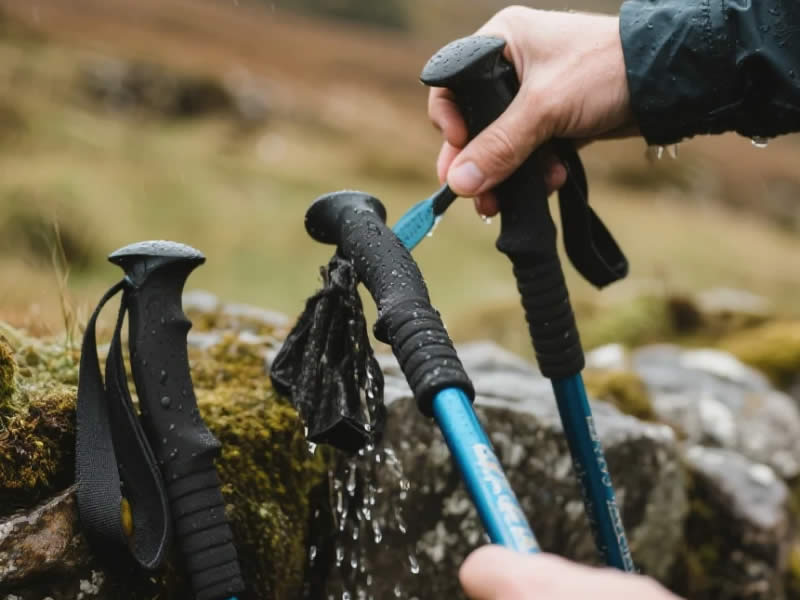
Why drying matters on the West Highland Way
The West Highland Way's environment is particularly harsh on poles. The rain is persistent, the peat is acidic, and the mud is fine and abrasive. Moisture left inside locking mechanisms will:
- Corrode steel screws and springs: Even stainless steel can pit in prolonged damp.
- Seize twist‑locks: Internal expanders can rust or become clogged with dried mud.
- Damage carbon fibre: Prolonged moisture can weaken epoxy resins, leading to delamination.
- Promote mould and odour: On foam and rubber grips.
A few minutes of drying each evening can add years to your poles' lives.
Step 1: Immediate after‑walk care (the 5‑minute routine)
As soon as you arrive at your accommodation or campsite, don't just drop your poles in the corner. Take 5 minutes to do this:
1. Rinse off mud and peat
If you have access to fresh water (a tap, a stream, or even your water bottle), rinse the entire pole, paying special attention to the locking mechanisms, basket attachments, and tip threads. Peat is acidic and will attack the anodised surface of aluminium and the steel components. A quick rinse washes away the worst of the corrosive material.
2. Extend poles fully and open all locks
Fully extend each section and open every lock—flick‑locks should be in the open position; twist‑locks should be fully unscrewed. This allows air to circulate inside the tube and around the locking mechanism, which is where water hides.
3. Wipe down with a microfiber cloth
Use a dedicated microfiber cloth (keep one in your pack) to wipe the shafts and grips. For the locks, use a small brush (like an old toothbrush) to remove mud from the cam surfaces and threads. This prevents the mud from drying into a hard crust.
4. Shake out excess water
Hold the pole vertically and shake it vigorously a few times. This dislodges water from inside the tubes.
Step 2: Active drying methods
Now you need to get the poles completely dry as fast as possible, especially if you're in a damp bothy or tent.
1. The "tent pole" method
If you're camping, you can use your trekking poles as tent poles (if your tent is designed for that). This keeps them extended and in a well‑ventilated position overnight. If you're not using them for the tent, lean them against the tent wall or a tree, fully extended, with the locks open.
2. Use the wind
If there's any breeze, position your poles so the wind can blow through the open locks and the inside of the tubes. This accelerates evaporation.
3. Use a towel
If you have a dry towel (or a spare T‑shirt), you can pull it through the tubes by tying a weight to the end of the towel and dropping it through. This is an old trick to get internal moisture out quickly.
4. Use a hairdryer (with caution)
Never use heat—a hairdryer on a high setting can melt the plastic of the lock mechanism or damage cork grips. However, a cool setting (no heat) can be used to blow air into the locks and the ends of the tubes to speed up evaporation. If your accommodation has a fan, position it to blow across the extended poles.
5. Compressed air
If you have a can of compressed air (or a bike pump with a needle adapter), you can blow air into the open lock mechanisms and the ends of the tubes to dislodge water. This is very effective for twist‑locks where water often gets trapped in the internal threads.
Step 3: Overnight drying
Even with your best efforts, the poles may still be slightly damp by bedtime. Here's how to handle that:
- Store them disassembled: Separate the sections and lay them out flat, not stacked on top of each other. This allows maximum air exposure.
- Leave locks open: Do not close the flick‑locks or twist the collars shut—this seals in moisture.
- Keep them in a warm, dry place: If you're in a bothy, hang them from a beam. If you're in a tent, put them near you (body heat creates a micro‑climate that can help dry them, but be mindful of condensation).
- Avoid putting them in a stuff sack: A stuff sack traps moisture. Only pack them when they are completely dry.
Step 4: Next‑morning check
Before you head out the next day, do a quick check:
- Run a cloth through the locks: Wipe off any condensation that has formed overnight.
- Check for any grit: If you feel any grittiness in the locks, clean them again before adjusting.
- Tighten locks correctly: Set the locks to the correct tension. A lock that is too loose will slip; one that is too tight can jam.
- Apply dry lubricant: If the poles are completely dry, apply a tiny amount of dry graphite powder to the threads of twist‑locks or the cam surfaces of flick‑locks. This prevents sticking and reduces wear.
What to avoid
- Don't use a fire or stove: Direct heat can damage the grips, melt plastic components, and alter the temper of aluminium.
- Don't store poles collapsed: Collapsing them traps moisture inside the overlap, which will cause corrosion.
- Don't use oil: Oil attracts grit and can cause locks to slip. Stick to dry lubricants.
The drying kit for the West Highland Way
To make the drying process quick and effective, carry these items in your pack:
- Microfiber cloth: For wiping down.
- Small brush (like a toothbrush): For cleaning lock mechanisms.
- A spare piece of cord: To pull a cloth through the tubes.
- Compressed air (if space allows): For blowing out moisture.
- Dry graphite powder: For lubrication once dry.
The verdict
Drying your trekking poles quickly after a wet day on the West Highland Way is a simple but essential routine. Extend them, open the locks, wipe them down, and let them air‑dry—ideally with a little airflow. Avoid heat, avoid packing them wet, and store them disassembled. With this practice, your poles will survive the wettest Scottish days and remain reliable for many years of walking. It takes just 10 minutes of effort, but it saves hours of repair and replacement costs. Happy walking—and keep those poles dry!




