




Do Mountain Warehouse stores let you attach a backpack to test pole stability?
No, Mountain Warehouse stores generally do not allow you to attach a backpack to test pole stability. Their stores are typically compact, focused on product display rather than active testing, and do not have the dedicated space or equipment for such simulations. However, you can walk around the shop floor with the poles to assess basic weight and grip. For a more thorough stability test—especially with a loaded pack—you should visit a specialist retailer like Cotswold Outdoor or Go Outdoors, which have larger spaces and staff who can help simulate real conditions. This guide explains what you can expect in a Mountain Warehouse store, why the limitation exists, and what to do if you need a more comprehensive test.
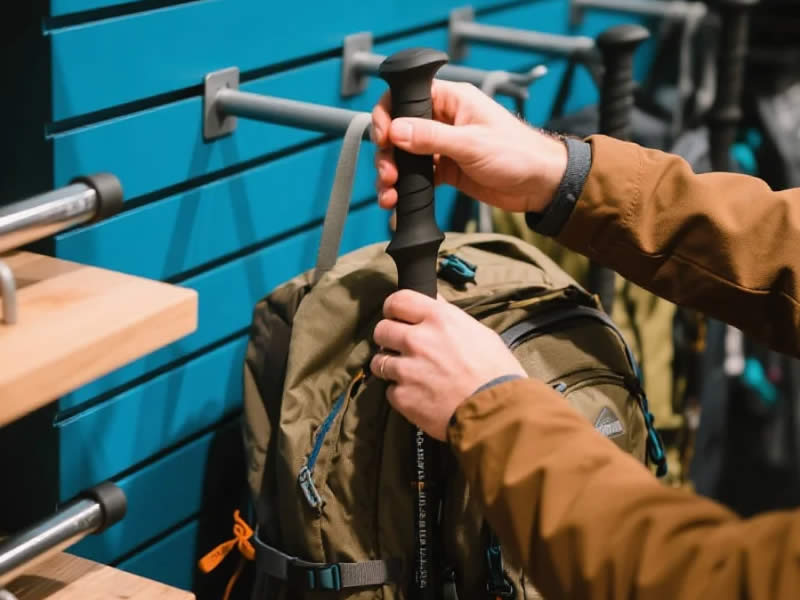
What you can do at Mountain Warehouse
Mountain Warehouse is a value‑oriented retailer, with stores designed for efficient browsing and quick purchases. The floor space is often limited, and the focus is on displaying a wide range of products rather than providing a dedicated testing area. In most branches:
- You can handle the poles: You can pick up display models, extend them, and feel the weight and grip. This is useful for a first impression.
- You can walk around the shop floor: You are allowed to take a few steps and plant the poles on the floor to assess the basic feel—though this is a far cry from a real‑world test.
- You can ask questions: Staff are generally helpful, though not always as specialised as in premium outdoor retailers.
However, you will not be able to:
- Attach a backpack: The store does not provide a weighted backpack, and there is no space to walk with one.
- Simulate uneven terrain: There is no artificial rock or gravel area to test tip grip or pole stability on uneven surfaces.
- Get a full fitting: While staff can help with basic length adjustment, they are unlikely to offer the detailed, consultative fitting you might find at Cotswold Outdoor or Ellis Brigham.
Why the limitation exists
Mountain Warehouse's business model is centred on affordability and convenience, not on deep product testing. Their stores are often located in shopping centres or high‑street locations where space is at a premium. Allowing customers to walk around with a loaded backpack would require:
- Dedicated space: A large, open area free from displays and other customers.
- Weighted backpacks: The store would need to supply backpacks filled with weight (or allow you to use your own).
- Staff time: A staff member would need to supervise the test to ensure safety and prevent accidents.
Given the cost‑conscious nature of the brand, these investments are not considered necessary for their typical customer. Mountain Warehouse is a great place to buy budget‑friendly poles if you already know what you're looking for, but it's not the destination for a detailed, hands‑on comparison.
Where to go for a proper stability test
If you need to test pole stability with a loaded backpack—especially important if you're a trekker or long‑distance walker—visit these stores:
Cotswold Outdoor
- Space: Larger branches have open floor areas and sometimes even a small "trail" with artificial rock.
- Policies: They actively encourage you to walk around with poles. While they may not provide a weighted backpack, they are often happy for you to bring your own (or a filled daypack) to test stability.
- Expertise: Staff are knowledgeable and can adjust the poles to your height, showing you how the wrist straps and locks perform under simulated load.
Go Outdoors
- Space: Warehouses are large, with plenty of room to walk and plant poles.
- Policies: You can bring your own backpack and test the poles with your actual load, making this the most realistic option for a stability test.
- Price‑matching: They also offer a price match guarantee, so you can get a good deal alongside the test.
Ellis Brigham
- Space: Flagship stores (e.g., Covent Garden) have ample space and a premium feel.
- Policies: Staff are passionate walkers and climbers; they'll encourage you to try poles with your pack if you bring it.
What to look for when testing stability
If you do manage to test with a backpack, or even just walking around a store, focus on these aspects:
- Lock stability: Plant the pole firmly and lean on it. Does the lock hold securely, or does it slip?
- Wrist strap: With a heavy pack, the strap transfers weight. Does it feel comfortable and secure?
- Grip: Does the cork or foam grip stay comfortable when you're bearing down?
- Basket and tip: On a soft or uneven surface, does the basket provide sufficient flotation?
The hybrid approach for Mountain Warehouse customers
If Mountain Warehouse is the most convenient store for you, but you still want to test stability properly:
- Use Mountain Warehouse for initial selection: Browse their range, handle the poles, and get a feel for the weight and grip. Note down the models you like.
- Visit a specialist store: Take your shortlist to Cotswold Outdoor or Go Outdoors. Try the same models there, but with your backpack on.
- Price‑match or buy where it's best: If the specialist store has a price match policy, you can buy there. If not, buy from Mountain Warehouse with the confidence that you've tested the stability elsewhere.
Final verdict
Mountain Warehouse stores do not offer the facility to attach a backpack to test pole stability, and their compact store layouts make it impractical. However, they are an excellent place for a basic first impression and for handling poles to compare weight and grip. For a proper stability test—especially if you're a trekker or multi‑day walker—you should visit a specialist retailer like Cotswold Outdoor, Go Outdoors, or Ellis Brigham. Many of these stores allow you to bring your own loaded pack and walk around to simulate real‑world conditions. By using a hybrid approach, you can combine Mountain Warehouse's affordability with the in‑depth testing of a premium store, ensuring you choose a pole that's stable and comfortable under load. Happy walking!




