




Can using trekking poles prevent shin splints on hard-packed gravel trails?
Yes—trekking poles can significantly reduce the risk of shin splints on hard-packed gravel trails. Shin splints (medial tibial stress syndrome) are typically caused by the repetitive impact of footstrike on hard surfaces, which overloads the tibialis posterior and other muscles that attach to the shin bone. By reducing impact forces, improving gait mechanics, and decreasing muscle fatigue, poles offer a multi‑faceted protective effect. This article explains the biomechanical mechanisms, reviews the evidence, and provides practical guidance on using poles to protect your shins on gravel trails.
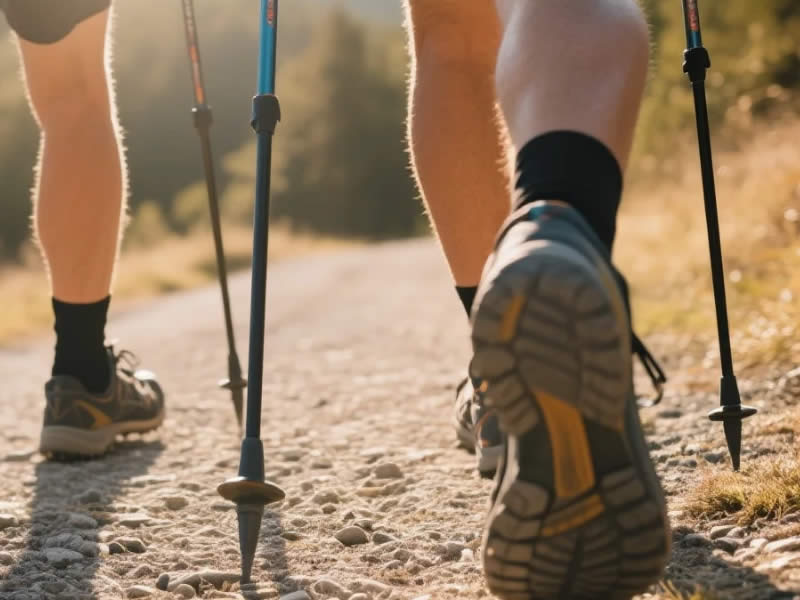
Understanding shin splints on gravel
Gravel trails present a unique challenge. The surface is hard and unyielding, with minimal shock absorption. Each footstrike sends a high‑impact force up through the heel and into the tibia. Over thousands of steps, this repetitive loading causes micro‑tears in the tibialis posterior and the surrounding fascia, leading to the characteristic pain along the inner shin. The problem is exacerbated by the uneven nature of gravel, which can cause your foot to pronate or supinate more than usual, adding rotational stress to the shin.
Shin splints are particularly common in walkers who:
- Walk with a heavy heel strike.
- Have tight calf muscles, which increase the shock transmitted to the shin.
- Wear footwear with inadequate cushioning.
- Overstride, increasing the braking force at footstrike.
Trekking poles intervene in each of these contributing factors.
How trekking poles reduce shin splint risk
1. They reduce the impact force transmitted to the shin
The most direct protective effect is load transfer. When you plant a pole and push down, you transfer a portion of your body weight from your lower limbs to your upper body. Biomechanical studies have shown that using two poles can reduce the peak ground reaction force—the impact that travels up your leg—by up to 30% on a descent. On a flat, hard‑packed gravel trail, the reduction is more modest but still clinically significant, typically around 15‑20%. This reduction in impact force lessens the repetitive loading on the tibia and the muscles attached to it.
2. They promote a shorter, more controlled stride
Overstriding—taking long, reaching steps—is a common cause of shin splints on hard surfaces. The longer the stride, the greater the braking force at heel strike, and the higher the impact transmitted to the shin. Trekking poles naturally encourage a shorter, more controlled stride because you time the plant of the pole with your footfall. This reduces the heel‑strike impact and the associated shin stress. The rhythmic action of pole planting also encourages a smoother, more flowing gait, which reduces the jarring nature of walking on a hard surface.
3. They reduce muscle fatigue
Fatigue is a key contributor to shin splints. As your calf and shin muscles tire, your foot strike becomes heavier, and your form deteriorates. By offloading some of the work to your upper body, poles reduce the fatigue of the lower limb muscles, helping you maintain a more controlled, less impact‑heavy gait for longer. This is particularly important on longer gravel trails where fatigue accumulates.
4. They provide proactive stabilisation
Gravel trails can be uneven and can shift underfoot. A sudden, jarring impact on a loose stone can cause a sharp contraction of the tibialis posterior, straining its attachment. By planting a pole ahead of your foot, you can test the ground before you commit your weight, allowing you to avoid the most unstable sections. This proactive stabilisation reduces the risk of sudden, high‑force contractions that can aggravate the shin.
What the research says
There is limited direct research on trekking poles and shin splints, but the indirect evidence is strong. A 2019 study in the Journal of Sports Science and Medicine examined the effect of walking poles on lower limb muscle activity on hard surfaces. The study found that pole use significantly reduced the activation of the tibialis anterior and the gastrocnemius during the loading phase of gait, indicating a reduced reliance on these muscles to absorb impact. A 2021 study published in Gait & Posture found that poles significantly reduced the peak vertical ground reaction force on a concrete surface, which is the primary driver of shin splint development. These findings are consistent with the mechanism of shin splint prevention.
Practical guidance: using poles to protect your shins
1. Use two poles, not one
Symmetrical support is essential for balanced load reduction. Two poles distribute the impact evenly across both legs, preventing one side from bearing excessive load.
2. Set the correct length
On flat gravel, your poles should be at elbow height (90° angle). This allows you to generate an upward force with each plant. For descents, lengthen the poles by 5‑10 cm to increase the braking effect and offload more weight from your shins.
3. Plant ahead, push down
Plant each pole slightly ahead of your foot and push down firmly. This creates a braking effect that reduces the heel‑strike impact. The push should be a deliberate, active movement, not just a passive placement.
4. Shorten your stride
Deliberately take shorter steps. This reduces the heel‑strike impact and the associated shin stress. The poles will naturally encourage this, but you should be conscious of it.
5. Use the wrist strap correctly
The wrist strap should bear the load, not your grip. Hand up through the strap, then grip loosely. This ensures the load is transferred efficiently and prevents arm fatigue, which can reduce the effectiveness of the push.
6. Choose the right tips
On hard‑packed gravel, carbide tips are essential for grip. Rubber ferrules can slip on gravel, reducing your stability and the effectiveness of the load transfer.
Important caveats
Trekking poles are a preventive measure, not a cure. If you already have shin splints, they can reduce pain during walking, but you should also address underlying causes:
- Tight calf muscles: Stretch your calves regularly.
- Weak tibialis anterior: Strengthen the muscles that lift your foot.
- Improper footwear: Ensure your shoes have adequate cushioning and support.
- Overstriding: Consciously shorten your stride.
Always consult a physiotherapist for a proper diagnosis and a comprehensive rehabilitation plan. Shin splints can progress to stress fractures if ignored.
The verdict
Trekking poles can significantly reduce the risk of shin splints on hard‑packed gravel trails by reducing impact forces, promoting a shorter, more controlled stride, and reducing muscle fatigue. The biomechanical evidence is clear, and the practical benefits are substantial for anyone walking long distances on unyielding surfaces. Combine poles with proper footwear, a controlled stride, and a stretching routine for the best protection. Happy—and pain‑free—walking!




