




Are trekking poles allowed on the Caledonian Sleeper train to Scotland?
Yes—trekking poles are generally allowed on the Caledonian Sleeper, the overnight train service from London to Scotland. The service is walker‑friendly, and many passengers travel with hiking gear, including poles. They are considered part of your standard luggage allowance, provided they are packed securely and stowed safely during the journey. This article explains the policy, how to pack your poles, and where to store them on board, so you can travel with confidence.
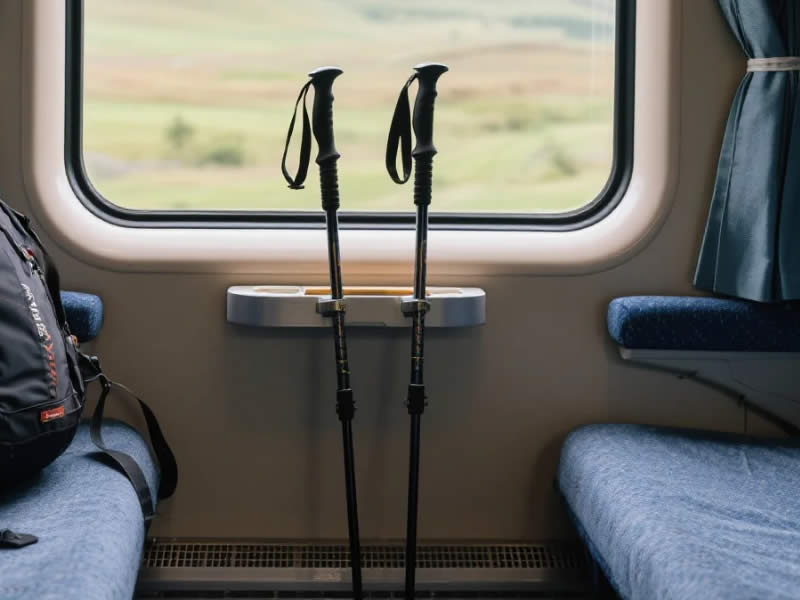
The Caledonian Sleeper luggage policy
The Caledonian Sleeper has a generous and flexible luggage policy. Each passenger is entitled to up to three items of personal luggage free of charge:
- Two larger items (e.g., suitcases, rucksacks, or large equipment bags), with dimensions not exceeding approximately 30cm x 70cm x 90cm.
- One smaller item (e.g., a daypack, a handbag, or a small equipment bag).
Trekking poles fall into the category of sports equipment and are treated as standard luggage, not as prohibited items. The key requirement is that they are securely packed to prevent injury to other passengers and to avoid damage to the train's interior. A loose pole rolling down the aisle is a hazard—so a protective bag or case is strongly recommended.
Packing your poles for the journey
While the Caledonian Sleeper does not require a specific type of packaging, practical and common‑sense advice applies:
- Use a padded bag or tube: A dedicated pole bag (or a padded sleeve) protects the poles from damage and prevents any sharp edges from causing injury.
- Collapse or fold them: If your poles are telescopic or folding, collapse them to their shortest length. This makes them easier to stow and reduces the risk of them catching on luggage racks.
- Remove detachable parts: If the baskets or tips can be removed, pack them separately or tape them to the pole to prevent them from falling off.
- Wrap in clothing: If you don't have a dedicated bag, wrap the poles in a soft item (e.g., a jumper or a sleeping bag) before placing them in your rucksack or case.
Storing your poles on the train
Where you store your poles depends on the type of accommodation you have booked:
In a berth (sleeper cabin)
- Under the seat: The seats in the berths often have space underneath where a collapsed pole bag can be slid.
- Overhead rack: Many berths have a small overhead shelf or rack where you can place a compact pole bag.
- At the foot of the bed: If you have a longer pair of poles, you can lay them flat at the end of the bed, provided they do not obstruct the aisle.
In the seated coach
- Luggage racks: There are large luggage racks at the ends of each coach. You can place your poles there, but ensure they are secured so they don't fall when the train moves.
- Overhead storage: Some seated coaches have overhead racks that can accommodate collapsed poles.
- Under the seat: If your poles are collapsed and packed in a small bag, they can often fit under the seat in front of you.
Important: Do not place poles in the aisle or leave them leaning against a seat—they could become a tripping hazard or fall onto someone during the journey.
What about particularly long poles?
If your poles are exceptionally long (e.g., over 1 metre when collapsed), they may not fit in the overhead racks or under the seat. In this case, you can use the large luggage area—a designated space at the end of the coach where larger items like skis, golf bags, and large rucksacks are stored. The train staff will direct you to the appropriate area. It's always a good idea to speak to the attendant on boarding to confirm the best storage spot.
Additional tips for a smooth journey
1. Check your luggage allowance
While three items are allowed, the combined weight of your luggage should be manageable for you to carry. The Caledonian Sleeper does not have a strict weight limit, but you should be able to handle your own luggage—there is no porter service.
2. Pack other essentials together
If you're travelling with a full hiking kit, consider packing your poles with your rucksack. Many rucksacks have side straps that can secure poles, keeping your hands free.
3. Bring a spare bag
If you're planning to use your poles immediately upon arrival, you may not want to unpack them in the station. Consider keeping a spare, lightweight bag to store the pole bag in, so you can carry it easily.
4. Check the latest policy
While the Caledonian Sleeper is generally walker‑friendly, policies can change. Always check the official website or contact customer service before your journey, especially if you have a particularly large or valuable set of poles.
What about other train operators?
If you're connecting to the Caledonian Sleeper via another train service (e.g., ScotRail, LNER), note that their policies may differ. In general, most UK train operators allow trekking poles as part of your luggage, provided they are packed safely. However, if you are travelling on a busy commuter train, you may need to store them in a luggage area rather than at your seat. Always check the specific operator's policy if you are making multiple train connections.
The verdict
Trekking poles are allowed on the Caledonian Sleeper train to Scotland, as long as they are packed securely and stowed safely during the journey. The service is designed with walkers and outdoor enthusiasts in mind, and the staff are generally helpful and accommodating. Use a padded bag, collapse the poles, and store them under the seat, in the overhead rack, or in the designated luggage area. With a little planning, your poles will travel safely alongside you, ready for your Scottish adventure. Happy—and smooth—travelling!




