




What is the best hard-case bag for checking trekking poles on a flight?
When you're flying to a hiking destination, your trekking poles are essential gear—but they're also vulnerable. Baggage handlers are not gentle, and a bent or broken pole can ruin a trip. The best protection is a hard‑case bag designed specifically for sports equipment. The industry standard is the Sportube, a durable, hard‑plastic tube that shields your poles from the rigours of baggage handling. This article reviews the top options, explains what to look for, and provides practical advice for flying with your poles.
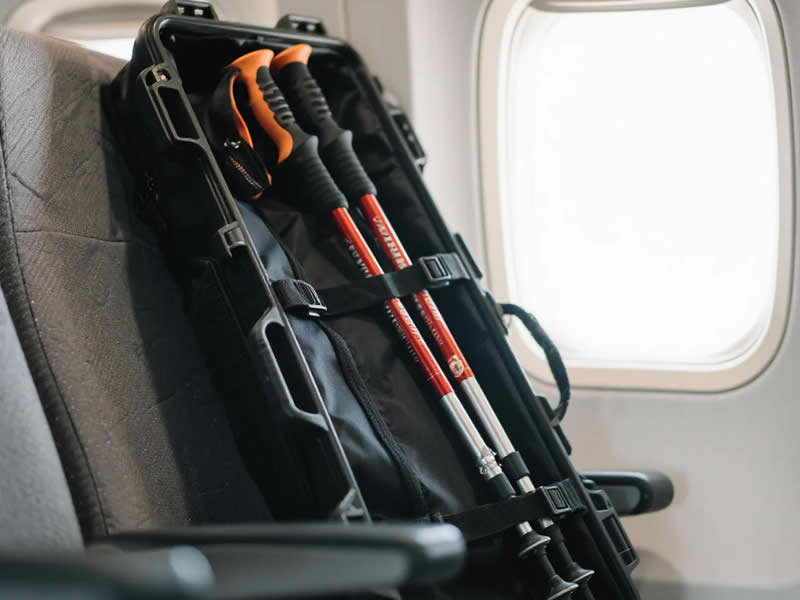
Why a hard case is essential
Trekking poles are long, relatively thin, and made of materials (aluminium or carbon fibre) that can bend or shatter under impact. A soft padded bag offers some protection, but it can be crushed, bent, or punctured. A hard‑case bag, typically made of rigid plastic or composite, provides a rigid, crush‑proof shell that absorbs the blows of baggage handling.
The key is to choose a case that is:
- Rigid: Not just a padded sleeve, but a hard outer shell.
- Long enough: Accommodates your collapsed or folded poles.
- Secure: Has a reliable closure (heavy‑duty zip or clip‑lock).
- Lightweight: Under 2 kg to avoid adding significant weight to your luggage.
Top hard‑case options
1. Sportube – Series 2 and Series 3
Sportube is the best‑known and most widely trusted brand for protecting trekking poles, skis, and other long sports equipment. It is a rigid, hard‑plastic tube that opens like a clamshell, allowing you to place your poles inside and close it securely.
Sportube Series 2:
- Length: Fits poles up to 115 cm when collapsed (standard for most trekking poles).
- Weight: Approximately 1.5 kg.
- Closure: Heavy‑duty clip‑lock system.
- Features: Durable, waterproof, and can be locked with a padlock (for security).
- Price: Around £70‑90.
Sportube Series 3:
- Length: Longer, for Nordic walking poles or ski poles (fits up to 130 cm).
- Weight: Approximately 1.8 kg.
- Best for: Longer poles or those who want extra space.
Why it's the best: Sportube is purpose‑built for poles. The hard shell is virtually indestructible, and the clamshell design makes packing easy. The Tube comes in different lengths, so you can match it to your specific poles. It's the most popular choice among frequent flyers.
2. Thule RoundTrip Ski Bag
While primarily designed for skis, the Thule RoundTrip ski bag is a semi‑rigid alternative that offers excellent protection. It features a padded, weather‑resistant exterior and internal compression straps to secure your gear.
- Protection: The padded shell and internal straps prevent movement.
- Length: Available in lengths up to 190 cm (longer than needed for poles, but works well).
- Weight: Around 2.5 kg.
- Price: More expensive (approx. £120‑160).
Why consider it: The Thule offers a softer feel but with a rigid back panel and reinforced ends, providing good protection while being more flexible to pack. It's a good option if you also travel with other long gear.
3. Decathlon Hard Pole Tube
For a budget‑friendly option, Decathlon offers a simple, hard‑plastic tube designed for trekking poles.
- Length: Fits poles up to 110 cm.
- Weight: Lightweight (approx. 1.2 kg).
- Closure: Simple screw‑on or clip‑on lid.
- Price: Around £25‑35.
Why consider it: It's the most affordable hard‑case option. It offers basic protection but lacks the padding and security features of the Sportube. For occasional travel, it's perfectly adequate.
4. DIY alternative: PVC pipe
For the budget‑conscious traveller, you can create your own hard case using a PVC pipe from a hardware store.
- Method: Cut a length of PVC pipe (diameter 4‑5 cm) to fit your collapsed poles. Add a screw‑on cap at one end and a push‑fit cap at the other.
- Cost: Under £10.
- Protection: Excellent—the pipe is rigid and waterproof.
- Drawback: It's bulkier than a purpose‑built case and can be tricky to pack in a suitcase.
Key features to look for
1. Rigid construction
The case must be made of hard plastic, composite, or reinforced material. A soft padded bag is not sufficient for checked luggage.
2. Length and fit
Measure your collapsed poles (or the longest section if they are not collapsible). Choose a case that is slightly longer than your poles to allow for a bit of padding.
3. Secure closure
A heavy‑duty zip or clip‑lock system that cannot be accidentally opened during handling is essential. Some cases also allow you to add a padlock.
4. Weight
Aim for under 2 kg to avoid pushing your luggage over the weight limit. The Sportube is among the lightest.
5. Internal padding
Some cases have internal padding or straps to secure the poles. If not, you can add bubble wrap or clothing around the poles inside the case.
Packing tips for safe travel
- Collapse your poles: Reduce them to their shortest length.
- Remove detachable parts: Take off the baskets and tips (if they are detachable) and pack them separately to prevent breakage.
- Wrap in bubble wrap: Place a layer of bubble wrap around the poles inside the case.
- Fill empty space: Add clothing or sleeping bags to prevent the poles from shifting.
- Label the case: Clearly mark the case with your name and contact details.
Airline policies and fees
Most airlines treat hard‑case pole bags as sports equipment, which may incur a separate fee or be included as part of your standard luggage allowance. Always check:
- Ryanair: Poles are prohibited in the cabin; must be checked as hold luggage. A sports equipment fee may apply.
- EasyJet: Similar policy—poles must be checked; a fee may apply if they exceed standard size.
- British Airways: Usually allows poles as part of your luggage allowance, but size and weight limits apply.
Tip: Book your sports equipment in advance online—it's cheaper than paying at the airport.
The verdict
For most travellers, the Sportube Series 2 is the best hard‑case bag for checking trekking poles on a flight. It offers robust protection, is lightweight, and is purpose‑built for the task. For budget travellers, the Decathlon Hard Pole Tube is a good alternative. If you're handy, a DIY PVC pipe can be an even cheaper option. Whichever you choose, pack your poles carefully, secure them inside the case, and always check your airline's policy in advance. With the right case, your poles will arrive safely, ready for your adventure. Happy travels!




