




Do foldable trekking poles fit inside a standard cabin suitcase?
Yes—most foldable trekking poles (Z‑poles) are designed to fit inside a standard cabin suitcase. The typical folded length of a 3‑section Z‑pole is around 35‑40cm, which is well within the dimensions of a standard 55x40x20cm cabin bag. However, while they may physically fit, the airline's security policy is the key factor: some airlines allow them, others prohibit them, regardless of size. This article explains the dimensions, packing tips, and the critical airline policies you need to know.
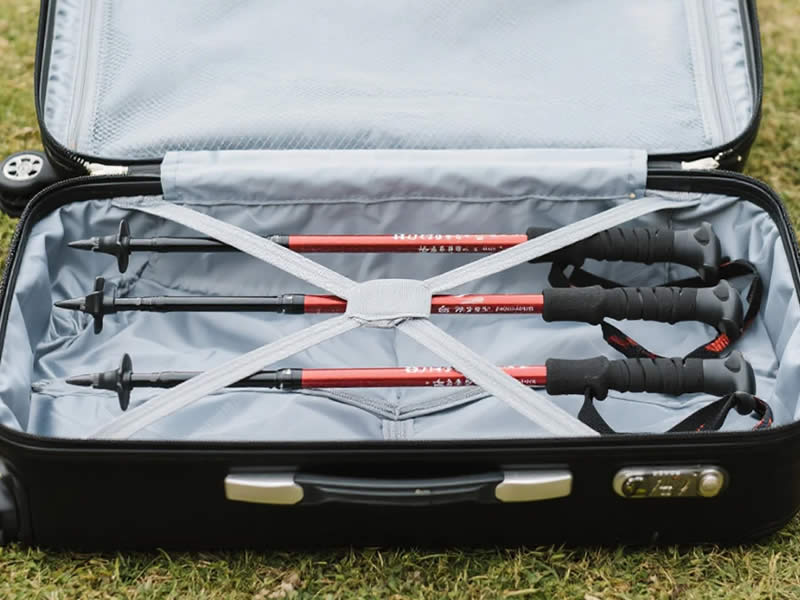
Dimensions: how small can they go?
Foldable trekking poles (often called "Z‑poles") are designed for packability. Unlike telescopic poles, which collapse by sliding sections into each other, Z‑poles fold into three or four sections held together by an internal cord. This makes them significantly shorter when packed.
Typical sizes:
- Standard Z‑pole: Folded length of 35‑40cm (e.g., Black Diamond Distance Z, Leki Micro Vario).
- Ultra‑compact Z‑pole: Some models fold to just 33cm.
- Telescopic poles (collapsed): Typically 60‑70cm—too long for most cabin bags.
Cabin suitcase dimensions:
- Standard cabin bag: 55 x 40 x 20 cm (plus or minus a few cm, depending on the airline).
- Maximum length: 55cm. A 35‑40cm pole easily fits inside.
So, physically, the poles will fit. The real question is not about dimensions, but about security policy.
Packing tips: keeping your poles safe
If you're planning to pack your foldable poles in a cabin suitcase, follow these tips to avoid damage and to make it through security without issues:
1. Fold them correctly
Make sure the pole sections are properly folded and aligned. The internal cord should be slack, and the locking mechanisms should be released. This prevents stress on the joints.
2. Wrap them in clothing
Place the poles in the centre of your suitcase, surrounded by soft items (jumpers, towels, or a sleeping bag). This prevents them from shifting and protects them from impacts.
3. Use a padded sleeve
If you have a sleeve or a small bag for the poles, use it. This provides extra protection against scratches and prevents the poles from damaging other items.
4. Position them diagonally
If your suitcase is slightly smaller, place the poles diagonally across the main compartment to fit them comfortably.
5. Secure the internal cord
If the cord is loose, it can get tangled. Some hikers use a small elastic band to keep the sections together.
6. Keep them accessible
If you're concerned about security, pack the poles on top of your clothing, so you can quickly show them to security staff if asked.
The critical factor: airline security policy
This is the deal‑breaker. Even if the poles fit perfectly in your cabin bag, the airline's security policy may prohibit them.
Airlines that generally prohibit trekking poles in the cabin:
- Ryanair: Explicitly prohibits trekking poles in the cabin, even if collapsible. They must be checked in as hold luggage.
- EasyJet: Similar policy—poles are considered "sports equipment" and cannot be carried in the cabin.
- Wizz Air: Generally prohibits poles in the cabin.
- British Airways: Allows poles in the cabin only if they are collapsible and less than 1.5m in length—but even then, it's at the discretion of the security staff. For safety, BA advises checking them.
Airlines that may allow them (but always check):
- Jet2: Generally allows collapsible trekking poles in the cabin, but policies can change.
- KLM: Allows poles if they are in a case and the passenger is flying to a hiking destination, but again, subject to security discretion.
- Lufthansa: Generally allows sports equipment if it fits in the overhead bin, but check with the airline.
The golden rule:
Never assume. Even if the airline's policy allows them, the security staff at the airport have the final say. If they consider the poles a potential weapon, they will be confiscated.
Practical advice: If you are flying with foldable poles and are unsure, check them in as hold luggage or ship them ahead to your destination. It's better to have them arrive safely than to risk losing them at security.
The "gate‑check" option
If you bring your poles to the gate and security stops you, you may be able to gate‑check them—they will be placed in the hold at the last minute. This is often more expensive than pre‑booking hold luggage, but it's better than abandoning them.
Gate‑check costs: Typically £20‑40, depending on the airline. Pre‑booking hold luggage is usually cheaper.
Summary table: dimensions and airline policies
| Feature | Details |
|---|---|
| Folded length | 35‑40 cm (fits in most cabin bags) |
| Cabin suitcase | 55x40x20 cm (standard) |
| Ryanair | Prohibited in cabin—must be checked |
| EasyJet | Prohibited in cabin—must be checked |
| British Airways | May allow collapsible poles, but check |
| Jet2 | Typically allowed, but check first |
| KLM | Subject to security discretion |
| Best practice | Check them in, or use a hard‑case tube |
The verdict
Physically, yes—foldable trekking poles fit inside a standard cabin suitcase. Their folded length of 35‑40cm is well within the dimensions of a typical cabin bag. However, the critical factor is the airline's security policy. Many budget airlines (Ryanair, EasyJet) explicitly prohibit trekking poles in the cabin, even if they are collapsible. Other airlines may allow them, but the final decision rests with airport security staff.
For a stress‑free experience, check your poles in as hold luggage or ship them ahead to your destination. If you do carry them in the cabin, pack them securely, be prepared to gate‑check them, and always check the airline's current policy before you fly. With a little planning, your poles will arrive safely, ready for your adventure. Happy—and smooth—travels!




