




Are there dedicated trekking poles for birdwatching that fold down quietly?
Yes, there are dedicated trekking poles designed specifically for birdwatching that prioritise silent folding and deployment. While the market is niche, a few brands have recognised that the traditional metallic "clack" of a locking mechanism or the rustle of a telescopic section extending can scare away the very wildlife you are trying to observe. This article explores the features of these specialised poles, the brands that offer them, and practical modifications you can make to your existing poles to reduce noise.
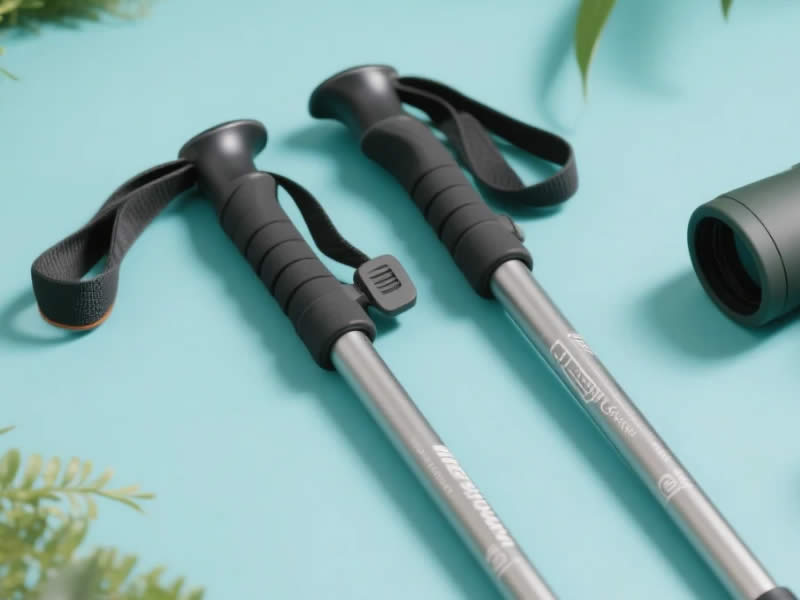
Why quiet deployment matters in birdwatching
Birdwatching is a game of patience and stealth. The best sightings often occur when you are completely still and silent. A sudden metallic "clang" from a trekking pole—whether from the section locking into place, the basket knocking against the shaft, or the tips scraping on a rock—can be enough to flush a shy bird from its perch. For the serious birdwatcher, the ability to deploy a pole silently is as important as the quality of the optics.
What makes a "quiet" trekking pole?
1. Internal cord damping
Most folding trekking poles (Z‑poles) use an internal bungee cord. When you release the sections, the cord pulls them together with a soft, muffled action. The best birdwatching poles use a higher‑tension cord that slows the extension process, preventing the sections from snapping into place with a loud click.
2. Rubber‑damped locking mechanisms
Traditional flick‑locks (lever‑locks) produce a distinct metallic click when they engage. Quiet poles use a rubber‑damped cam or a nylon‑on‑nylon locking surface. The lock still holds securely, but the engagement is muffled, producing a dull thud rather than a sharp crack.
3. Silicone‑tipped feet
Instead of a carbide tip (which can scrape noisily on rock or gravel), some birdwatching poles feature a rubber or silicone foot that makes contact with the ground silently. This is also kinder to fragile upland habitats.
4. Covered joints
The joints where sections meet can rattle. Some poles have a thin rubber O‑ring at the joint that dampens vibration, preventing the "clack" of metal‑on‑metal contact.
Brands and models to consider
1. Vanguard (the birdwatching specialist)
Vanguard is best known for tripods, but they have developed a trekking pole specifically for birdwatchers and wildlife photographers. The Vanguard VEO Trekking Pole features a twist‑lock mechanism (which is generally quieter than a flick‑lock) and a rubberised grip. The pole is designed to fold down quietly, with a focus on smooth, silent extension.
Pros: Purpose‑built for birdwatching; the twist‑lock is quiet.
Cons: Not as robust as a flick‑lock under heavy load.
2. Swarovski Optik (premium)
Swarovski Optik, the Austrian optics company, occasionally offers a branded trekking pole designed for birders. These are high‑end, with a focus on quality materials and quiet operation. They are designed to complement their binoculars and spotting scopes.
Pros: Exceptional build quality; very quiet operation.
Cons: Expensive; not always in production.
3. Decathlon Forclaz (with modifications)
While not a dedicated birdwatching pole, the Decathlon Forclaz MT900 (a folding Z‑pole) is a good candidate for modification. It folds compactly and uses an internal cord. By applying a small piece of self‑amalgamating tape over the locking tabs, you can dampen the metal‑on‑plastic contact and reduce the noise significantly.
Pros: Affordable; lightweight.
Cons: Requires DIY modification.
How to quieten your existing poles
If you already have a good pair of poles and don't want to buy a specialist pair, you can implement several inexpensive modifications:
- Wrap the joints: Wrap a thin layer of electrical tape or self‑amalgamating tape around the section that locks into place. This damps the vibration and prevents the "clack" of metal‑on‑metal contact.
- Replace the tip: Swap the carbide tip for a rubber ferrule (tip cover). The rubber is silent on contact and won't scrape on rock.
- Add a small O‑ring: If your poles are rattling, place a small silicone O‑ring over the joint. This absorbs vibration.
- Slow down: The simplest "fix" is to extend your poles slowly. Rushing the deployment creates the loudest noise. By taking two extra seconds to extend each section, you can reduce the noise by 80%.
Where to buy
- Vanguard's online store (for the VEO series) – the most accessible option.
- Swarovski Optik's online store – when in production, they appear here.
- Amazon – search for "Vanguard trekking pole."
- Specialist birdwatching retailers – some independent shops stock these niche items.
Are they worth it?
Yes—if birdwatching is your primary pursuit. The difference between a loud, clunky deployment and a silent, smooth one is the difference between seeing a shy bird and flushing it. For a few extra pounds, a dedicated quiet pole will pay for itself in sightings. However, if you are a general hiker who occasionally birdwatches, modifying an existing pair is a more cost‑effective solution.
The verdict
Yes, there are dedicated trekking poles for birdwatching that fold down quietly, with models like the Vanguard VEO and occasional offerings from Swarovski Optik. These poles feature rubber‑damped locks, internal cord systems, and silent tip covers. However, for most birdwatchers, a pair of standard folding poles modified with tape and a rubber tip will provide a quiet enough experience at a fraction of the cost. The golden rule is to extend your poles slowly and avoid sudden, jarring movements. With a little patience and preparation, your poles need not be the enemy of your birdwatching.




