




In the UK, are "walking sticks" and "trekking poles" legally the same product?
No—"walking sticks" and "trekking poles" are not legally distinct categories in the UK. Both are classified under the same general product safety regulations as "personal mobility aids" or "sports equipment." The distinction is purely a matter of marketing and intended use, not of legal definition. This article explains the legal framework, the role of voluntary standards, the VAT implications, and what this means for consumers and sellers.
The legal classification: general product safety
The primary legislation governing the safety of consumer products in the UK is the General Product Safety Regulations 2005. This regulation applies to all products intended for, or likely to be used by, consumers. It requires that products be safe for their intended use. It does not, however, provide a specific definition of a "walking stick" or a "trekking pole." Both are considered general consumer products, not medical devices (unless specifically marketed as such). This means they are subject to the same safety requirements.
The implication: There is no legal distinction between the two. A trekking pole sold in a sports shop is subject to the same safety requirements as a walking stick sold in a pharmacy.
Medical devices: a different classification
If a product is marketed as a medical device (e.g., a walking stick specifically prescribed by a GP or physiotherapist for a specific medical condition), it may be classified as a medical device under the Medical Devices Regulations 2002. This regulation imposes stricter requirements, including the need for a CE mark (or UKCA mark) and conformity to specific standards (such as EN/ISO 11199 for walking aids). However, most walking sticks sold in retail shops are not marketed as medical devices; they are general consumer products.
The implication: If a walking stick is sold as a medical device, it is subject to a different legal framework. But for the vast majority of products sold to the public, the distinction does not apply.
Voluntary standards: not legally binding
While there is no specific British Standard for trekking poles, several voluntary standards exist. For example, the EN/ISO 11199 series covers walking aids, but these are not mandatory. Manufacturers may choose to test their products to these standards to demonstrate quality and safety, but they are not legally required to do so. The same standards apply to both walking sticks and trekking poles—there is no separate standard for each.
The implication: A manufacturer could voluntarily meet a standard for a walking stick or a trekking pole, but the standard is the same for both.
VAT classification: a subtle distinction
One area where the legal treatment differs is VAT. Standard‑rated products (20% VAT) are subject to the standard rate. However, if a product is specifically designed for a disabled person and is sold as a medical aid, it may be eligible for zero‑rating (0% VAT). This is governed by the VAT Act 1994 and related HMRC guidance.
- Zero‑rated: If a walking stick is sold as a medical aid (e.g., prescribed by a GP) and is suitable for a disabled person, it may be zero‑rated for VAT.
- Standard‑rated: If a trekking pole is sold for general outdoor use, it is subject to the standard VAT rate.
The implication: The VAT treatment depends on the intended use and the marketing, not on the name. A walking stick sold as a general mobility aid may be standard‑rated; a trekking pole sold as a medical aid (with a prescription) could be zero‑rated.
What about the "stick" vs. "pole" distinction?
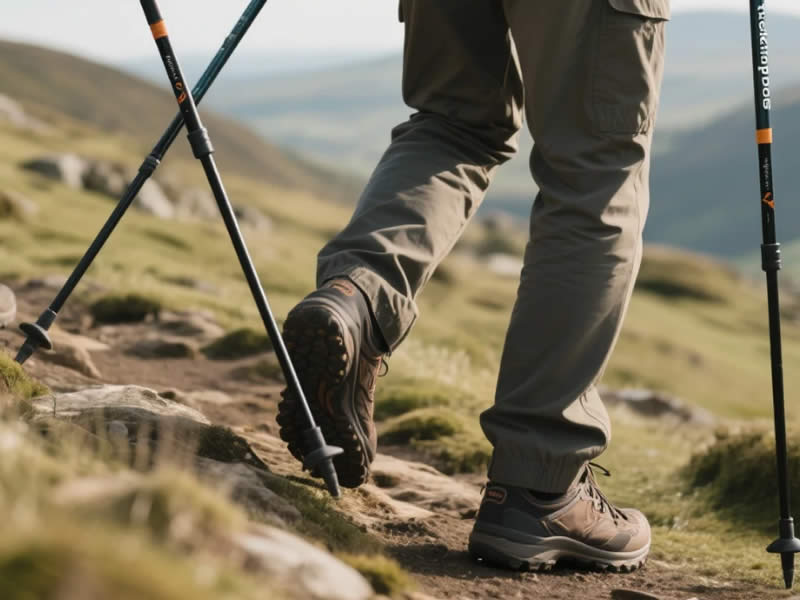
In common parlance, a "walking stick" is often associated with a single, wooden or metal shaft, while a "trekking pole" is adjustable and has a wrist strap. This is a practical distinction, but it has no legal basis. Both are regulated by the same consumer protection laws. A seller cannot claim that a trekking pole is "not a walking stick" to avoid consumer rights—the law treats them as equivalent.
Legal cases and guidance
There have been no specific court cases in the UK that have defined these terms. The Office for Product Safety and Standards (OPSS) provides guidance on general product safety, but it does not distinguish between a walking stick and a trekking pole. The British Standards Institution (BSI) does not have a separate standard for each; it treats them as similar products.
What this means for consumers
- For buying: There is no legal difference. Both products must be safe for their intended use. You should check the build quality, the locking mechanism, and the grip, and look for a product that meets a recognised standard (even if voluntary).
- For returning: Both are covered by the Consumer Rights Act 2015. If a product is faulty, you have the same rights of return and repair.
- For VAT: If you are buying a walking stick for a specific medical condition and have a prescription, you can ask for zero‑rating. If not, you will pay the standard VAT rate.
Summary table
| Aspect | Walking Stick | Trekking Pole | Legal Difference? |
|---|---|---|---|
| Legal classification | General consumer product | General consumer product | No |
| Medical device classification | If marketed as medical aid | If marketed as medical aid | Same |
| Voluntary standards | May be tested to EN/ISO 11199 | May be tested to EN/ISO 11199 | Same |
| VAT rate | Standard (20%) unless zero‑rated | Standard (20%) unless zero‑rated | Depends on use, not name |
| Consumer rights | Consumer Rights Act 2015 | Consumer Rights Act 2015 | Same |
The verdict
In the UK, walking sticks and trekking poles are legally the same product. Both are classified as general consumer products under the General Product Safety Regulations 2005. There is no specific legal definition that distinguishes one from the other. The difference is purely a matter of marketing, intended use, and design. A walking stick is typically marketed for everyday mobility, while a trekking pole is marketed for outdoor sports. Both are subject to the same safety requirements, and both are covered by the same consumer rights. If you are buying either, you are buying a product that is legally equivalent, and you should prioritise safety, comfort, and fit over the name. For VAT and medical device classification, the intended use (and any prescription) is the deciding factor, not the product name.




