




What does "shock absorber" mean in a UK trekking pole product description?
In a UK trekking pole product description, a "shock absorber" refers to an internal spring or elastomer mechanism built into the pole's shaft (usually near the lower section) that compresses on impact, absorbing the jarring vibration when the tip strikes the ground. The goal is to reduce the peak force transmitted up the shaft and into your hands, wrists, and arms. This feature is often marketed as a comfort and joint‑protection benefit, particularly for walkers who spend a lot of time on hard, unyielding surfaces.
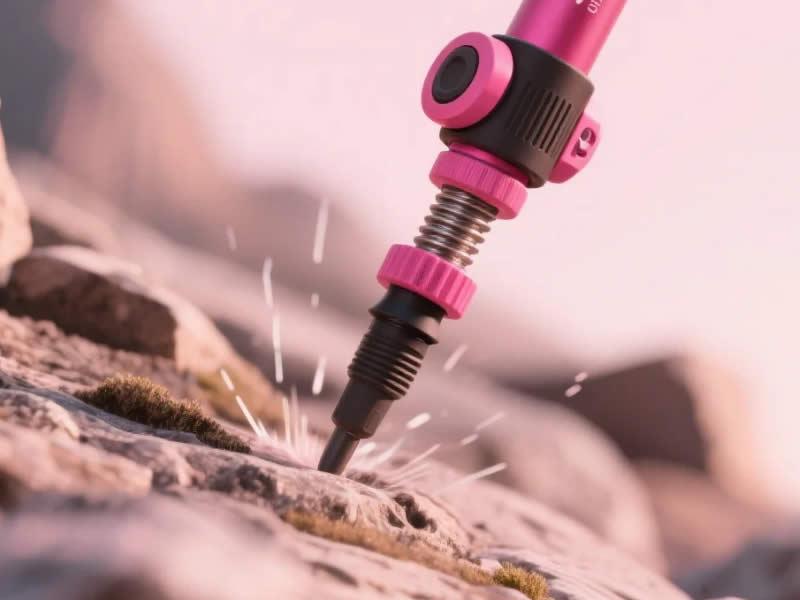
How a shock absorber works
When you plant a trekking pole, the tip hits the ground, creating a sudden impact. In a rigid pole, this impact is transmitted directly up the shaft, producing a jarring vibration that can be felt in your hands, wrists, and shoulders. A shock‑absorbing mechanism interrupts this transmission.
The mechanism
- Spring‑based: A coiled steel spring sits inside the lower section of the pole. When the tip strikes the ground, the spring compresses, absorbing some of the kinetic energy. It then rebounds, releasing the energy slowly.
- Elastomer‑based: A synthetic rubber or polymer block performs a similar function. It compresses on impact and then returns to its original shape, dampening the shock.
Both mechanisms reduce the rate of force application—the shock is spread over a slightly longer time, which reduces the peak pressure on your joints.
The benefits: why it's marketed
1. Reduced fatigue
The jarring of repeated pole plants on hard ground can cause fatigue in the wrists, elbows, and shoulders. A shock absorber reduces this cumulative impact, allowing you to walk longer without discomfort.
2. Joint protection
For walkers with arthritis, wrist issues, or a history of joint pain, the shock absorber can provide a noticeable comfort benefit. It reduces the peak load on the wrist joint, which is particularly beneficial on descents.
3. Improved comfort on hard surfaces
On compacted trails, tarmac, or rocky paths, the difference between a rigid pole and a shock‑absorbing one can be significant. The shock absorber makes the pole feel "softer" and more forgiving.
The trade‑offs: what you lose
1. Added weight
The shock absorber adds 50‑100 g per pole. This may not seem like much, but over a long day, the extra weight can be noticeable, especially if you are carrying a heavy pack.
2. Reduced feedback
A shock absorber can make the pole feel "bouncy," reducing the tactile feedback from the ground. Some walkers find this disconcerting, as they lose the direct sense of the terrain.
3. Potential noise
The spring or elastomer can squeak or rattle over time, particularly if dirt or moisture gets into the mechanism. This can be irritating and may require maintenance.
4. Less effective on soft ground
On soft ground (mud, sand, grass), the ground itself absorbs the impact, rendering the shock absorber largely redundant. The mechanism may not even activate, as the pole simply sinks into the ground.
When to choose a shock‑absorbing pole
Consider a shock absorber if:
- You walk primarily on hard, compacted surfaces (canal towpaths, forest tracks, pavements).
- You have wrist, elbow, or shoulder issues and need extra cushioning.
- You are a leisure walker who prioritises comfort over weight.
- You want the option to switch it off (see below).
Consider a rigid pole (no shock absorber) if:
- You walk on soft, uneven terrain (mud, grass, moorland) where the shock absorber is not effective.
- You are a weight‑conscious walker who wants to minimise pack weight.
- You prefer direct feedback from the ground, especially on technical terrain.
- You are a long‑distance hiker who values simplicity and reliability.
The "switchable" shock absorber
Many poles feature a switchable shock absorber, with a small button or twist‑lock that allows you to turn the mechanism on or off. This is the most versatile option, as it lets you:
- Turn it on for hard surfaces and descents.
- Turn it off for soft ground or when you want a more direct feel.
If you are unsure whether you need a shock absorber, a switchable model is a good compromise.
How to spot a shock absorber in a product description
Look for terms like:
- "Internal shock absorber"
- "Spring‑loaded"
- "Elastomer cushioning"
- "Shock‑absorbing system"
- "Damping system"
- "Smart shock absorber" (some brands have a proprietary name)
The description will usually specify whether it is switchable or fixed.
Summary table
| Feature | Shock‑Absorbing Pole | Rigid Pole |
|---|---|---|
| Weight | Heavier (+50‑100g) | Lighter |
| Feedback | Damped, less direct | Direct, tactile |
| Comfort on hard ground | High | Moderate |
| Effectiveness on soft ground | Limited | Full |
| Maintenance | More complex (possible squeak) | Simple |
| Best for | Hard surfaces, joint issues | Soft terrain, weight‑conscious |
The verdict
In a UK trekking pole product description, a "shock absorber" is an internal mechanism designed to reduce the jarring impact of pole plants on hard ground. It is a comfort feature that can benefit walkers with wrist or joint issues, particularly those who walk on compacted trails or pavements. However, it adds weight, reduces tactile feedback, and is less effective on soft terrain. For most UK hill walkers, a rigid pole is a more practical choice, especially on the soft, boggy ground of the moors. If you are unsure, choose a switchable shock absorber so you can turn it off when not needed. Ultimately, the decision depends on your terrain, your joints, and your personal preference.




