




Are Vango trekking poles durable enough for Scottish winter treks?
Yes—but with significant caveats. Vango trekking poles are a budget-to-mid-range option. They can handle milder Scottish winter conditions (well-defined paths, moderate snow, and short winter walks), but they may not be durable enough for the most extreme, relentless terrain typical of the Scottish Highlands in winter. This article provides a balanced assessment, explaining where they perform well, where they fall short, and what to consider when buying.
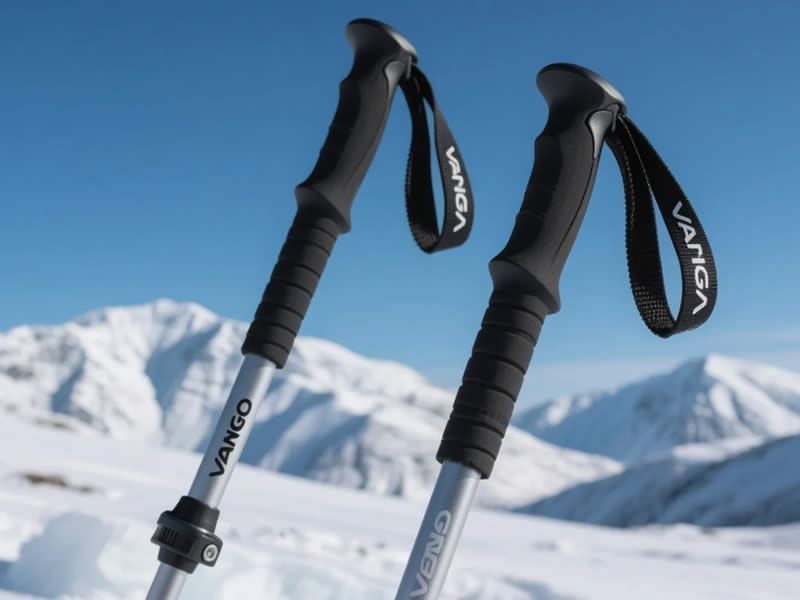
The Vango range: what's on offer
Vango offers several trekking pole models, primarily:
- Vango Trek (or "Vango Pro Trek"): A budget-friendly pole with a flick-lock (on some models) or twist-lock, aluminium shaft, and foam grip.
- Vango Enduro: A slightly higher-spec model with a flick-lock, 7075 aluminium, and a cork/foam hybrid grip.
- Vango Air: A lightweight, twist-lock model (less recommended for winter use).
The best Vango pole for winter is the Enduro (or a similarly spec'd model) with a flick-lock.
The pros: where Vango poles perform well
1. Flick-locks
Most Vango models use flick-locks (lever-locks), which are far more reliable in wet and muddy conditions than twist-locks. In the Scottish winter, where mud, snow, and ice are common, a flick-lock will not clog or slip as easily as a twist-lock. This is the single most important feature for winter use.
2. Aluminium shafts
The higher-spec Vango models use 7075 aluminium, a high-grade alloy that is both lightweight and strong. It resists bending and is durable enough for moderate rocky terrain. This is a significant advantage over cheaper steel or lower-grade aluminium poles.
3. Affordable
At £40-60 per pair, Vango poles are a low-risk investment. If you are unsure whether you will do more winter walking, they are a cost-effective entry point.
The cons: where they fall short
1. Weight
Vango poles are heavier than premium poles, typically 260-300g per pole. Over a long winter day, the extra weight will cause arm fatigue, especially when you are swinging the poles for hours on end.
2. Grip quality
Vango uses foam grips (or a foam/cork hybrid on higher-spec models). While adequate for summer walks, foam is less comfortable in cold, wet winter conditions. It can become slippery with sweat or rain, and it does not provide the same comfort as a premium cork grip. Over a multi-day winter trek, this can lead to blisters or hand fatigue.
3. Lock durability
Under sustained, heavy use (e.g., constant rocky descents, heavy snow), the locking mechanism on Vango poles may wear out faster than premium brands. The plastic components of the flick-lock can weaken over time, especially in freezing temperatures.
4. Snow baskets
Vango poles may not come with snow baskets. Check the model. If they don't, you will need to buy them separately. Without a snow basket, the pole will sink into soft snow, making it useless for support.
Scottish winter-specific issues
1. Snow and ice
- Flotation: Vango poles with snow baskets will provide adequate flotation in soft snow. Without baskets, they will sink.
- Grip: The carbide tips are suitable for ice, but the foam grip may become slippery in wet, cold conditions.
2. Cold temperatures
- Locking mechanism: Flick-locks are less affected by cold than twist-locks, but the plastic components can become stiff or brittle in extreme cold (below -10°C).
- Corrosion: The Scottish winter is wet; salt (if you are near the coast) can corrode metal components. Vango poles are not particularly corrosion-resistant, so they require regular cleaning and drying.
3. Terrain
- Rocks: Vango poles are durable enough for moderate rocky terrain, but they may not withstand the constant, sharp impacts of a full winter traverse in the Highlands.
- Deep snow: In deep, heavy snow, a Vango pole with a snow basket will provide support, but the pole's shaft may flex more than a premium pole.
When to choose Vango for Scottish winter
- For a budget-conscious walker doing a few winter walks.
- For moderate terrain (e.g., well-defined paths, not extreme scrambling).
- For a first winter trip where you are unsure if you will do more.
- For use with a light pack (not heavy expedition loads).
When to avoid Vango for Scottish winter
- For extreme winter terrain (e.g., steep, icy slopes, deep snow, constant rocky descents).
- For multi-day expeditions where reliability is critical.
- If you are a heavy user (e.g., weekly winter walks).
- If you are carrying a heavy pack (the extra weight of the poles will be noticeable).
Recommended Vango model for winter
If you are buying Vango for winter, choose the Vango Enduro (or similar) with:
- Flick-lock: The most reliable lock for wet, muddy conditions.
- 7075 aluminium: The strongest and lightest alloy.
- Cork/foam hybrid grip: More comfortable than pure foam in cold weather.
- Snow baskets: Buy them separately (check compatibility).
Comparison with premium brands
| Brand | Price | Lock | Material | Weight | Grip | Best For |
|---|---|---|---|---|---|---|
| Vango Enduro | £40-60 | Flick-lock | 7075 aluminium | 260-280g | Foam/cork hybrid | Budget winter walks |
| Leki Makalu | £85 | SpeedLock 2 | 7075 aluminium | 270g | Cork | All-round premium |
| Black Diamond Trail Pro | £90 | FlickLock Pro | 7075 aluminium | 280g | Cork | Rugged terrain |
The verdict
Vango trekking poles are a decent budget option for milder Scottish winter walks. For a weekend trip on well-defined paths, with moderate snow and ice, they will perform adequately. However, for the most extreme, relentless terrain of the Scottish Highlands in winter, they are not the best choice. The weight, grip quality, and lock durability are not up to the standard of premium brands like Leki or Black Diamond. If you are a regular winter walker or planning a multi-day expedition, invest in a premium pole. If you are on a budget and doing a few winter walks, Vango poles with a flick-lock and snow baskets are a reasonable choice—just be prepared to maintain them carefully and accept that they may not last as long as a premium pole. Always clean and dry them thoroughly after a winter walk to prevent corrosion.




