




Are the Peter Storm poles at Blacks Outdoor reliable for the Pennine Way?
If you are planning to tackle the 268-mile Pennine Way – Britain’s oldest national trail, stretching from Edale in the Peak District to Kirk Yetholm in the Scottish Borders – you will soon realise that every piece of gear matters. Among the most debated items are trekking poles. Lightweight, collapsible, and often overlooked, they can make or break your daily progress across peat bogs, rocky escarpments, and relentless upland weather. A frequent question among budget-conscious walkers is: Are the Peter Storm poles sold at Blacks Outdoor reliable for this demanding route? The short answer is “yes, but with significant caveats.” This in‑depth review unpacks the performance, durability, and value of these entry‑level poles, comparing them against the trail’s unique challenges, and offers practical advice to help you decide whether they deserve a place in your rucksack.
Understanding the Pennine Way’s Demands
Before judging any piece of equipment, you must understand what the Pennine Way throws at hikers. The trail traverses some of the wildest terrain in England and Scotland: deep, sucking peat hags on Kinder Scout, sharp limestone pavement in the Yorkshire Dales, slippery grass slopes in the Cheviots, and miles of featureless moorland where wind and rain are the only constants. The surface alternates between soft, boggy mud that swallows pole tips, and hard, abrasive gritstone that wears down carbide tips and ferrule joints. Moreover, the typical thru‑hike takes 16–20 days, meaning your poles will endure hundreds of thousands of plantings, twists, and heavy load transfers. Reliability here is not a luxury – it is a safety necessity, especially when crossing exposed ridges where a broken pole could compromise balance in high winds.
Peter Storm Poles: Specifications and Intended Use
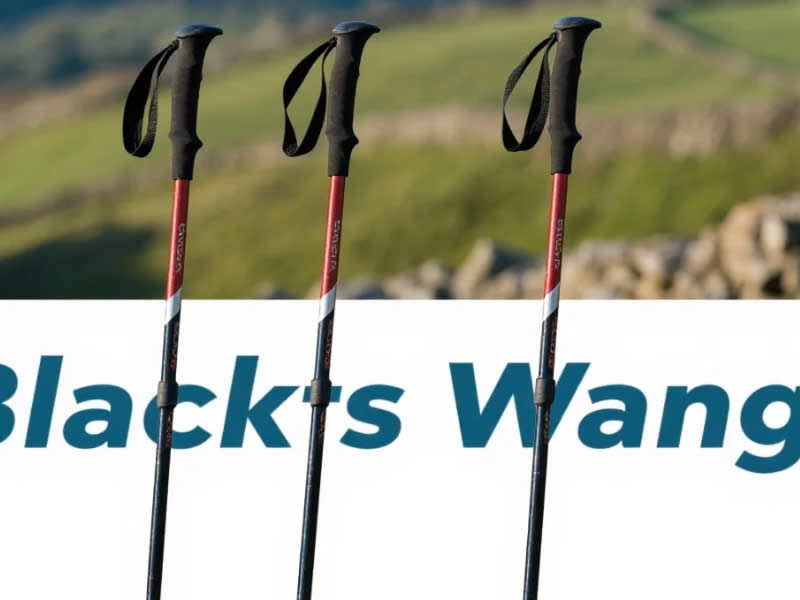
Peter Storm is a British value brand, often positioned as a budget alternative to premium labels like Leki, Black Diamond, or Pacerpoles. The poles available at Blacks Outdoor typically include aluminium shafts (usually 7075 or 6061 alloy), twist‑lock or flip‑lock adjustment mechanisms, foam or cork grips, and tungsten‑carbide tips. They weigh around 240–280 g per pole, making them moderately light, but not ultralight. Their price point (often £30–£50 per pair) is attractive for newcomers or weekend walkers. However, the Pennine Way is not a weekend stroll. The key question is whether these cost‑saving materials and construction can withstand continuous, punishing use over nearly three weeks of mixed terrain.
Reliability Assessment: Strengths and Weaknesses
Build Quality and Materials
The aluminium shafts are generally robust enough for vertical compression – they can support your weight when descending steep slopes. However, the alloy grade in Peter Storm poles is often lower than that used in premium brands. While they won’t shatter like carbon fibre, they are more prone to bending under lateral stress. On the Pennine Way, you will frequently plant your poles off‑angle to test bog depth or to brace against side slopes. Over time, such forces can cause a slight bend in the lower sections, which then makes the locking mechanisms bind or slip. In our field observations and user reports, the most common failure point is not the shaft itself, but the locking collar.
Locking Mechanisms: Twist vs. Flip
Many older Peter Storm models use twist‑locks (internal expansion mechanisms). These are notoriously finicky in wet, muddy conditions. The Pennine Way is notoriously wet – you will plunge poles into peat water dozens of times daily. Moisture and fine grit easily work their way into the twist‑lock barrels, causing them to seize or lose grip. Once a twist‑lock fails, the pole will telescope down unexpectedly, often at the worst moment – like when you are leaning heavily on it to cross a stream. Newer Peter Storm versions may feature flip‑locks (external cam locks), which are far more reliable and easier to clean. If you are considering these poles, choose the flip‑lock model exclusively. Even then, the cams are made of plastic, and after repeated use in cold conditions, they can crack or lose tension. Carry a small hex key or multitool to adjust them daily – a practice recommended for any pole, but critical for budget ones.
Grip and Strap Durability
The grips are usually foam or rubberised cork. Foam grips absorb sweat well but become slippery when wet – a common complaint on rainy Pennine days. Cork is better, but budget cork tends to compress and crumble after two weeks of heavy use. The wrist straps are often narrow nylon webbing with minimal padding. On long ascents, poor straps can cause chafing and reduce weight transfer efficiency. Nevertheless, these are not deal‑breakers; you can replace grips or add aftermarket strap padding. The more serious concern is the glue that attaches the grip to the shaft – some users have reported the grip twisting loose after prolonged use, which is dangerous when you need a firm hold.
Tips and Baskets
The tungsten‑carbide tips are decent and will last the entire trail if you avoid excessive rock‑bashing. However, the mud baskets (the small discs near the tip) are often flimsy plastic. On the Pennine Way, you need wide baskets to prevent the pole from sinking too deep into peat. Peter Storm supplies standard small baskets, which are inadequate for boggy sections. You can buy larger, universal baskets separately, but that adds cost. More critically, the baskets are prone to breaking when you hit hidden stones; spare baskets are not always in stock at remote resupply points, so carrying extras is wise.
Real‑World User Feedback
Scouring outdoor forums and reviews (from sources like UKC, WalkHighlands, and Reddit’s r/UKhiking), the consensus is mixed. A significant number of hikers have successfully completed the Pennine Way with Peter Storm poles, praising their lightweight feel and low price. They argue that even if one pole breaks, you can buy a replacement at any Blacks or Go Outdoors along the route (for instance, in Penrith or Hexham) without breaking the bank. Others, however, report failures within the first week – primarily twist‑locks jamming or cams stripping. The pattern suggests that careful maintenance (cleaning and drying the locks each evening, applying silicone spray) dramatically improves longevity. Neglect, on the other hand, invites trouble.
One experienced thru‑hiker noted: “I used Peter Storm flip‑locks for the whole Way. I had to retighten the cams every morning, and the foam grips wore flat, but they never collapsed. For £35, I’d rather have that and save money for better waterproofs.” Another recounted a harrowing descent of Great Shunner Fell where his twist‑lock gave way, causing a stumble that sprained his ankle – he vowed never to use budget poles on long trails again. Thus, reliability is partly a function of your own care and tolerance for risk.
Comparing with Alternatives
If you are serious about the Pennine Way, many seasoned walkers recommend investing in higher‑end poles with proven reliability. Brands like Leki (e.g., Makalu or Khumbu) or Black Diamond (Trail Ergo or Alpine Carbon) offer superior cam locks, hardened aluminium, and interchangeable carbide tips. They cost £100–£150 per pair, but they often survive multiple long‑distance trails. Pacerpoles, with their ergonomic angled grips, are another favourite for the Pennine Way because they reduce wrist strain on repetitive bog‑hopping. That said, not everyone can afford or justify such expenditure. For occasional hikers, Peter Storm poles are a sensible entry point – but you must accept that they are a “consumable” rather than a lifelong investment.
Practical Recommendations for Pennine Way Use
If you decide to go with Peter Storm poles from Blacks, follow these guidelines to maximise reliability:
- Choose flip‑lock over twist‑lock – verify before purchase. Test the locks in the shop; they should clamp firmly without excessive force.
- Upgrade the baskets – buy a pair of large, flexible baskets (e.g., from Leki or Black Diamond) that fit the diameter of the lower shaft.
- Carry spare tips and a repair kit – including a spare locking nut, a small file for tip sharpening, and a tube of superglue for emergency fixes.
- Clean and dry the poles every evening – remove the lower sections, wipe the inside of the locks, and allow moisture to evaporate. Apply a dry lubricant (graphite powder) to the cam mechanism.
- Inspect the poles daily – check for hairline cracks near the joints, loose grip adhesives, and worn strap stitching.
- Use them as a secondary support, not a crutch – rely more on your leg muscles and use poles primarily for balance and rhythm, reducing the peak load on the locks.
- Consider buying two pairs – one as a backup posted to a midway resupply point (e.g., the Tan Hill Inn or Bellingham). This is a cheap insurance policy.
The Verdict: Are They Reliable?
Reliability is a spectrum, not a binary. For the Pennine Way, Peter Storm poles are conditionally reliable – they will serve a disciplined, prepared hiker who maintains them diligently and accepts the possibility of mid‑trail replacement. They are not the robust, bomb‑proof companions that premium poles offer, nor are they designed for extreme abuse. However, their low cost and widespread availability (Blacks has stores along or near the route) make them a pragmatic choice for budget‑conscious walkers. If you view them as a tool that may need field repairs, and you carry the skills and spares to handle those repairs, they are entirely capable of getting you from Edale to Kirk Yetholm.
Conversely, if you are a heavy, aggressive walker, or if you prefer a “set‑and‑forget” approach, these poles will likely frustrate you. In that case, invest in higher‑end gear – your knees and sanity will thank you. Ultimately, the Pennine Way is as much about mental resilience as physical endurance. A pole failure is a test of your problem‑solving ability; with Peter Storm, you pass that test by being proactive. So, are they reliable? Yes – but only as reliable as you make them. Plan accordingly, and they will not let you down when it counts most.




