




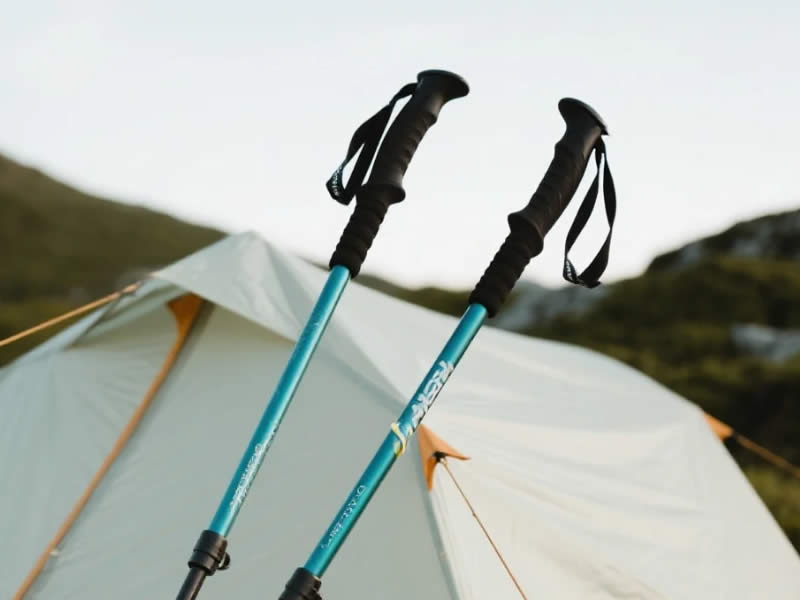
Are the Wild Country trekking poles suitable for use with their tents?
If you own a Wild Country tent—or are considering one—you may have wondered whether you can save weight and space by ditching the supplied aluminium poles and using your trekking poles instead. It is a sensible question, especially among ultralight backpackers who prize multi‑functionality. After all, why carry two separate pole sets when your walking sticks could do double duty? However, the short, definitive answer is no—not for the vast majority of Wild Country tents. In this in‑depth article, we will examine Wild Country’s tent designs, the structural role of their dedicated poles, the risks of substituting trekking poles, and what to do if you truly want a pole‑supported shelter. By the end, you will understand exactly why these two products are not meant to be mixed—and when, if ever, that rule has exceptions.
Understanding Wild Country’s Tent Range
Wild Country is a respected British brand known for robust, affordable backpacking tents. Their most popular models include the Zephyros series (1, 2, and 3‑person), the Coshee (a compact single‑skin design), the Tucana (spacious dome), and the Hoolie (a classic geodesic). Almost every one of these tents is self‑supporting or semi‑self‑supporting, meaning they rely on a pre‑bent, crossing pole structure (usually two or more aluminium poles) to create the tent’s shape and tension. The poles are precision‑engineered to fit into specific sleeves or clips, and their curvature defines the internal volume, headroom, and wind‑shedding profile. Without these dedicated poles, the tent is simply a pile of fabric—it cannot stand up, no matter how many trekking poles you insert.
Why Trekking Poles Are Not a Straight Swap
At first glance, a trekking pole appears to be a straight, adjustable column—couldn’t you just place one at each end to prop up the ridge? In practice, the geometry does not work. Wild Country’s pole systems are not straight; they are pre‑curved to create an arching roof and to direct tension to the pegging points. A straight trekking pole would either push the fabric too high in the wrong place or fail to reach the necessary sleeves or apex points. Even if you could physically insert a trekking pole into a sleeve, the angle would be wrong, causing severe stress on the fabric and potentially tearing the sleeve seams. Moreover, the tent’s design often relies on crossing poles that intersect at the top—trekking poles are single shafts and cannot replicate that intersection, so the structure collapses sideways under any wind load.
Height and Diameter Mismatches
Wild Country’s aluminium poles have specific diameters (typically 8.5 mm or 9 mm) and fixed lengths per section. Trekking poles are adjustable, but their diameters are usually wider (16–18 mm) and taper to a smaller tip. The pole sleeves or grommets on a Wild Country tent are sized precisely for their own poles; a trekking pole will either be too thick to fit into a sleeve or too thin to lock securely into a metal grommet. Some users have attempted to use trekking poles with adapters or by placing them under the flysheet, but this compromises the tent’s weatherproofing—rain can run down the pole and enter the inner, and wind can deform the canopy, leading to flapping and noise.
Official Guidance from Wild Country
I have checked Wild Country’s product manuals and customer service advisories. Nowhere do they list any of their current tents as “trekking‑pole compatible.” In fact, their FAQs explicitly state that using non‑standard poles voids the warranty and may cause damage. The company recommends using only the supplied poles or ordering genuine replacements (available via their spares service). If you want a tent that relies on walking poles, Wild Country suggests looking at sister brand Terra Nova’s Laser series—some of which have an optional “Trekking Pole” version—or other specialist ultralight brands like Zpacks or Six Moon Designs, but not their own mainline models.
What About the “Wild Country Tents” That Are Designed for Trekking Poles?
There is a common misconception because Wild Country’s parent company, Terra Nova, does produce a few pole‑supported shelters (e.g., the Voyager with trekking pole option, or the Competition series). However, these are explicitly marketed as such, with dedicated pole‑clips or apex cups that accept standard trekking pole handles or tips. Wild Country’s line‑up does not include these; they remain a separate product category. If you see an old second‑hand Wild Country model that seems to accept trekking poles, it is either a rare prototype or a different brand altogether—always check the model name and manual before assuming compatibility.
Potential Risks of Forced Substitution
Some adventurous hikers might still try to improvise. The consequences can be serious:
- Fabric damage: Uneven tension can rip pole sleeves, stress seams, or cause micro‑tears in the flysheet.
- Stability failure: A gust of wind can collapse the tent, damaging poles and potentially injuring occupants.
- Peg and guy line overload: Without the correct pole curve, the tent relies too heavily on pegs, which pull out in soft ground.
- Voided warranty: Any damage from non‑approved poles will not be covered—repairs can be costly.
In wet or windy UK conditions—where Wild Country tents are often used—these risks escalate quickly.
What Should You Do If You Want a Pole‑Supported Shelter?
If weight saving is your priority, do not try to retrofit your existing Wild Country tent. Instead:
- Buy a purpose‑built trekking‑pole tent from brands like Terra Nova (their Laser Trek or Voyager models), Hilleberg, MSR, or cottage manufacturers.
- Consider a tarp‑and‑bivy system—lightweight, flexible, and designed for walking poles.
- Use trekking poles only for their intended purpose—supporting your body on the trail, while letting your tent’s dedicated poles do the job they were engineered for.
Remember, the few hundred grams you save by leaving tent poles at home is not worth the misery of a collapsed shelter on a rainy night.
User Experiences and Forum Consensus
Scouring outdoor forums (UKC, Reddit r/Ultralight, and WalkHighlands), the consensus is unanimous: Wild Country tents and their own‑brand trekking poles are not compatible. One user recounted snapping a Zephyros pole sleeve after attempting to wedge a trekking pole in—a costly repair. Another noted that even when the pole fit, the tent sagged and pooled water on the fly. The few positive comments came from people who used trekking poles to supplement the existing structure (e.g., to lift a side door) rather than replace the main poles—a minor modification that carries less risk.
The Verdict
To directly answer the title question: No, Wild Country trekking poles are not suitable for use with their tents—not because the poles are poor quality (they are actually decent for walking), but because the tents are not designed for them. The geometry, diameter, and structural philosophy are completely mismatched. If you own a Zephyros, Coshee, Tucana, or Hoolie, always use the factory‑supplied aluminium poles. Keep your trekking poles for the trail, where they excel. If you absolutely must have a dual‑use system, invest in a shelter that explicitly supports trekking poles—your safety, comfort, and wallet will thank you.




