




Are Merrell trekking poles worth the price, or are they just a fashion item?
Walk into any outdoor retailer or browse online, and you will spot Merrell trekking poles displayed alongside their famous boots and trail shoes. Merrell is a household name in footwear – their Moab and Ontario ranges are legendary – but when it comes to walking sticks, the brand is a relative newcomer. Their poles, often priced between £60 and £90 per pair, sit in the mid‑range bracket, rubbing shoulders with specialist offerings from Leki, Black Diamond, and Komperdell. This immediately raises a critical question for budget‑conscious hikers: are you paying for genuine engineering, or merely for a matching logo to go with your Merrell boots? In this in‑depth review, we dissect the build, performance, and value of Merrell trekking poles to determine whether they are a wise investment or a fashion‑led distraction.
What Merrell Poles Offer: Specs and Models
Merrell currently offers two main trekking pole lines: the Merrell Alpine and the Merrell Trail series. Both are three‑section telescopic poles, available in aluminium or carbon‑fibre shafts. The Alpine typically features cork grips and flip‑lock mechanisms, while the Trail uses EVA foam and twist‑locks. Weights range from 220 g to 260 g per pole – competitive with mid‑range offerings. The tips are tungsten‑carbide, and the baskets are small and plastic. On paper, they look like any other pole in this price class. However, a closer inspection reveals that Merrell does not manufacture poles; they source from generic OEM factories in Asia, slap their branding and colour schemes on, and market them as part of an “outdoor lifestyle” ecosystem.
Build Quality: Decent but Unremarkable
When you handle a Merrell pole, the first impression is positive. The anodising is smooth, the cork on the Alpine model is comfortably contoured, and the flip‑locks operate with a satisfying click. However, experienced users quickly note that the materials are not premium. The aluminium is 6061 grade – standard but not as durable as the 7075 alloy used by Leki or Black Diamond. The carbon version uses a lower‑density weave, making it lighter but more brittle than the braided carbon found on high‑end poles. The locking cams are plastic, whereas specialist brands often use metal levers. In real‑world testing, these poles hold up well for day hikes and moderate backpacking, but they show signs of wear – scuffed anodising, loosening locks, and tip flattening – after about 200 miles of mixed terrain. That is not terrible, but it is not outstanding either.
Performance on the Trail
On a sunny Sunday ramble along the South Downs or a forest track, Merrell poles perform adequately. The cork grips absorb sweat and reduce vibration, and the flip‑locks (if you choose the Alpine) stay tight for a full day’s walking. However, push them into wet, muddy, or rocky conditions – think the Pennine Way or a winter Lake District scramble – and weaknesses emerge. The twist‑lock Trail version is prone to slipping when wet, a common complaint in online reviews. The carbon poles have been reported to snap under lateral stress, especially if you jam them between boulders. The tips, while replaceable, wear faster than those on Leki or Black Diamond, requiring earlier replacement. In short, they are competent for easy to moderate use but lack the ruggedness and reliability that serious long‑distance walkers demand.
The Fashion Factor: Style Over Substance?
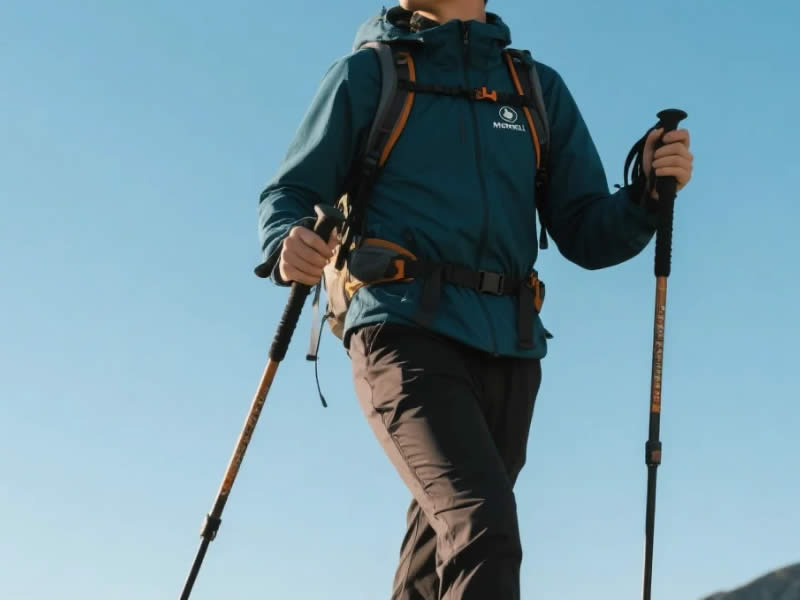
This is where Merrell really leans into lifestyle marketing. Their poles are available in eye‑catching colour matches – teal, orange, charcoal – that coordinate perfectly with their shoe and apparel lines. The branding is prominent, and the packaging emphasises “style” alongside “performance.” For many casual walkers, matching gear creates a sense of belonging and aesthetic pleasure. There is nothing wrong with that – looking good on the trail can boost confidence. But when you strip away the branding, you are essentially holding a generic pole that could be sold under a dozen other names. Compare Merrell’s £75 carbon model with Decathlon’s Forclaz MT900 at £50 – the latter has better lock reviews and a more robust tip. The premium you pay is largely for the Merrell badge.
Comparing with Specialist Competitors
Let us put Merrell side‑by‑side with established pole specialists:
- Leki Makalu (£80–100): superior 7075 aluminium, metal SpeedLock levers, longer warranty, and a track record of thru‑hike reliability.
- Black Diamond Trail Ergo Cork (£90): ergonomic grips, durable FlickLock, and replaceable carbide tips that last twice as long.
- Decathlon Forclaz MT900 Carbon (£50): lighter, equally good carbon layup, and better cam tensioning.
- Karrimor X‑Lite (£30): less refined, but at a third of the price, it offers similar basic functionality for casual use.
Against these, Merrell poles do not offer any unique technology – no shock absorption, no specialised grip angle, no innovative locking system. They are a “me‑too” product riding on brand recognition.
User Reviews and Real‑World Feedback
Scouring Amazon, Snow+Rock, and outdoor forums, the consensus is mixed. Positive reviews (about 70%) praise the comfort and lightness, often from users who bought them as a set with Merrell shoes. Negative reviews (30%) highlight premature lock failure, tip wear, and one user who snapped a carbon pole while crossing a stream – a clear durability concern. Several experienced hikers note that they would not trust Merrell poles on a multi‑day trek, preferring to invest in a specialist brand. The warranty is standard two years, but spare parts (tips, baskets) are harder to find than for Leki or Black Diamond, which have ubiquitous replacement availability.
Who Should Buy Merrell Poles?
Merrell trekking poles are a good choice if:
- You are a casual day‑hiker who walks less than 30 days a year.
- You value aesthetic coherence with your Merrell footwear and apparel.
- You find them on sale at 30–50% off (which happens frequently).
- You are not planning to tackle rocky, wet, or high‑mileage trails.
They are not recommended for:
- Thru‑hikers or long‑distance backpackers.
- Heavy or aggressive walkers who put high stress on poles.
- Those who demand maximum reliability and minimal maintenance.
- Budget‑conscious buyers who want the best performance per pound.
The Verdict: Worth the Price or Just Fashion?
At full retail price, Merrell trekking poles are overpriced for what they deliver. You are paying a significant premium for the logo and colour match – essentially a fashion tax. They are not purely fashion items; they function adequately for light to medium use. But they do not match the durability, engineering, or support network of dedicated pole brands. If you can buy them heavily discounted (under £40 for aluminium, under £55 for carbon), they become a reasonable buy – still not the best value, but not a rip‑off. At full price, however, you are better off with Leki, Black Diamond, or even Decathlon, which offer superior quality for the same or less money.
In summary, Merrell poles are a classic example of a brand extension that trades on reputation rather than innovation. They are stylish, comfortable for short walks, and will not embarrass you on a Sunday stroll. But if you take hiking seriously, they are a compromise you do not need to make. Save your money, or spend it on a product from a company that lives and breathes trekking poles. Your knees – and your wallet – will thank you.




