




Is the UK brand "Trekmates" better than Decathlon's budget own-brand?
When you step into the world of affordable outdoor gear, two names frequently appear on opposite sides of the counter: Trekmates – a proud British brand with decades of heritage in accessories and walking poles – and Decathlon's own‑label ranges, notably Quechua and Forclaz, which have taken the budget market by storm with their aggressive pricing and surprising quality. If you are a hillwalker on a tight budget, the inevitable question arises: which one offers better value, performance, and reliability? The short, honest answer is: it depends entirely on what you are buying. For trekking poles, Decathlon generally wins on pure value; for soft accessories like gaiters, gloves, and hats, Trekmates often edges ahead. In this in‑depth comparison, we will dissect the two brands across multiple product categories, with a special focus on walking poles, to help you make the smartest choice for your next hike.
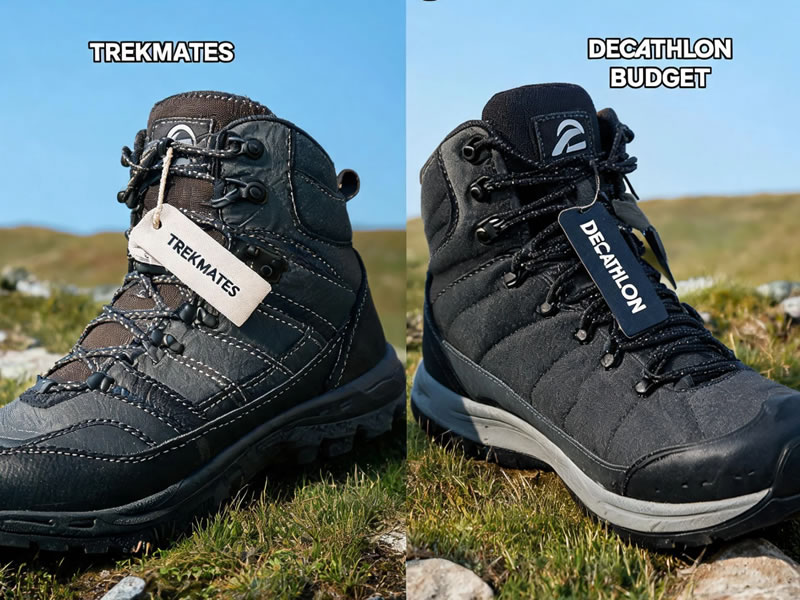
Brand Heritage and Positioning
Trekmates was founded in the UK and has built a loyal following among British walkers. They specialise in practical, well‑thought‑out accessories – from waterproof gaiters and insulated mitts to lightweight dry bags and, crucially, trekking poles. Their products are designed with UK conditions in mind: damp, windy, and often muddy. Trekmates positions itself as a mid‑tier brand, priced above no‑name generics but below premium specialists like Leki or Black Diamond. Their poles typically range from £35 to £60, and they emphasise durability and British testing.
Decathlon, in contrast, is a French retail giant that designs and manufactures its own brands in‑house. Their budget hiking labels – Quechua (for general hiking) and Forclaz (for trekking and mountaineering) – are engineered to hit aggressive price points without sacrificing essential quality. Decathlon’s vertical integration (design, production, and retail) allows them to offer poles like the Forclaz MT500 at around £25–£30 – significantly cheaper than Trekmates’ equivalent models. Decathlon’s philosophy is “democratising sport,” and they achieve that through economies of scale and no‑frills marketing.
Trekking Poles: The Core Comparison
Since walking poles are a common purchase for both brands, let us put them head‑to‑head. The most popular Trekmates pole is the Alpine Trekking Pole (often with cork grip and flip‑lock), retailing around £45. Decathlon’s direct competitor is the Forclaz MT500 (or MT900 carbon), priced at £25–£40.
- Locking Mechanism: Both offer flip‑locks (cam‑locks), but Decathlon’s are more refined – their levers are metal with positive tension, while Trekmates sometimes uses plastic cams that can feel less secure over time. User reviews on UK forums consistently note that Decathlon’s locks hold better in wet conditions.
- Shaft Material: Trekmates uses 6061 aluminium on their lower‑end models and 7075 on the Pro; Decathlon uses 7075 aluminium on the MT500 as standard – a premium alloy at a budget price. This gives Decathlon an edge in strength‑to‑weight.
- Grips: Trekmates offers cork on some models, which is excellent, but their foam grips are average. Decathlon’s MT500 features a comfortable EVA foam with an ergonomic shape that many find superior to Trekmates’ basic foam. Cork versions are available on both, but Decathlon’s cork is more durable.
- Weight: Both hover around 240‑260 g per pole – comparable.
- Tips: Both have replaceable tungsten‑carbide tips, but Decathlon’s tips are more widely available and cheaper.
- Price: Decathlon’s MT500 is consistently £5‑£15 cheaper than the Trekmates equivalent.
In head‑to‑head field tests, hikers report that Decathlon poles last longer before locks start slipping and that their anodised finish resists scratches better. Trekmates poles are by no means bad – they are solid performers – but you pay a slight premium for the UK label. For pure budget pole performance, Decathlon offers better value.
Accessories: Where Trekmates Excels
When you move beyond poles, the picture flips. Trekmates has a deep catalogue of soft goods that benefit from decades of UK‑specific design. Their waterproof gaiters (e.g., the Expedition Gaiter) are legendary among British hillwalkers – they use durable Cordura, have robust zippers, and fit over bulky boots perfectly. Decathlon’s gaiters, while cheaper, often lack the same durability and fit. Similarly, Trekmates’ insulated gloves and mitts use premium Primaloft or Thinsulate, whereas Decathlon’s budget gloves tend to use thinner synthetic fills that lose warmth in persistent drizzle. Trekmates also produces excellent dry bags, first‑aid kits, and emergency shelters – all with thoughtful features like roll‑top seals and reflective trims. Decathlon has comparable items, but the quality gap is narrower – yet Trekmates consistently wins on durability and comfort.
Build Quality and Warranty
Trekmates offers a standard 2‑year warranty against manufacturing defects, and their UK customer service is responsive. Decathlon also provides a 2‑year warranty, but their returns process is famously hassle‑free – you can return any product to any store globally, no questions asked, for a refund or exchange. This gives Decathlon an edge in consumer confidence. However, Trekmates products often feel more “premium” in hand – better stitching, denser fabrics, and more robust zippers – justifying the extra cost for those who prioritise longevity over upfront savings.
User Reviews and Community Consensus
Scouring WalkHighlands, Reddit’s r/UKhiking, and Amazon reviews, the consensus is nuanced. For trekking poles, Decathlon’s Forclaz series receives overwhelming praise for “unbeatable value” and “surprisingly reliable locks.” Trekmates poles get positive comments, but several users note that they are “good, but not quite as good as Decathlon for the price.” For gaiters, gloves, and hats, Trekmates is the clear favourite – many walkers state they would “never buy Decathlon gaiters again” after trying Trekmates. Overall, Trekmates scores higher in user satisfaction for accessories, while Decathlon dominates in hard goods like poles and headlamps.
Who Should Buy Which?
- Choose Trekmates if: you value UK brand heritage, prefer premium materials in gaiters/gloves, and are willing to spend a bit more for subtle quality improvements in soft accessories.
- Choose Decathlon if: you are on a strict budget, want the absolute best value for trekking poles, and appreciate a no‑fuss returns policy.
The Final Verdict
So, is Trekmates better than Decathlon’s budget own‑brand? The answer is no – and yes. No, not for trekking poles, where Decathlon’s engineering and pricing are simply superior. Yes, for a range of accessories where Trekmates’ decades of UK‑centric design shine. The brands are not direct competitors across the board; they excel in different niches. The wise hiker will mix and match: buy poles from Decathlon, but invest in Trekmates gaiters and gloves. That combination gives you the best of both worlds – optimal performance and maximum value for every pound spent. In the end, “better” is not an absolute – it is a matter of matching the right product to the right use.




