




How to stop a squeaking noise from the handle-to-shaft connection on Leki poles?
Few things are as irritating on a peaceful hillside as a persistent squeak‑squeak‑squeak emanating from your trekking poles with every stride. If you own a pair of Leki poles – renowned for their robust design and reliable SpeedLock systems – you might be surprised to encounter this annoying noise. The good news is that the squeak is almost never a sign of catastrophic failure; it is typically a friction‑related issue at the junction where the handle meets the upper shaft. In this comprehensive guide, we will diagnose the root causes, walk you through step‑by‑step solutions, and provide preventative maintenance tips to keep your poles silent and smooth for many miles to come.
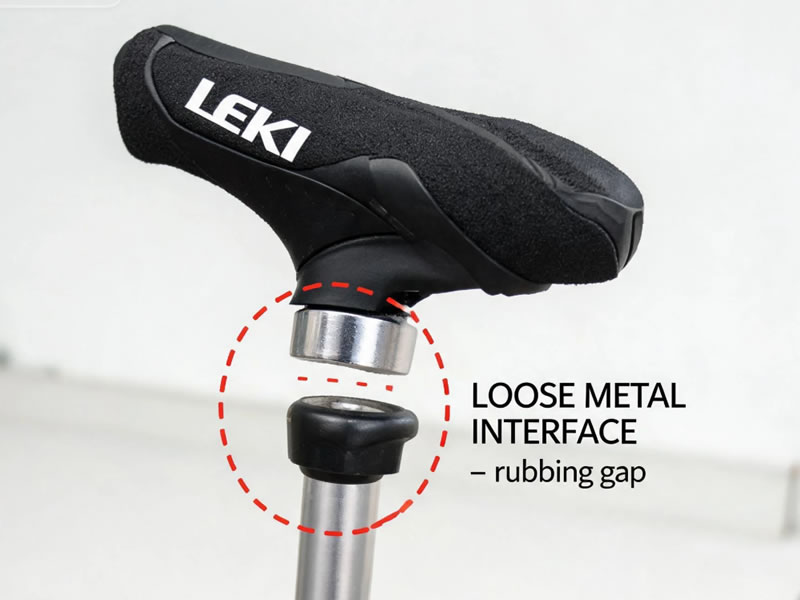
Understanding the Handle‑to‑Shaft Interface
On most Leki trekking poles, the handle (cork, foam, or rubber) is bonded or mechanically fastened to the top section of the shaft – usually a hollow aluminium or carbon tube. The “handle‑to‑shaft connection” is often a press‑fit or adhesive joint, but in many Leki models (especially those with interchangeable handles or extended grips), there is a small overlap where the shaft inserts into the handle’s core. Squeaking occurs when microscopic movement between these two surfaces generates friction – typically due to dirt, moisture, wear, or slight loosening of the bond over time. Unlike the lower locking mechanisms (which are easily adjustable), this upper joint is fixed, so the noise can seem mysterious.
Step‑1: Clean the Connection Thoroughly
The most common culprit is embedded grit or dried sweat. Over time, dust, salt, and skin oils accumulate in the tiny gap between the handle and the shaft. Each time you plant the pole, the handle flexes slightly, and that debris creates a high‑pitched squeak.
How to clean:
- First, if your Leki pole has a removable handle (some older models have a screw‑on top), unscrew it carefully. If not, do not force it – you will work with the assembly in place.
- Use a soft, dry cloth or a cotton swab to wipe the exposed portion of the shaft just below the handle. Remove any visible grime.
- For deeper cleaning, dampen a cloth with isopropyl alcohol (rubbing alcohol) and gently wipe around the joint. Alcohol evaporates quickly and cuts through grease. Avoid soaking the handle, as moisture can degrade foam or cork.
- Allow the area to dry completely for at least 15 minutes before testing.
Often, this simple cleaning eliminates the squeak immediately. If not, proceed to the next step.
Step‑2: Apply a Dry Lubricant or Wax
If cleaning alone fails, the friction surfaces need a thin, non‑oily lubricant that reduces squeaking without attracting more dirt. Avoid standard oils (WD‑40, 3‑in‑1) or greases – they seep into the handle material, soften adhesives, and can make the grip slippery, leading to a dangerous loss of control.
Recommended lubricants:
- Candle wax or beeswax – rub a small piece of unscented candle against the shaft where it enters the handle. The wax deposits a fine, dry film that reduces friction. This is the safest and most effective method.
- Silicone spray – spray a tiny amount onto a cloth, then wipe the shaft. Use a silicone‑based lubricant that is plastic‑safe; avoid aerosols with petroleum solvents.
- Graphite powder – sprinkle a pinch into the gap and work it in by twisting the handle slightly. Graphite is a classic dry lubricant for metal‑on‑metal and metal‑on‑composite interfaces.
Application method:
- Extend the pole and grip the handle firmly.
- Rotate the handle gently while applying your chosen lubricant to the shaft’s surface just below the handle. The goal is to allow a minuscule amount to migrate into the joint.
- Wipe off any excess with a clean cloth – you want a film, not a puddle.
Test the pole by planting it firmly on the ground and rocking it side‑to‑side. The squeak should be gone or significantly reduced.
Step‑3: Check for Looseness or Wear
If the noise persists, the handle may have developed a slight play due to wear of the internal sleeve or degradation of the bonding adhesive. This is more common in older poles or those used extensively in wet, freeze‑thaw conditions.
How to diagnose:
- Hold the handle in one hand and the shaft just below it in the other. Try to twist and pull gently – if you feel any movement or hear a clicking sound, the joint has loosened.
- In such cases, the long‑term fix is to re‑bond the joint. This requires epoxy adhesive (e.g., Araldite) and careful application:Remove the handle if possible (check if it has a retaining screw – some Leki models have a small grub screw under the top cap).Clean the shaft and the inside of the handle bore thoroughly with alcohol.Apply a thin layer of epoxy to the shaft, insert it into the handle, align it correctly, and clamp gently (use a rubber band to hold tension) for 24 hours.This is a delicate operation – if you are unsure, take the poles to a Leki dealer or an outdoor repair shop.
Step‑4: Address the Locking Mechanism (Indirect Cause)
Sometimes the squeak is not actually from the handle‑shaft joint but from the upper locking collar (on twist‑lock models) or the SpeedLock lever vibrating against the handle. If you have a twist‑lock, the internal expander may be rubbing inside the shaft, and the noise transmits upward.
- For twist‑locks: fully extend the pole, open the twist‑lock, clean the inside of the upper tube, and apply a tiny amount of silicone grease to the expander’s threads (not the clamping surface). Re‑tighten.
- For SpeedLock (flip‑lock): check that the cam lever is not overly tight, which can distort the shaft and transfer vibration. Adjust the hex screw so that the lever closes with moderate force – not too loose, not too stiff.
After adjusting, test again – you may find the squeak was a red herring.
Step‑5: Lubricate the Internal Shaft Surface
In some Leki poles, the upper section is a telescopic tube, and the handle is attached to the outer tube. Squeaks can arise from the inner shaft rubbing against the inner wall of the handle’s bore due to flex. Applying a dry lubricant to the entire upper section (not just the joint) can help.
- Remove the lower sections (so you only have the top section with handle).
- Wipe the entire surface with a dry cloth.
- Apply a light dusting of talcum powder or graphite to the shaft, then reassemble. The powder acts as a barrier between moving parts.
Preventative Maintenance to Avoid Future Squeaks
- After every hike, especially in wet or muddy conditions, wipe down the entire pole with a soft cloth, paying extra attention to the handle‑shaft junction.
- Store poles with the locks released and the sections fully separated (if possible) to relieve stress on all joints.
- Avoid leaving poles in hot cars or direct sunlight – heat can soften adhesives and cause handles to shift.
- Periodically (every 50–100 miles) apply a fresh wax film to the upper shaft – a 30‑second routine that prevents grit from embedding.
When to Seek Professional Help
If you have tried all the above and the squeak persists, or if you notice visible cracks in the handle or shaft, it is time to consult a specialist. Leki offers a repair service in the UK (via their distributor); they can replace handles or shafts at a reasonable cost. Remember that a squeak is not just an annoyance – it can indicate a compromise in structural integrity. Do not ignore it if accompanied by wobble or looseness.
The Final Word
A squeaky handle‑to‑shaft connection on Leki poles is almost always fixable with cleaning and a suitable dry lubricant. Wax is your best friend – it is cheap, safe, and effective. Avoid over‑tightening locks, keep the joint clean, and your poles will reward you with years of silent, reliable service. The next time you hear that tell‑tale chirp, follow these steps, and you will be back to enjoying the sounds of nature – not your gear.




