




What causes a rattling sound inside a folding trekking pole shaft?
If you have ever been mid‑stride on a tranquil trail, only to be accompanied by an annoying clink‑clink‑clink from your trekking poles, you know how distracting it can be. That internal rattling sound – seemingly coming from nowhere inside the shaft – is a common complaint among hikers, especially those using folding (Z‑style) or telescopic trekking poles. The good news: it is rarely a sign of imminent failure. The bad news: it can indicate wear that, if ignored, might compromise the pole’s longevity. In this comprehensive guide, we will dissect every possible cause of that rattling noise, help you pinpoint the source, and provide step‑by‑step fixes to silence your poles for good.
Understanding the Anatomy of a Folding Pole
Most modern trekking poles fall into two categories: telescopic (sections slide inside each other, secured by twist‑locks or flip‑locks) and folding (sections connected by an internal tension cord, which keeps them assembled when extended, and allows them to collapse into a compact bundle – think Black Diamond’s Z‑Poles or similar designs). The rattling sound you hear nearly always originates from the internal components, not the external surfaces. Knowing this helps you focus your diagnostic efforts.
Cause 1: The Internal Tension Cord – Loose or Frayed
In folding poles, an internal elastic cord (usually a bungee‑style string) runs through the centre of all sections, keeping them together when folded and providing tension when extended. Over time, this cord stretches, loses elasticity, or frays at the knots or anchors. When the cord becomes slack, the sections can shift laterally or rotate slightly, causing the metal or carbon tubing to knock against the cord guides or against each other. This produces a distinct, rhythmic rattling that changes with your stride.
How to check: With the pole fully extended, gently shake it side‑to‑side and listen. If the rattle seems to come from the middle or upper joints, the cord is likely the culprit. Also, try folding the pole – if the cord does not pull the sections together snugly when collapsed, it is definitely too loose.
Fix: Most folding poles allow you to access the cord by removing the top handle or the bottom tip. You can re‑tie the knot to shorten the cord and increase tension. Alternatively, replace the entire cord (readily available as repair kits). Follow the manufacturer’s instructions; this is a simple DIY fix for most models.
Cause 2: Loose Locking Components – Push‑Buttons and Springs
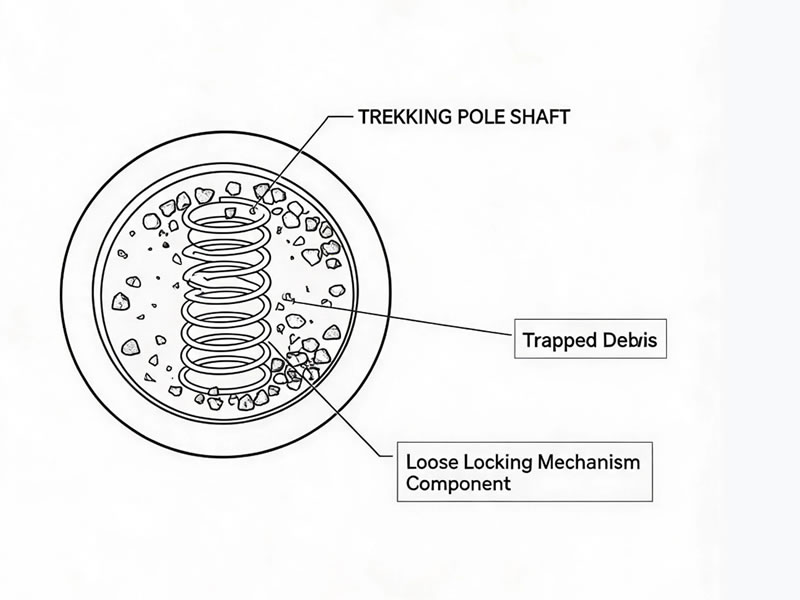
Some folding poles use a push‑button or spring‑loaded pin to lock each section when extended. If the button’s internal spring weakens or the retaining clip loosens, the metal pin can vibrate within its housing, creating a high‑frequency rattle. Similarly, the spring may have detached partially, allowing the pin to bounce as you walk.
How to check: Extend the pole and push each button individually – they should click firmly into place. If you can push the button in more than a few millimetres without resistance, the spring may be worn. Also, listen closely while tapping the pole on the ground; if the rattle is localised near a joint, focus there.
Fix: Tighten any visible screws or retaining rings around the button assembly. If the spring is damaged, replacement parts are available. Some buttons can be disassembled with a small hex key; others require a specialist repair. For most users, applying a small drop of light machine oil to the button mechanism (not the locking surface) can quieten it temporarily, but replacement is the permanent solution.
Cause 3: Foreign Debris – Sand, Dirt, or Small Stones
When you plant your poles in muddy or sandy terrain, particles can get lodged inside the shaft through tiny gaps at the joints, the tip, or the locking mechanism. As the pole flexes and vibrates, these particles tumble around, producing a gritty rattling or scraping sound. This is especially common after walking on coastal paths or through loose scree.
How to check: Remove the lower sections (if telescopic) or separate the folding sections fully, and shake each segment over a clean surface. If you see dust or grit falling out, that is your culprit. You may also hear the rattle shift position when you tilt the pole.
Fix: Thoroughly clean each section. For folding poles, detach the sections (if possible) and rinse with water, then dry completely. Use a pipe cleaner or a long brush to reach inside. Compressed air can blow out stubborn particles. Once clean, apply a light silicone spray to the internal surfaces to prevent future sticking, but wipe off excess to avoid attracting more dirt.
Cause 4: Worn Internal Bushings or Spacers
Inside each joint, most poles have plastic or nylon bushings that centre the sections and reduce friction. Over time, these bushings wear down, crack, or become displaced. When they lose their snug fit, the shaft sections can wobble and make contact with each other or with the outer tube, creating a metallic or plastic rattling sound.
How to check: Extend the pole and try to wiggle each section sideways – if there is noticeable play, the bushing is likely worn. The rattle may also be intermittent, depending on the angle of the pole.
Fix: Bushings are often replaceable. Check with the manufacturer for spare parts. In some cases, wrapping a single layer of plumber’s PTFE tape around the worn bushing can tighten the fit temporarily, but this is not a long‑term solution. Professional replacement is recommended.
Cause 5: Internal Coating or Anodising Flakes
Aluminium poles often have an anodised coating; carbon poles may have a clear coat. With heavy use, this coating can flake off inside the tube, creating small particles that roll around and rattle. This is less common but can happen after years of use or if the pole has been subjected to excessive flexing.
How to check: Shake the pole gently – if you hear a fine, powdery rattle, it may be flakes. Inspect the inside of each section with a torch; you might see discolouration or peeling.
Fix: There is no perfect fix. You can try to flush the tube with compressed air or a mild solvent to remove loose flakes, but if the coating continues to degrade, the pole is nearing the end of its life. Consider replacing it for safety.
Diagnosing the Exact Source – A Step‑by‑Step Approach
- Isolate the rattle: Without extending the pole, shake it while collapsed. If you hear the rattle, the issue is inside one of the sections. Extend it fully – if the rattle disappears, it may be due to sections moving when collapsed. If it remains, keep going.
- Tap each joint: Hold the pole horizontally and tap each joint with your knuckle. Listen for differences – the louder the rattle, the closer you are to the source.
- Remove sections: If your pole allows (most do), separate each section and shake individually. This will pinpoint the exact segment.
- Inspect visually: Use a torch to look inside each section for debris, loose parts, or visible damage.
Preventing Rattles in the Future
- Regular cleaning: After every muddy hike, disassemble and clean all sections. Let them dry thoroughly before reassembly.
- Check cord tension: For folding poles, test the cord tension monthly – if it feels slack, tighten or replace.
- Lubricate joints sparingly: A dry graphite powder or silicone‑based lube applied to the internal surfaces reduces friction and prevents wear, but avoid excessive amounts.
- Store properly: Always collapse the poles and release all locking tension when not in use – this prolongs the life of springs, cords, and bushings.
- Inspect for damage: After a fall or a hard impact, check for cracks or bends – a bent section can cause misalignment and rattling even without other issues.
When to Seek Professional Help
If you have tried all the above and the rattle persists, or if you notice any cracks, dents, or a noticeably weakened shaft, do not ignore it. A rattling can be a warning sign that the structural integrity is compromised. Send your poles to the manufacturer’s authorised service centre for a full inspection and repair. For Leki, Black Diamond, Komperdell, or other major brands, replacement parts and servicing are available.
The Final Word
A rattling sound inside a folding trekking pole shaft is usually easy to diagnose and fix – whether it is a slack cord, a loose button, or simple grit. With the steps outlined above, you can confidently identify the cause and restore your poles to silent, reliable service. Regular maintenance not only keeps your poles quiet but also extends their lifespan, ensuring they support you safely on every adventure. So next time you hear that unwelcome percussion, do not panic – just follow our guide, and you’ll be back to enjoying the symphony of nature in no time.




