




Why Does My New Pole Make a Clicking Noise When I Put Weight on It?
If you’ve just bought a brand‑new telescopic pole—whether for a hiking stick, a camera monopod, a boat hook, or a tent centre pole—and you hear a distinct click every time you lean on it, you’re not alone. This is one of the most common frustrations among outdoor enthusiasts and DIY users alike. The good news: in most cases, the click is not a sign of imminent failure, but it is a warning that something isn’t perfectly set up. Ignoring it can lead to wear, instability, or even a sudden collapse at the worst possible moment.
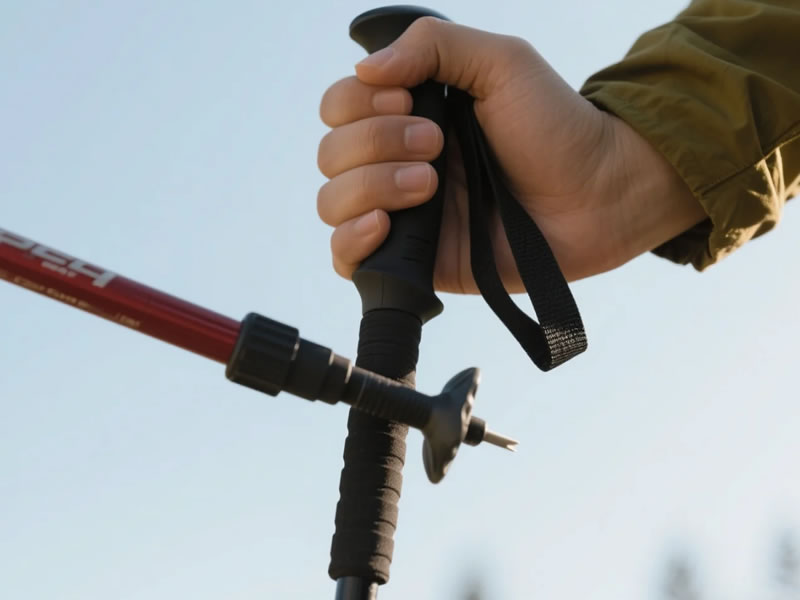
This article dives deep into the physical and mechanical reasons behind that annoying noise, gives you a step‑by‑step diagnostic routine, and provides actionable fixes—all while helping you understand whether you should return the pole or keep it with confidence.
1. The Usual Suspects: Why Poles Click Under Load
When you apply axial or bending force to a pole, the components shift microscopically. A click means that shift is not smooth—it’s sudden, like a tiny slip between two mating surfaces. Here are the primary causes:
a. Insufficient Torque on Locking Collars
Most telescopic poles use twist‑lock or flip‑lock mechanisms. If the collar is even half a turn too loose, the inner and outer tubes aren’t clamped firmly. When weight is applied, the inner tube slides down a fraction of a millimetre until it hits the locking friction zone, producing a sharp metallic click. New poles often ship with collars set for storage, not for use.
b. Lack of Lubrication Between Sections
Dry aluminium or carbon‑fibre surfaces have a high static coefficient of friction. Under load, the stick‑slip effect causes the sections to jerk rather than move continuously. That jerk is heard as a click. Many manufacturers apply a light grease at the factory, but it can dry out during shipping or be wiped off by handling.
c. Debris or Manufacturing Burrs
Even a tiny metal shaving, grain of sand, or paint fleck trapped between the overlapping sections can create a localised pressure point. When you bear down, that particle deforms or pops out of its seat, creating an audible click. New poles are especially prone to this because they haven’t been “worn in.”
d. Incomplete Engagement of Twist‑Lock Cams
Some high‑end poles use an internal cam that expands when you twist. If the cam isn’t fully expanded (because you stopped twisting too soon), it can ratchet slightly under load. This is more common when users are afraid to overtighten.
e. Faulty Joint Design or Tolerance Issues
Less frequently, the click is due to a manufacturing defect—ovality, incorrect taper, or a missing anti‑rotation pin. In these cases, no amount of tightening will eliminate the noise because the metal itself is flexing past a poorly machined stop.
2. How to Diagnose the Click Like a Pro
Before you grab a tool, perform these simple tests outdoors (or over a carpet) to pinpoint the source:
- Test each section individually: Extend only the bottom section, put weight on it, and listen. Then extend the middle, then the top. This isolates which joint is the culprit.
- Rotate the pole: Sometimes the click only happens when the load is applied at a certain rotational angle. Mark that angle with tape—it often points to a burr on one side of the tube.
- Remove and reseat: Fully collapse the pole, then extend it again with a deliberate, firm twist at each lock. Many clicks disappear simply because you’ve re‑indexed the sections.
3. Step‑by‑Step Fixes (from Easiest to Most Involved)
Start with the non‑invasive methods—they solve over 80% of cases.
✅ Tighten the Locking Mechanisms
For twist‑locks: turn each collar clockwise until you feel significant resistance, then give it another quarter turn. Do not over‑tighten to the point you can’t unlock it, but most users are too gentle. For flip‑locks: adjust the screw on the lever to increase clamping pressure by 1–2 full rotations.
✅ Apply a Dedicated Silicone Grease
Wipe the inner tube clean with a cloth, then apply a thin, even coat of silicone‑based lubricant (never petroleum‑based—it degrades plastics). Extend and collapse the pole a few times to distribute it. The click should become a dull thud or vanish entirely.
✅ Clean the Joints
Use a soft brush or compressed air to remove any grit inside the female section. If you find a visible burr, gently smooth it with fine (1000‑grit) sandpaper—but do this sparingly, as removing material changes the fit.
✅ Check for “False Lock”
If your pole has a push‑button pin (common in tent poles), press the button firmly and rotate it to ensure the pin fully engages the hole. A partial engagement gives a distinctive click as the pin edge rides over the hole rim.
4. When to Return or Replace the Pole
If you’ve performed all the above and the click persists—especially if you also feel a slight wobble or the pole slowly compresses under sustained weight—it’s a structural issue. Contact the manufacturer immediately. Most reputable brands offer a 1‑year warranty and will exchange the defective section. Do not “wait for it to break in”; a clicking defect in a new pole often worsens with use and can lead to a sudden snap during a critical moment (e.g., crossing a stream or supporting a heavy camera).
5. Long‑Term Prevention and Maintenance
To keep your pole click‑free for years:
- Clean and re‑grease every 20 hours of heavy use—especially after exposure to saltwater or dust.
- Store the pole partially extended (not fully collapsed) to prevent the seals from taking a permanent set.
- Mark your preferred extension length with a permanent marker so you don’t have to “hunt” for the sweet spot each time.
- Avoid using the pole as a pry bar—lateral forces can bend the locking cams, creating permanent play.
6. Final Verdict: Should You Worry?
In short: a click on a new pole is almost always user‑adjustable. It is rarely a safety hazard if addressed promptly. However, if the click is accompanied by a grinding sensation or visible scoring on the tube, stop using it and file a claim. For the majority, a little tightening and a dab of grease will restore the solid, silent feel you expected.
Remember, your pole is a precision instrument—treat it with the same care you’d give a bicycle shock or a fishing reel. Now go out, test those fixes, and enjoy the peace of mind that comes with a quiet, dependable tool




