




Do folding poles have a lower weight capacity than telescopic poles?
When you're shopping for trekking poles, one of the first decisions is whether to go with a folding (Z‑style) design or a traditional telescopic model. Both have loyal fans, but a common question—especially for heavier hikers—is whether folding poles sacrifice strength for packability. The short, honest answer is: generally, yes—but not always. Folding poles often have lower maximum user weight ratings than telescopic poles of similar price and material, but premium folding models can close the gap significantly. In this comprehensive guide, we'll dissect the structural reasons, compare real‑world numbers, and help you decide which style suits your weight and walking style.
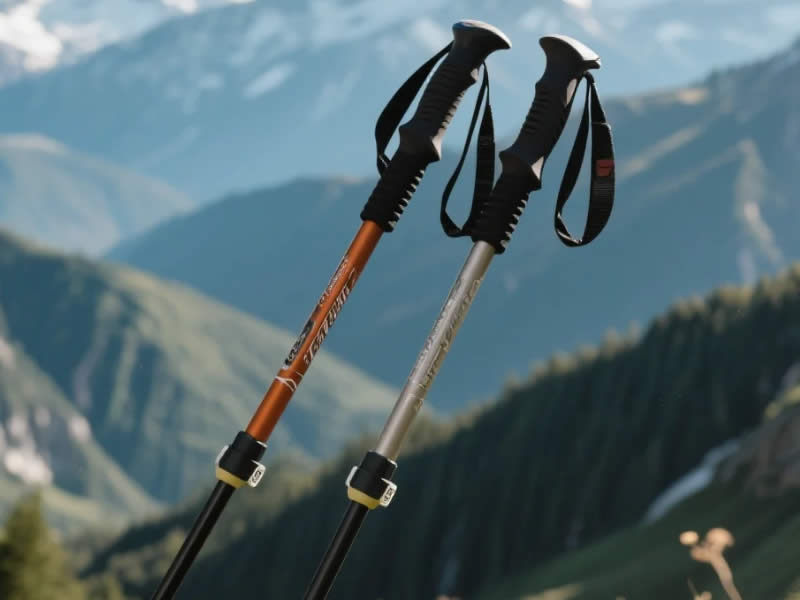
1. What's the Structural Difference?
Telescopic poles consist of 2 or 3 sections that slide inside one another. The sections overlap by several inches, and a locking mechanism (flip‑lock or twist‑lock) clamps the outer tube around the inner tube. This overlap creates a long, continuous load‑bearing surface. When you push down, the force is distributed across that overlapping area, reducing stress on any single point.
Folding (Z‑style) poles use 3 or 4 sections connected by an internal cord. Each section is a separate tube of similar diameter, joined at the ends by metal or plastic ferrules. When unfolded, the ferrules lock together, creating a rigid column. However, the joint is short—typically only 1–2 inches of engagement—and relies on a small pin or a cam to hold the sections together. This minimal overlap and the presence of a cord that runs through the entire pole create potential weak points.
2. Why Folding Poles Usually Have Lower Capacity
There are four engineering reasons why folding poles tend to be rated lower:
- Thinner wall thickness – To keep weight down, folding poles use thinner tube walls. Many ultralight folding models have walls as thin as 0.7‑0.8 mm, whereas telescopic poles often use 1.0‑1.2 mm walls for the same diameter. Thinner walls buckle more easily under heavy vertical loads.
- Short ferrules – The connecting ferrule is small; if it deforms even slightly, the joint becomes loose, and the pole can slip or collapse. This limits the static load they can handle.
- Multiple moving parts – Each joint adds potential for play or failure. A telescopic pole has one lock per joint; a 3‑section folding pole has two joints, each with its own small locking pin or cam. More components mean more possible points of weakness.
- Internal cord tension – The cord keeps sections together but does not bear weight; it can stretch over time, allowing micro‑movement that accelerates wear.
Consequently, most mass‑market folding poles are rated for 80–110 kg (175‑240 lbs) , while standard telescopic poles often carry 100–140 kg (220‑310 lbs) ratings.
3. Exceptions: Premium Folding Poles Can Match Telescopic
Not all folding poles are weak. High‑end models from brands like Black Diamond, Leki, and Komperdell use thicker 7075‑T6 aluminium or high‑modulus carbon fibre with reinforced joints. For example:
- Black Diamond Distance Carbon Z – rated for 120 kg (265 lbs) despite being a folding pole.
- Leki Micro Vario Carbon – uses a hybrid folding/telescopic design (lower sections fold, upper telescopes) and is rated for 125 kg.
- Komperdell C3 Carbon – some folding versions support up to 130 kg.
These poles achieve their capacity through oversized ferrules, dual‑pin locking, and robust wall thickness (often 1.0 mm for carbon). They can match or even exceed cheap telescopic poles. However, they cost 2‑3× more.
4. What Do Manufacturers' Tests Show?
Independent lab tests and brand‑published data reveal a clear trend:
| Pole Type | Average Rating (Entry‑level) | Average Rating (Premium) |
|---|---|---|
| Telescopic (2‑3 sections) | 110‑130 kg | 140‑160 kg |
| Folding (Z‑style) | 85‑105 kg | 120‑140 kg |
So, at comparable price points, telescopic wins. But when you pay for premium folding, the difference shrinks to only 10‑15 kg—a margin that doesn't matter for most users under 100 kg.
5. Real‑World Considerations Beyond the Spec Sheet
Rated weight isn't the whole story. Folding poles face additional practical challenges:
- Impact resistance – The short ferrule can get damaged if you strike a rock sideways. A telescopic pole's longer overlap absorbs lateral forces better.
- Mud and grit – Folding poles have more crevices where dirt can jam the locking pins, causing failure to engage fully. This reduces effective capacity in the field.
- Cord fatigue – Over time, the internal cord stretches, creating slack. A slack cord means the joints aren't pulled tightly together, increasing play and lowering the load they can take before slipping.
Therefore, even if the spec says 120 kg, a folding pole may effectively hold less after a season of use unless you maintain it (re‑tension the cord, clean joints). Telescopic poles, with simpler friction locks, are more forgiving of neglect.
6. Who Should Choose Which?
- Ultralight hikers and runners – Folding poles are ideal because they pack small and weigh little. If you're under 85 kg, even entry‑level folding poles will suffice.
- Heavy hikers (over 100 kg) – Unless you buy a premium folding model, choose telescopic. The added overlap and thicker walls give you a safety buffer.
- Winter / expedition users – Telescopic poles with rugged locks are more reliable in snow and ice, where folding joints can freeze or clog.
- Travelers – Folding poles fit in carry‑on luggage, making them the only choice for flying.
7. How to Extend the Lifespan and Capacity of Any Pole
Regardless of type, you can maximise holding strength:
- Use two poles – This halves the load on each.
- Adjust length correctly – Longer poles have more leverage, increasing stress on joints. Keep them as short as practical.
- Keep friction surfaces clean – Dirt reduces grip, especially on telescopic locks.
- Retension the cord (folding) – Most folding poles have a screw at the handle or tip to adjust cord tension. Do this every few months.
- Avoid prying or side‑loading – This kills both types, but folding poles are more vulnerable.
8. The Verdict – Capacity Gap Is Real but Narrowing
To directly answer the question: Yes, folding poles generally have a lower weight capacity than telescopic poles, but the difference is most pronounced in budget models. A £30 folding pole might hold only 90 kg, while a £30 telescopic pole holds 120 kg. However, a £150 folding pole can hold 130 kg, matching a mid‑range telescopic pole. So the rule is: if you're over 100 kg and on a budget, stick with telescopic. If you're lighter, or willing to invest, folding poles offer unmatched portability without sacrificing safety. Always check the manufacturer's specific rating—don't rely on generalisations. And remember, your technique and maintenance influence real‑world capacity more than the design alone. Choose wisely, and enjoy the hills with confidence.




