




Do shock‑absorbing poles have a higher or lower weight limit than rigid ones?
When choosing trekking poles, many hikers believe that a built‑in shock absorber—usually a spring or elastomer inside the shaft—makes the pole stronger and more capable. The logic seems intuitive: absorbing impact must protect the structure, so it should handle more weight. However, the reality is the opposite. Shock‑absorbing poles generally have a lower maximum user weight limit than rigid poles of comparable material and build quality. In this in‑depth article, we'll explain the engineering reasons, quantify the difference, and help you decide which type suits your weight and hiking style.
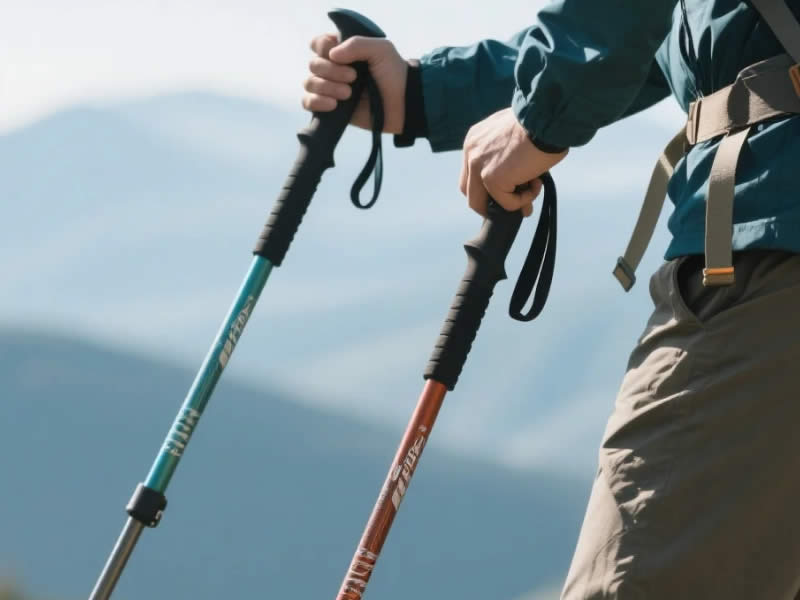
1. How Shock Absorbers Work – And Why They Weaken the Load Path
A shock‑absorbing pole contains a spring or a dense rubber insert, typically located just above the tip or inside the lower section. When you plant the pole, the compression force is partially absorbed by the spring, which compresses and then rebounds, smoothing the impact on your wrists and shoulders.
The problem is that the spring is a moving component placed in series with the shaft. This creates two structural issues:
- Added compliance – Under sustained vertical load, the spring compresses noticeably, effectively shortening the pole. This changes your posture and reduces the mechanical advantage of the lock. More importantly, the spring itself has a finite compression limit; beyond that, it bottoms out, transferring the full load to the locking mechanism and tube walls—but now with an additional metal‑to‑metal impact that can dent the internal stop.
- Extra joint – The shock unit is a separate assembly with its own housing, bushings, and retaining pins. Each of these parts can wear, loosen, or fail under high load, introducing a failure point that rigid poles lack.
Consequently, manufacturers derate shock‑absorbing models to account for these vulnerabilities.
2. Typical Weight Limits – Rigid vs. Shock
Based on data from major brands (Leki, Komperdell, Black Diamond, and budget equivalents), here are typical maximum user weight ratings for 3‑section aluminium poles:
| Pole Type | Entry‑level (6061 alloy) | Premium (7075 alloy) |
|---|---|---|
| Rigid (twist or flip‑lock) | 110‑120 kg | 130‑150 kg |
| Shock‑absorbing (similar diameter) | 95‑105 kg | 115‑125 kg |
So, at the same price tier, shock poles have a 10‑20 kg (22‑44 lbs) lower capacity—roughly a 15‑20% reduction. This gap holds true across most brands. For example, Leki's rigid Makalu series is rated at 140 kg, while the shock‑equipped Khumbu (with similar tube dimensions) is rated at 120 kg.
3. Why the Spring Doesn't Help Under Steady Load
The shock absorber is designed for dynamic loads—the spike of impact when the tip hits the ground. It offers no benefit under static compression, like when you lean heavily on the pole while resting or during a steep step. In fact, the spring creates a "dead zone" where energy is stored, and if the spring bottoms out, the shock load is transmitted to the end‑stops abruptly, which can cause wear over time.
For a 120‑kg hiker, repeatedly bottoming out the spring (which often occurs at loads above 100‑110 kg) will fatigue the internal stop, leading to a clunky feel and eventual loss of damping—and potentially damaging the locking wedge that holds the sections.
4. Real‑World Experiences from Heavy Users
Outdoor forums and user reviews consistently show that heavier walkers (over 110 kg) avoid shock‑absorbing poles. Many report that the spring compresses noticeably with every step, making the pole feel "spongy" and less responsive. Worse, after a few hundred kilometres, the shock unit becomes noisy and loose, reducing the effective load the pole can take before slipping. Conversely, rigid poles maintain their stiffness and holding power for much longer, even under heavy use.
Guides and professional mountaineers almost universally prefer rigid poles for high‑load applications—carrying heavy packs, winter snowshoeing, or supporting a tarp in high winds—because the absence of moving parts means one less thing to break.
5. Exceptions – When Shock Poles Can Match Rigid
A few high‑end shock models, like the Komperdell Anti‑Shock with a titanium spring and reinforced housing, or the Leki Soft Antishock system, are built with thicker walls and stronger alloys to compensate. These can reach 130‑135 kg ratings, approaching the lower end of premium rigid poles. However, they are also significantly more expensive (often 2× the price). For the same budget, you can buy a rigid pole with a higher rating and a simpler, more durable design.
There is also the lockable shock feature found on some poles—a switch that disables the spring, turning the pole into a rigid one. When locked, the load capacity increases to the rigid rating of that same shaft. So if you use such a pole, you effectively have two capacities: lower when unlocked, higher when locked. This is a good compromise for hikers who want occasional shock absorption on mild terrain but need full strength for descents.
6. The Maintenance Factor – More Moving Parts, More Risk
Shock‑absorbing poles require periodic servicing: cleaning the spring, lubricating the housing, and checking for rust or wear. If neglected, the internal components corrode or bind, which can suddenly reduce the effective load limit. Rigid poles need only occasional lock cleaning and lubrication, making them more reliable for long‑term heavy use.
7. Which Should You Choose?
- If you weigh over 100 kg (220 lbs) or carry heavy packs – Choose rigid poles with a clear rating of 130‑140 kg. The loss of shock absorption is a small price for safety and durability. Your knees will still thank you if you use proper technique and rubber tips.
- If you weigh under 80 kg (175 lbs) and hike on mostly soft trails – Shock‑absorbing poles can add comfort. The capacity reduction is unlikely to affect you, and the reduced jarring on your wrists is a genuine benefit.
- If you're in between – Consider a lockable shock model, or simply choose rigid and add shock‑absorbing tips (like rubber boots with internal air chambers) that provide cushioning without compromising the pole's structural integrity.
8. Final Verdict – Lower, and Here's Why
To directly answer the title: Shock‑absorbing poles have a lower weight limit than rigid ones—typically 10‑20 kg less for equivalent models. This is due to the spring's compliance, the extra mechanical joints, the increased maintenance needs, and the manufacturer's conservative derating to avoid warranty claims. Unless you are a lighter hiker who prioritises joint comfort over maximum capacity, rigid poles are the safer, stronger, and more durable choice. Always check the specific rating printed on the product, and never assume that "shock" means "tougher"—in engineering, simpler often means stronger.




