




Can I use my trekking poles for the Yorkshire Three Peaks in one day?
Absolutely – and in fact, you'd be making a serious mistake to leave them behind.
The Yorkshire Three Peaks challenge – Pen‑y‑ghent, Whernside, and Ingleborough – is a classic British endurance test. The circular route covers 24 miles (39 km) with over 5,200 feet (1,580 m) of ascent, and most walkers aim to complete it within 12 hours. That's a long, punishing day on your feet, and your knees, ankles, and lower back will be screaming for mercy long before the final summit.
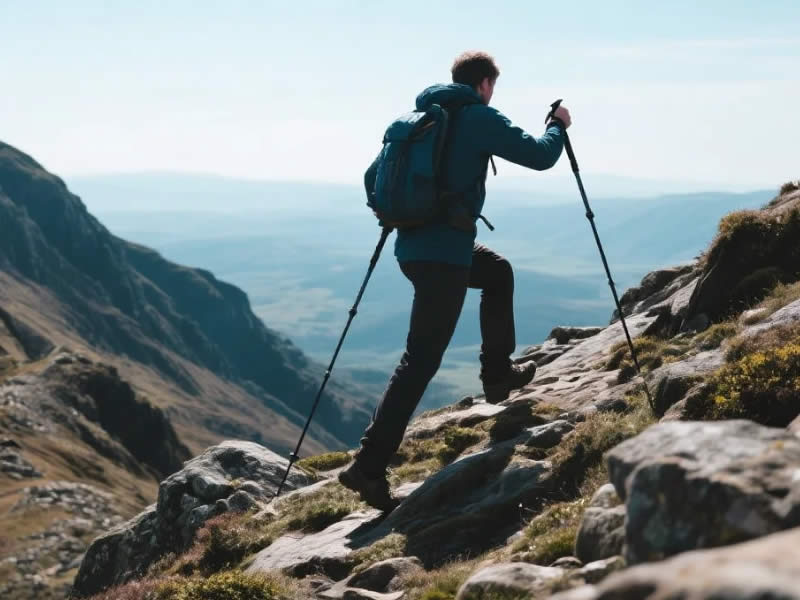
Trekking poles are not a luxury on this route; they are a practical, performance‑enhancing tool that can make the difference between a triumphant finish and a hobbling, cramp‑ridden slog. In this guide, we'll explain exactly why you should use them, how to set them up for the specific demands of this walk, and what to avoid.
Why poles are a game‑changer for the Three Peaks
1. They save your knees – especially on the descents
The descents from Whernside (the highest peak at 736 m) and Pen‑y‑ghent are notoriously steep and punishing. The limestone paths are often uneven, and the constant jarring can aggravate knee joints. Research shows that trekking poles can reduce compressive forces on the knees by up to 25% when descending – that's a massive saving over 24 miles.
2. They improve balance and confidence on technical sections
Ingleborough's summit approach involves a rocky, limestone pavement that can be slippery when wet. Poles give you four points of contact, which is invaluable on loose scree or wet rock. You'll plant more confidently, reducing the risk of a twisted ankle or a stumble that could ruin your day.
3. They help maintain rhythm and speed
On the flat sections between peaks (notably the long, monotonous valley between Pen‑y‑ghent and Whernside), poles help you maintain a steady, efficient stride. They engage your upper body, turning walking into a full‑body exercise that propels you forward with less perceived effort. Many walkers report a 5‑10% increase in walking speed over long distances when using poles correctly.
4. They reduce hand swelling
When your arms hang by your sides for hours, blood pools in your hands, leading to that unpleasant puffiness. Poles keep your hands elevated and gently working, which helps maintain circulation.
Choosing the right poles for the Yorkshire Three Peaks
Not all poles are equal for this kind of endurance walk. Here's what to prioritise:
- Lightness – You'll be swinging them for 8‑12 hours, so every gram counts. Carbon fibre poles are lighter but more prone to damage if mistreated; good aluminium (7075 alloy) is a robust compromise. Aim for under 250g per pole.
- Reliable locking – Flip‑locks (cam locks) are far superior to twist‑locks for long days. They are easier to adjust with tired, sweaty hands and are less likely to slip under load. Check that the locking screw is tight before you start.
- Comfortable grips – Cork or foam grips absorb sweat and are more comfortable than rubber over many hours. Ensure the grip extends far enough for a comfortable hold when climbing (you'll often choke up).
- Carbide tips – The route includes road sections, so you'll need rubber tip protectors for those parts. But on the rocky uplands, carbide tips give excellent bite on limestone and wet gritstone.
- Baskets – Small baskets (2‑3 inches) are useful to stop the pole sinking into soft peat or mud, which you'll encounter on the lower slopes. They also help when crossing boggy patches.
Setting up your poles for the Three Peaks
Length adjustment
- On flat ground – Set the pole so your elbow forms a 90‑degree angle when the tip is on the ground. This is your baseline.
- For ascents – Shorten the poles by 5‑10 cm. This keeps your elbow from rising too high and allows you to plant the pole on the slope ahead of you.
- For descents – Lengthen them by 5‑10 cm. This gives you a longer reach to plant the pole lower down the slope, acting as a brake.
Many walkers adjust their poles multiple times during the day. If you have flick locks, this takes seconds. If you have twist locks, you might need to stop and use two hands – a hassle you can avoid.
Hand positioning
Use the straps correctly. Put your hand up through the strap, then grip the handle. The strap should go around your wrist so that you can lean weight on the strap without having to squeeze the grip tightly. This saves grip fatigue and lets you relax your hands on the long flats.
Technique tips for a long day
- Plant at an angle – On uphills, plant the pole slightly ahead of your foot and push off. On downhills, plant it further forward and use it to brake.
- Swing in rhythm – Let the poles move opposite to your legs (right leg, left pole). This builds a natural, energy‑efficient rhythm.
- Relax your grip – Hold the handles lightly. The straps should do most of the work. If you finish with sore hands, you're gripping too hard.
- Use rubber feet on roads – The route includes several miles of tarmac. Carbide tips on hard surfaces make a loud clacking sound and can become blunt; rubber tips add cushioning and reduce noise. Carry a pair of rubber boots and slip them on before each road section (you can easily slide them off for the rough stuff).
What to carry in case of pole issues
- A spare locking screw or adjustable wrench – flip‑lock screws can loosen over time. A small multi‑tool with a hex key is wise.
- Extra rubber tips – They can wear out or fall off. Carry a spare pair.
- A pole repair sleeve – Rarely needed, but if you have a lightweight aluminium pole, a small piece of tubing can serve as a splint in an emergency.
The verdict – yes, and strongly recommended
To directly answer: Yes, you can (and absolutely should) use trekking poles for the Yorkshire Three Peaks in one day. They will protect your knees, boost your speed, improve your stability, and help you maintain a steady pace across the entire 24 miles. Just choose a lightweight, reliable pair with flick locks, set them up correctly for each section, and use proper technique. With poles in hand, you'll finish stronger and less battered – ready to enjoy a well‑earned pint at the end.




