




What are the best trekking poles for UK hillwalking?
If you’ve ever trudged up a rain‑lashed Scottish Munro or stumbled through a boggy Pennine trail, you already know the answer isn’t a single brand – it’s a set of features tailored to Britain’s uniquely fickle conditions. The best trekking poles for UK hillwalking combine rugged durability, reliable locking, comfortable ergonomics, and sensible weight, all without breaking the bank. This guide cuts through the hype and gives you a practical, field‑tested framework for choosing your perfect pair – plus specific models that consistently outperform in Welsh rain, Lake District scree, and Dartmoor peat.
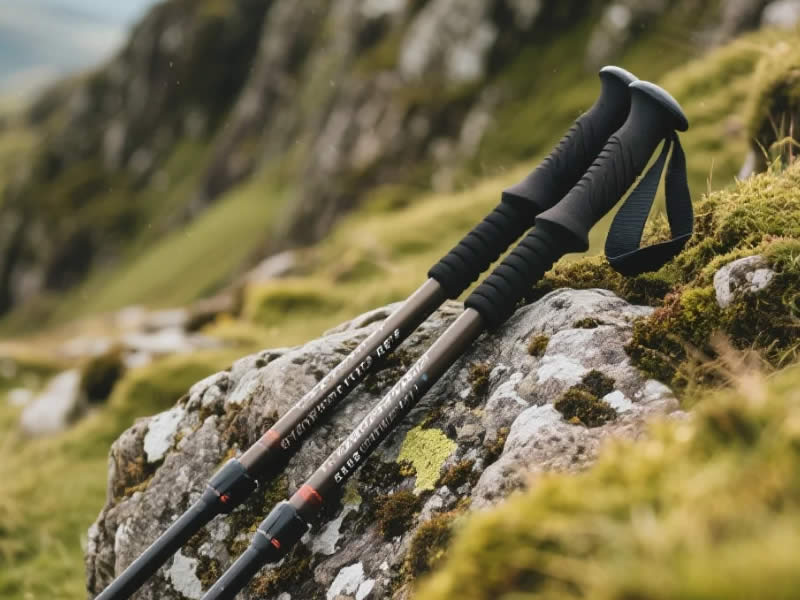
Why UK hillwalking demands a different pole
Unlike the dry, well‑maintained trails of the Alps or the rocky desert paths of the US Southwest, British hills are defined by wetness, unpredictability, and variety. In a single day you can encounter slick limestone, knee‑deep mud, loose slate, and wind‑blasted heather. Your poles must cope with constant moisture – which rusts hardware and degrades grips – and sudden changes in terrain that demand rapid length adjustments. Additionally, UK paths often include narrow stiles and awkward gates, so a pole that folds or collapses quickly is a real asset.
The four critical decision factors
1. Shaft material: aluminium vs. carbon fibre
Aluminium (usually 7075 or 6061 alloy) is the UK favourite. Why? It bends under extreme stress rather than shattering. When you jam a pole between rocks and lean hard, aluminium will bow – you can often bend it back (gently) to finish your walk. Carbon fibre is lighter and damps vibration, but a sideways impact on a hidden boulder can snap it cleanly, leaving you one‑pole‑short miles from the car. For most British hillwalkers, aluminium offers peace of mind. If you still prefer carbon, choose a multi‑directional weave (e.g. carbon/kevlar) from premium brands.
2. Locking mechanism: lever‑lock beats twist‑lock
Two systems dominate: internal twist‑locks (rotate to expand) and external lever‑locks (flip a cam). In wet, gritty conditions, twist‑locks are notoriously prone to slipping – mud and sand clog the threads, and cold hands struggle to tighten them enough. Lever‑locks are far more reliable; they clamp with consistent force, are easy to adjust even with gloves, and are simpler to clean. Many UK guides now recommend only lever‑locks for year‑round use. Some premium poles use a “speed‑lock” or “Powerlock” design – these are excellent.
3. Grip material: cork, rubber, or foam?
- Cork – naturally absorbs sweat, moulds to your hand, and stays grippy when wet. Top choice for summer and autumn.
- Rubber – durable and warm, but can become slippery in heavy rain. Often found on budget poles.
- Foam/EVA – lightweight and comfortable, but wears quickly and holds water like a sponge.
For the UK, cork is the winner if you can afford it, especially extended grips that let you choke down for scrambling. Rubber is acceptable for short, low‑level walks.
4. Weight and packed length
Every gram counts on a long ridge, but don’t sacrifice strength for ultra‑light. Aim for 220–260g per pole – that’s a sweet spot. For packed length, three‑section telescopic poles (fold to ~60‑70cm) are more versatile than two‑section, while Z‑fold (four‑section) poles are ultra‑compact but often more expensive and less adjustable. In the UK, telescopic poles with lever locks are the pragmatic default.
Top recommended models for UK conditions
Based on years of tester feedback and forum consensus, these four stand out:
🥇 Black Diamond Trail Ergo Cork – the all‑rounder
- 7075 aluminium, dual FlickLock levers (bombproof).
- Ergonomically curved cork grip with a soft‑touch top section – reduces wrist strain on steep descents.
- Interchangeable carbide tips and baskets (mud/snow).
- Weight ~240g each. Price ~£120‑140.
- Why it suits UK: the levers never slip in rain; the cork stays tacky; and the curved grip helps when traversing slopes.
🥈 Leki Makalu Lite – the traditionalist’s choice
- One of the few remaining German‑made aluminium poles.
- Super‑durable Aergon Thermo foam grip (not cork, but a grippy, warm compound) with a clever trigger‑release strap.
- SpeedLock 2 lever system – exceptionally strong.
- Weight ~250g. Price ~£130.
- UK advantage: the trigger strap lets you release instantly for gates or photography – a small but huge convenience on busy national trails.
🥉 Pacerpoles – the biomechanical favourite
- These are not cheap (£150‑170) and have a unique forward‑angled grip that encourages a natural “handshake” wrist position.
- Many UK long‑distance walkers swear by them for reducing shoulder fatigue.
- Aluminium shafts, twist‑lock (surprisingly reliable on these because of high manufacturing tolerances) – but they also offer lever versions now.
- Best for those with joint issues or who walk 20+ miles a day.
💰 Budget king: Trekology York – surprisingly capable
- At ~£40‑50, you get 7075 aluminium, lever locks, cork grips, and a weight of 220g.
- Not as durable as premium brands – the levers may need occasional retightening – but for weekend hillwalkers, this is an unbeatable entry point.
- Replacement tips are cheap and readily available on Amazon.
Essential extras: baskets, tips, and straps
- Baskets – the UK needs mud baskets (wide, with open slots) for soft ground; snow baskets are too small. Most poles come with both – swap them according to season.
- Carbide tips – essential for rocky sections; replace them every 300‑500 miles. Dull tips slip dangerously on wet rock.
- Wrist straps – should be adjustable and wide enough to distribute pressure. Learn to use them properly: put your hand up through the loop, then grip – the strap bears most of the weight, saving your fingers.
Maintenance tips for UK longevity
After every wet walk, wipe down the shafts and fully extend the poles to dry inside (moisture trapped in joints causes corrosion). Clean lever cams with a dry brush; never use oil – it attracts dirt. Every six months, unscrew the lower sections and apply a tiny smear of silicone grease to the friction points (not the locking surfaces). Store them unclamped to relieve spring tension.
Final verdict – which to buy?
- If you have £120‑140: Black Diamond Trail Ergo Cork – you won’t regret it.
- If you prefer a classic, bombproof feel: Leki Makalu Lite.
- If you’re a long‑distance hiker or have wrist pain: invest in Pacerpoles (try them first).
- If you’re on a tight budget: Trekology York – they’ll serve you well for 2‑3 seasons.
Remember, the “best” pole is the one that fits your grip, your stride, and your typical terrain. Visit a local shop – Cotswold Outdoor, Ellis Brigham, or Tiso – and handle different models. Test the locking action, feel the grip angle, and check the strap adjustment. A pole that feels right in the shop will feel like a natural extension of your arm on Helvellyn.
Over to you
Now you have a clear framework – prioritise aluminium, lever‑locks, cork grips, and sensible weight. Whether you’re tackling the Yorkshire Three Peaks or a gentle stroll in the Brecon Beacons, the right poles will save your knees, improve your rhythm, and keep you safe on slippery descents. Choose wisely, look after them, and they’ll be your companions for thousands of UK miles. Happy hillwalking!




