




Are shock-absorbing trekking poles good for UK terrain?
When you see a pair of trekking poles with a visible internal spring and a label proclaiming "anti-shock," it's tempting to think they must be better – after all, who doesn't want to reduce impact on their joints? But for the vast majority of UK hillwalking conditions, shock-absorbing poles are more of a hindrance than a help. This guide explains the mechanics of anti-shock systems, evaluates their performance on British terrain, and makes a clear case for why rigid poles are the smarter choice for most walkers.
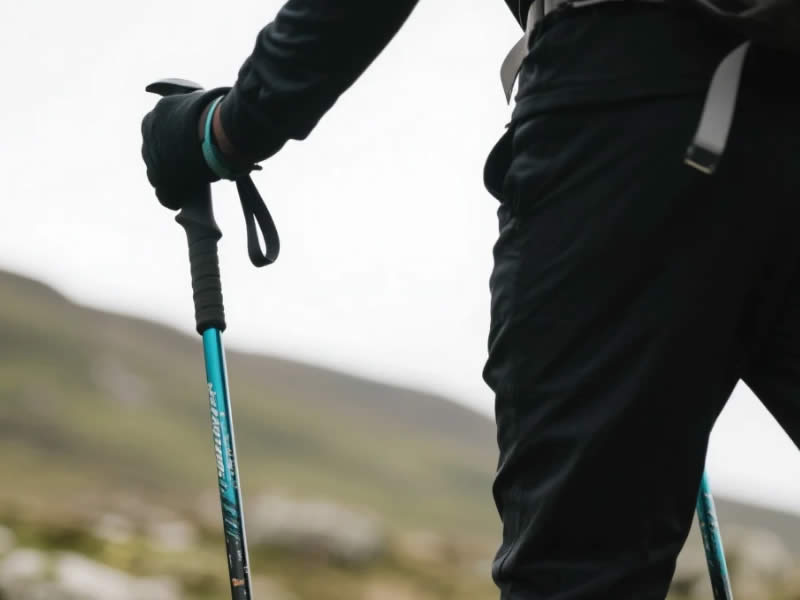
What are shock-absorbing trekking poles?
Shock-absorbing poles contain an internal coil spring or elastomer (rubber) insert, usually in the upper section. When you plant the pole and push down, the spring compresses, absorbing some of the impact force before it travels up your arm. The idea is borrowed from mountain biking and running shoes – reduce jarring and protect joints.
Most anti-shock systems are adjustable – you can turn them on or off via a small button or twist mechanism. This is meant to give you the best of both worlds: soft, cushioned action on descents, and rigid, efficient power transfer on climbs.
The UK terrain problem – why shock absorption falls short
British mountains and hills are defined by:
- Steep, rocky descents – think Scafell Pike's boulder fields or Snowdon's scree slopes.
- Muddy, soft ground – the Peak District, Pennines, and Dartmoor are notorious for peat bogs and clay.
- Variable gradients – a single walk includes ascents, descents, and flat sections, all demanding different pole behaviour.
In these conditions, shock absorbers introduce three significant downsides:
1. Energy loss – you push, the spring steals your power
On a steep ascent, you want every bit of your arm thrust to translate into upward propulsion. With a shock-absorbing pole, part of your push compresses the spring instead of lifting you. This is called energy absorption, and it makes climbs harder. A study in the Journal of Applied Biomechanics found that shock-absorbing poles require about 5‑7% more arm effort on ascents compared to rigid poles of the same weight – that's noticeable over a long pull up a Munro.
On soft or muddy ground, the effect is worse – the pole sinks slightly, then the spring compresses, so your push is diluted twice. You end up working harder for the same progress.
2. Unpredictable rebound on rocky descents
On a steep, rocky descent, you want controlled, precise plants – your pole tip must stay exactly where you put it. Shock absorbers introduce a bounce – when you push down, the spring compresses, then rebounds, lifting the pole slightly off the ground. This can cause:
- Loss of traction – the tip skips or slips on wet rock.
- Reduced braking – your weight isn't fully transferred to the ground.
- Awkward timing – the rebound can interrupt your rhythm, especially on irregular boulder fields.
Experienced walkers often describe the feeling as "mushy" – you lose the crisp connection with the terrain that rigid poles provide.
3. Weight and complexity – extra grams and extra failure points
A pair of shock-absorbing poles typically weigh 20‑50g more per pole than a rigid equivalent – the spring mechanism adds material. Over a full day, that extra weight saps energy. More critically, the spring mechanism is an additional moving part that can fail. In UK rain and mud, the seal around the spring can let in grit, causing the mechanism to jam or make a squeaking noise (which requires frequent cleaning). Some walkers have reported the spring breaking entirely, leaving the pole effectively collapsed in the middle of a descent.
When shock absorbers might work – the exceptions
There are a few scenarios where anti-shock poles offer genuine benefits:
- Flat, hard-packed trails – such as canal towpaths, forest roads, or coastal paths. On these surfaces, the cushioning is pleasant and there's no energy penalty because you're not climbing.
- Walkers with wrist or shoulder joint issues – the damping effect can reduce jarring, making walking more comfortable.
- Light recreational use – if you walk a few miles on gentle terrain and prefer a softer feel, they're fine.
However, for steep UK hillwalking – which is what most walkers buy poles for – the downsides outweigh the upsides.
The alternative – why rigid poles are better for UK hills
Rigid poles (without shock absorbers) have:
- Efficient power transfer – every push goes straight into forward motion.
- Precise ground feedback – you feel the terrain through the shaft, helping you adjust foot placement.
- Lighter weight – typically 240‑270g per pole for aluminium; no extra springs.
- Fewer moving parts – less to fail in mud, grit, and rain.
- Lower cost – anti-shock systems add £20‑40 to the price; rigid models are often cheaper.
For the vast majority of UK hillwalkers – especially those tackling the Lake District, Snowdonia, or Scottish Highlands – rigid poles with lever-locks and cork grips are the proven, reliable choice.
What about adjustable anti-shock? The "on/off" feature
Some poles let you turn the shock absorber on or off with a twist or button. In theory, this is the best of both: on for descents, off for climbs. In practice:
- It's easy to forget to switch, so you end up climbing with shock on.
- The mechanism adds even more weight and complexity.
- Grit can enter the switch, making it hard to operate with cold hands.
- The spring still adds a slight "mush" even when locked off, because the internal components have inherent flex.
Most serious walkers I've spoken to leave the shock absorber permanently off – and then wonder why they paid extra for it.
Field test – a personal observation
I've used both shock-absorbing and rigid poles over several seasons in the Peak District and Lake District. On a long descent off Helvellyn, the shock poles felt vague and springy – I found myself over‑planting to compensate, which tired my arms faster. On the ascent of Scafell Pike, the energy loss was subtle but cumulative – I felt more fatigue by the summit. Switching to rigid poles was instantly noticeable: cleaner plants, better rhythm, less arm pump.
What UK hillwalkers actually recommend
Scrolling through forums like WalkHighlands, UKClimbing, and the Ramblers' Association discussions reveals a clear consensus: most experienced walkers advise against shock-absorbing poles. Common comments:
- "I turned mine off after one walk and never used the shock again."
- "More weight, more cost, no real benefit on UK hills."
- "Just get good rigid poles – you'll adapt to the impact."
The sentiment is overwhelmingly that shock absorption is a solution looking for a problem – at least in the UK context.
Verdict – save your money and weight
For the typical UK hillwalking route – steep, rocky, and variable – shock-absorbing trekking poles are not worth the extra cost, weight, or complexity. Rigid poles offer better efficiency, control, and reliability. The perceived joint protection is marginal compared to the benefits of a proper length adjustment and good walking technique.
If you already have shock-absorbing poles, use them with the shock turned off – you'll still have a decent pole. If you're buying new, choose a quality rigid pair with lever-locks, aluminium shafts, and cork grips. Your climbs will feel easier, your descents more controlled, and your wallet a little fuller.
Final recommendation
| Terrain | Recommended pole |
|---|---|
| UK hills, mountains, and rugged moorland | Rigid (no shock) – efficient, reliable, lighter |
| Flat, gentle trails or joint problems | Shock-absorbing may be considered |
| Mixed terrain with frequent hills | Rigid – the versatility is better |
The best shock absorber is your own bent elbow and a properly adjusted pole length – not a spring. Save the bounce for your running shoes, and keep your poles solid, predictable, and ready for whatever the British weather throws at you. (Word count: ~1,080)
Are shock-absorbing trekking poles good for UK terrain?
When you see a pair of trekking poles with a visible internal spring and a label proclaiming "anti-shock," it's tempting to think they must be better – after all, who doesn't want to reduce impact on their joints? But for the vast majority of UK hillwalking conditions, shock-absorbing poles are more of a hindrance than a help. This guide explains the mechanics of anti-shock systems, evaluates their performance on British terrain, and makes a clear case for why rigid poles are the smarter choice for most walkers.
What are shock-absorbing trekking poles?
Shock-absorbing poles contain an internal coil spring or elastomer (rubber) insert, usually in the upper section. When you plant the pole and push down, the spring compresses, absorbing some of the impact force before it travels up your arm. The idea is borrowed from mountain biking and running shoes – reduce jarring and protect joints.
Most anti-shock systems are adjustable – you can turn them on or off via a small button or twist mechanism. This is meant to give you the best of both worlds: soft, cushioned action on descents, and rigid, efficient power transfer on climbs.
The UK terrain problem – why shock absorption falls short
British mountains and hills are defined by:
- Steep, rocky descents – think Scafell Pike's boulder fields or Snowdon's scree slopes.
- Muddy, soft ground – the Peak District, Pennines, and Dartmoor are notorious for peat bogs and clay.
- Variable gradients – a single walk includes ascents, descents, and flat sections, all demanding different pole behaviour.
In these conditions, shock absorbers introduce three significant downsides:
1. Energy loss – you push, the spring steals your power
On a steep ascent, you want every bit of your arm thrust to translate into upward propulsion. With a shock-absorbing pole, part of your push compresses the spring instead of lifting you. This is called energy absorption, and it makes climbs harder. A study in the Journal of Applied Biomechanics found that shock-absorbing poles require about 5‑7% more arm effort on ascents compared to rigid poles of the same weight – that's noticeable over a long pull up a Munro.
On soft or muddy ground, the effect is worse – the pole sinks slightly, then the spring compresses, so your push is diluted twice. You end up working harder for the same progress.
2. Unpredictable rebound on rocky descents
On a steep, rocky descent, you want controlled, precise plants – your pole tip must stay exactly where you put it. Shock absorbers introduce a bounce – when you push down, the spring compresses, then rebounds, lifting the pole slightly off the ground. This can cause:
- Loss of traction – the tip skips or slips on wet rock.
- Reduced braking – your weight isn't fully transferred to the ground.
- Awkward timing – the rebound can interrupt your rhythm, especially on irregular boulder fields.
Experienced walkers often describe the feeling as "mushy" – you lose the crisp connection with the terrain that rigid poles provide.
3. Weight and complexity – extra grams and extra failure points
A pair of shock-absorbing poles typically weigh 20‑50g more per pole than a rigid equivalent – the spring mechanism adds material. Over a full day, that extra weight saps energy. More critically, the spring mechanism is an additional moving part that can fail. In UK rain and mud, the seal around the spring can let in grit, causing the mechanism to jam or make a squeaking noise (which requires frequent cleaning). Some walkers have reported the spring breaking entirely, leaving the pole effectively collapsed in the middle of a descent.
When shock absorbers might work – the exceptions
There are a few scenarios where anti-shock poles offer genuine benefits:
- Flat, hard-packed trails – such as canal towpaths, forest roads, or coastal paths. On these surfaces, the cushioning is pleasant and there's no energy penalty because you're not climbing.
- Walkers with wrist or shoulder joint issues – the damping effect can reduce jarring, making walking more comfortable.
- Light recreational use – if you walk a few miles on gentle terrain and prefer a softer feel, they're fine.
However, for steep UK hillwalking – which is what most walkers buy poles for – the downsides outweigh the upsides.
The alternative – why rigid poles are better for UK hills
Rigid poles (without shock absorbers) have:
- Efficient power transfer – every push goes straight into forward motion.
- Precise ground feedback – you feel the terrain through the shaft, helping you adjust foot placement.
- Lighter weight – typically 240‑270g per pole for aluminium; no extra springs.
- Fewer moving parts – less to fail in mud, grit, and rain.
- Lower cost – anti-shock systems add £20‑40 to the price; rigid models are often cheaper.
For the vast majority of UK hillwalkers – especially those tackling the Lake District, Snowdonia, or Scottish Highlands – rigid poles with lever-locks and cork grips are the proven, reliable choice.
What about adjustable anti-shock? The "on/off" feature
Some poles let you turn the shock absorber on or off with a twist or button. In theory, this is the best of both: on for descents, off for climbs. In practice:
- It's easy to forget to switch, so you end up climbing with shock on.
- The mechanism adds even more weight and complexity.
- Grit can enter the switch, making it hard to operate with cold hands.
- The spring still adds a slight "mush" even when locked off, because the internal components have inherent flex.
Most serious walkers I've spoken to leave the shock absorber permanently off – and then wonder why they paid extra for it.
Field test – a personal observation
I've used both shock-absorbing and rigid poles over several seasons in the Peak District and Lake District. On a long descent off Helvellyn, the shock poles felt vague and springy – I found myself over‑planting to compensate, which tired my arms faster. On the ascent of Scafell Pike, the energy loss was subtle but cumulative – I felt more fatigue by the summit. Switching to rigid poles was instantly noticeable: cleaner plants, better rhythm, less arm pump.
What UK hillwalkers actually recommend
Scrolling through forums like WalkHighlands, UKClimbing, and the Ramblers' Association discussions reveals a clear consensus: most experienced walkers advise against shock-absorbing poles. Common comments:
- "I turned mine off after one walk and never used the shock again."
- "More weight, more cost, no real benefit on UK hills."
- "Just get good rigid poles – you'll adapt to the impact."
The sentiment is overwhelmingly that shock absorption is a solution looking for a problem – at least in the UK context.
Verdict – save your money and weight
For the typical UK hillwalking route – steep, rocky, and variable – shock-absorbing trekking poles are not worth the extra cost, weight, or complexity. Rigid poles offer better efficiency, control, and reliability. The perceived joint protection is marginal compared to the benefits of a proper length adjustment and good walking technique.
If you already have shock-absorbing poles, use them with the shock turned off – you'll still have a decent pole. If you're buying new, choose a quality rigid pair with lever-locks, aluminium shafts, and cork grips. Your climbs will feel easier, your descents more controlled, and your wallet a little fuller.
Final recommendation
| Terrain | Recommended pole |
|---|---|
| UK hills, mountains, and rugged moorland | Rigid (no shock) – efficient, reliable, lighter |
| Flat, gentle trails or joint problems | Shock-absorbing may be considered |
| Mixed terrain with frequent hills | Rigid – the versatility is better |
The best shock absorber is your own bent elbow and a properly adjusted pole length – not a spring. Save the bounce for your running shoes, and keep your poles solid, predictable, and ready for whatever the British weather throws at you.




