




Trekking poles for beginners: what should I look for?
If you're new to hillwalking, the world of trekking poles can feel overwhelming – carbon vs. aluminium, lever‑locks vs. twist‑locks, cork vs. foam, and prices ranging from £20 to £200. But for a beginner, the choice is actually simpler than it seems. You don't need the lightest, most expensive poles – you need a pair that's durable, reliable, comfortable, and affordable. This guide strips away the marketing jargon and gives you a clear, step‑by‑step framework for choosing your first pair of trekking poles, whether you're tackling a gentle South Downs ramble or your first Lake District fell.
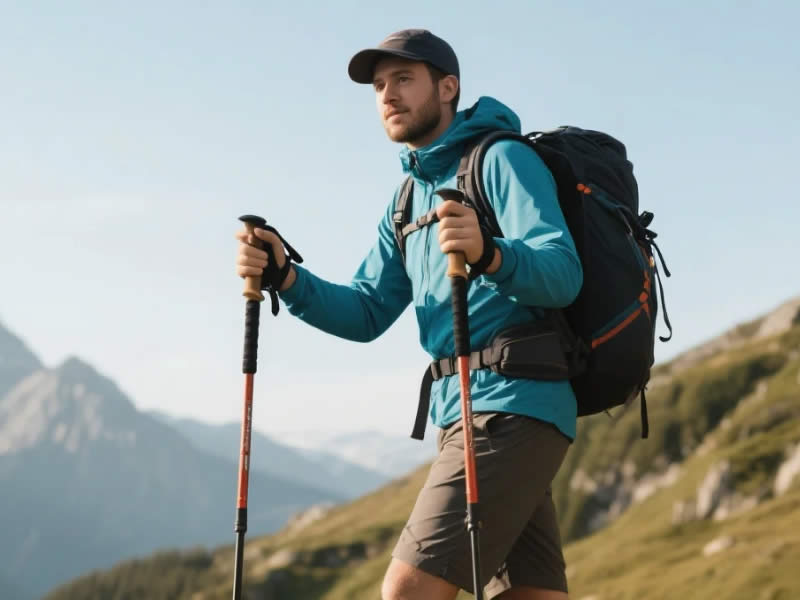
Why beginners should definitely consider poles
If you're wondering whether you need poles at all – the answer for most beginners is yes. They:
- Reduce knee impact by 20‑25% on descents – your knees will thank you.
- Improve balance on uneven ground – essential when you're still building confidence.
- Help you maintain a steady rhythm – making long walks feel easier.
- Take some load off your legs – distributing effort to your arms.
Start with a sensible pair, and you'll quickly wonder how you ever walked without them.
The beginner's checklist – 7 key features to prioritise
1. Material: aluminium over carbon – every time
As a beginner, you will make mistakes – you'll jam a pole between rocks, lean on it at an awkward angle, or drop it on a rocky path. Aluminium (especially 7075 alloy) bends under stress rather than snapping. You can often bend it back and finish your walk. Carbon fibre is lighter but shatters on impact – and a broken pole is useless. For your first pair, choose aluminium. It's also cheaper – you can get a good aluminium pair for £30‑50, whereas quality carbon starts at £80+.
What to avoid: Cheap steel or unidentified alloys – they're heavy and weak. Stick to known aluminium grades (6061 or 7075).
2. Locking mechanism: lever‑locks are beginner‑friendly
Two main types: lever‑locks (external cam) and twist‑locks (internal expanding wedge).
- Lever‑locks are easier to use – flip the lever, slide, flip back. They work well in mud and rain, and you can adjust them with gloves on. They're also easier to see and clean.
- Twist‑locks require a twisting motion that can be stiff, especially with cold hands. They're more prone to seizing or slipping in wet conditions.
For a beginner, lever‑locks are the smarter, frustration‑free choice. They cost a little more, but the reliability is worth it.
What to avoid: Cheap plastic lever‑locks that crack under pressure. Look for metal cams or well‑made plastic (e.g., Black Diamond's FlickLock, LEKI's SpeedLock).
3. Grips: cork wins for comfort
Grips come in cork, foam, or rubber.
- Cork – naturally sweat‑wicking, moulds to your hand over time, and stays tacky even when wet. The best all‑round choice for UK conditions.
- Foam – lightweight, comfortable, but absorbs sweat and can become slippery when wet.
- Rubber – durable and warm, but can get very slippery in rain – not recommended for beginners.
Verdict: Choose cork if your budget allows (you can find cork grips on poles from £35). Foam is a decent second choice – but avoid rubber.
Also look for: An extended grip – a rubberised section below the handle that lets you choke up on steep sections. This is a useful feature for beginners learning scrambles.
4. Weight: the sweet spot for beginners
Ultralight poles (under 200g) are expensive and fragile. Heavy poles (over 300g) tire your arms. For a beginner, aim for 250‑280g per pole. This gives you a durable aluminium shaft without being a burden. A pair will weigh about 500‑550g – perfectly manageable for day walks.
What to avoid: Poles that feel noticeably heavy when you lift them – they'll exhaust you on a long day. Conversely, avoid ultralight poles that feel flimsy – they won't survive your learning curve.
5. Adjustability: telescopic over fixed
Telescopic poles (2‑3 sections that slide) let you change length for uphill (shorter) and downhill (longer). This versatility is essential for beginners learning to adapt to terrain. Folding/Z‑poles are fixed length – they're lighter and pack smaller, but you can't adjust them on the trail. For a beginner, telescopic poles are more forgiving – you can experiment with lengths to find what suits you.
Adjustment range: Look for a range of at least 100‑130cm – this fits most heights (150‑190cm).
6. Baskets and tips: the essentials
- Mud baskets are non‑negotiable for UK walks – they stop the pole sinking into soft ground. Ensure your poles come with them (most do). Snow baskets are smaller and less useful – but you can swap them if needed.
- Tips should be carbide – they grip rocks and last for hundreds of miles. Crucially, ensure the tips are replaceable – cheap poles often have moulded‑in tips that wear out and can't be changed. Replaceable tips mean your poles can last for years.
What to avoid: Poles without baskets (you'll sink into peat) or with non‑replaceable tips (you'll need a new pole when they wear flat).
7. Price: the beginner's budget
You don't need to spend a fortune. A quality beginner pair costs £30‑50 (e.g., Decathlon Forclaz MT500, Trekology York). This gets you aluminium, lever‑locks (in some models), cork grips, and replaceable tips. For under £30, you'll compromise on locks or grips – but it's still doable for occasional use (see our budget guide).
Our recommendation: Spend £40‑50 – it's a sweet spot where you get real durability without over‑paying for features you don't yet need.
The "try‑before‑you‑buy" rule
If possible, visit a shop and hold a few poles. Check:
- Does the grip feel comfortable in your hand?
- Can you easily adjust the length with one hand?
- Does the strap adjust to fit your wrist without cutting in?
- When you push down, does the lock hold firm?
London stores like Cotswold Outdoor, Ellis Brigham, and Decathlon allow in‑store testing (see our previous guide). Bring your boots and a weighted pack for a realistic feel.
Common beginner mistakes to avoid
- Buying carbon – too fragile; you'll regret it.
- Choosing twist‑locks – they're more hassle than they're worth.
- Ignoring baskets – you'll sink into every bog.
- Not checking strap fit – a poorly fitting strap can cause blisters.
- Overtightening locks – this can damage the shaft; just snug is enough.
- Buying without testing – online pictures don't show feel.
How to use your new poles – a quick start
- Set length – stand with boots on, elbow at 90°, adjust pole so tip touches the ground. That's your flat length.
- Shorten 5‑7cm for uphills – keeps your shoulders relaxed.
- Lengthen 5‑10cm for downhills – gives you reach for braking.
- Use the straps – hand goes up through the loop, then grips – the strap bears the weight, not your fingers.
- Plant ahead – tip goes about 30cm in front of your foot, at a slight backward angle.
- Alternate – left pole with right foot, right pole with left foot.
Maintenance for beginners – keep it simple
- After muddy walks, rinse with cold water and dry fully.
- Loosen locks when storing for long periods.
- Wipe shafts with a dry cloth – that's it.
- Replace tips when they flatten (around 300‑500 miles).
Final verdict – your first pair
For a beginner in the UK, the ideal first pair is:
- Aluminium (7075 or 6061)
- Lever‑locks (reliable and easy)
- Cork or good foam grips
- 250‑280g per pole
- Mud baskets and replaceable tips
- £40‑50 budget
Great starter models: Decathlon Forclaz MT500 (lever‑locks, cork, ~£45) or Trekology York (lever‑locks, cork, ~£35). Both are excellent value and will serve you well for several years.
Over to you
Your first trekking poles are an investment in comfort, safety, and enjoyment. Choose wisely with the checklist above, test them in a shop, and then get out on the hills. Within a few walks, you'll wonder how you ever managed without them. Happy exploring – and may your knees stay happy for many miles to come.




