




Can I use trekking poles on a plane as carry-on UK?
If you're planning a hillwalking trip and flying from a UK airport, one question often lingers until check‑in: can I just slip my trekking poles into my hand luggage and save the hassle of checked baggage? The short, definitive answer is no – UK airlines and airport security do not permit trekking poles in the cabin. This guide explains the rationale, the policies of all major UK carriers, the narrow exceptions for medical use, and – most importantly – what you should do instead to get your poles to your destination safely and legally.
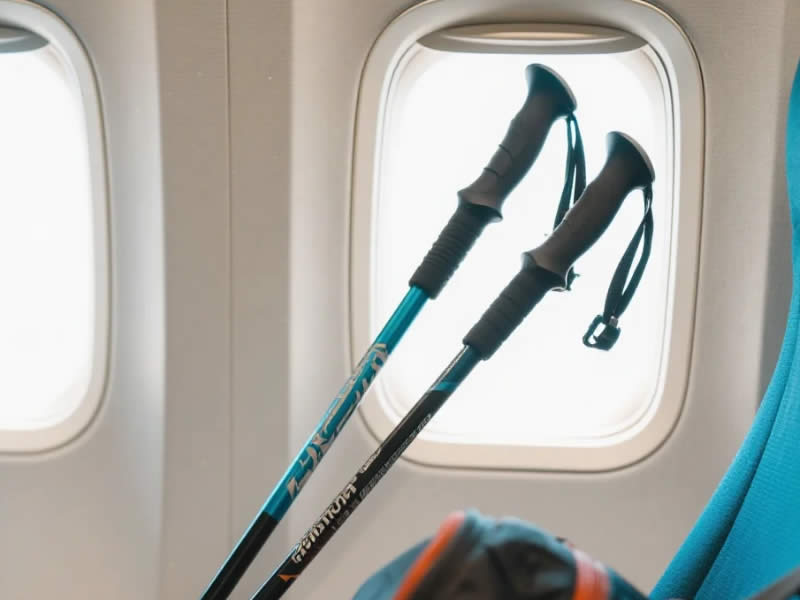
Why trekking poles are banned from the cabin
Since the early 2000s, aviation security regulations across the UK and Europe have classified trekking poles, walking sticks, and ski poles as potential blunt instruments. They have a rigid shaft and a pointed tip, which could be used as a weapon – regardless of whether they are collapsible, made of lightweight materials, or sheathed in a protective cover. The ban is enforced by the Civil Aviation Authority (CAA) and its airport security partners, not just by individual airlines. Even if you fold your poles into a tiny bundle and bury them inside a rucksack, the X‑ray machine will reveal them, and a manual search will confirm they are prohibited.
Importantly, the prohibition applies to all trekking poles – regardless of brand, material, or folded length. There is no "if it fits in the overhead bin" loophole. The rules are uniform across UK airports, from Heathrow to Edinburgh to Belfast.
What UK airlines explicitly say
All the major airlines that operate from UK airports have clear, written policies:
- British Airways – "Walking poles, hiking sticks, and ski poles are not permitted in cabin baggage." They must be checked into the hold.
- Ryanair – Lists "walking poles / hiking sticks" under "Prohibited Items – Cabin Baggage". No exceptions for recreational use.
- easyJet – Explicitly bans "walking poles, hiking sticks, ski poles" in the cabin.
- Jet2 – Same classification; they must be placed in checked luggage.
- Virgin Atlantic – Also prohibits poles in hand luggage; they fall under "sports equipment" that must be checked.
These policies are not ambiguous. They are published on each airline's website and reiterated at check‑in desks. Some travellers have reported that a particular security officer might show discretion, but relying on such luck is unwise – confiscation is the norm, and you will not be compensated.
The one exception – medical walking aids
If you use trekking poles as a mobility aid due to a disability or a temporary injury (e.g., a sprained ankle), you may request an exemption. However, this is not automatic:
- You must contact the airline's Special Assistance team at least 48 hours before departure.
- You must provide a medical certificate or a doctor's letter explaining your need for the poles.
- The poles must be collapsible and stowed in an overhead bin or under the seat, subject to space.
- The final decision rests with the security officer at the airport – even with prior airline approval, the security officer can refuse if they deem the item unsafe.
This exception is rarely granted for standard trekking poles used by able‑bodied walkers. It is designed for people who genuinely cannot walk without support. If you qualify, get written confirmation from the airline and carry it with you.
What happens if you try to take them to security?
If you arrive at security with trekking poles in your hand luggage, the X‑ray operator will flag them. You will be asked to remove them, and then you have two options:
- Return to check‑in and add them to a checked bag – if you have time and have a bag to check, you might be able to do this. However, check‑in closes 40‑60 minutes before departure, so this is rarely feasible.
- Surrender them – they will be confiscated and disposed of. You will not get them back.
In many cases, you won't be allowed to proceed to the gate until you've surrendered the poles. This can cause delays, stress, and a spoiled start to your trip.
The safe alternative – checked baggage
The only reliable way to transport trekking poles on a UK flight is to pack them in your checked hold luggage. Here's a quick checklist for doing it securely:
- Collapse fully – every section should be at its shortest length.
- Protect the tips – wrap each carbide tip in a thick sock, rubber tip cover, or bubble wrap to prevent puncturing your bag.
- Bundle the pair – use velcro straps or tape to hold them together so they don't rattle or shift.
- Position centrally – place the bundled poles in the middle of your suitcase or rucksack, surrounded by soft clothing (jumpers, fleeces) to absorb impact.
- Loosen locks slightly – a quarter‑turn loosening prevents pressure‑jamming during the flight.
- Check weight – a pair of poles adds about 500‑600g; ensure your total luggage weight stays within your allowance.
Most UK airlines include a standard checked baggage allowance (e.g., 20‑23kg on BA, 20kg on easyJet if paid). Adding poles to your existing check‑in bag is usually free, as long as you're within the weight limit.
Alternatives if you're flying with hand luggage only
If you've booked a ticket without checked baggage, you have several options:
- Add a checked bag online – this is cheaper than paying at the airport. For Ryanair and easyJet, it costs about £15‑30 each way.
- Ship your poles ahead – use a courier service like SendMyBag or ParcelHero to send them to your accommodation. This costs roughly £20‑40 each way.
- Rent poles at your destination – many outdoor shops near popular trails offer rentals for a few pounds per day.
- Buy cheap poles locally – for a short trip, you can buy a budget pair at a Decathlon near your destination for £20‑30, which may be cheaper than paying for checked luggage.
These alternatives are especially useful for budget travellers who want to avoid hold baggage fees.
Double‑check before you fly
Airline policies can change, and security regulations are periodically updated. Always:
- Visit your airline's official website and search for "prohibited items" or "baggage restrictions".
- Look specifically for "walking poles" or "hiking sticks".
- If you have any doubt, call the airline's customer service.
Do not rely on forum posts or anecdotal experiences from years ago – rules tighten over time.
Final verdict – never gamble with your poles
You cannot carry trekking poles in the cabin on any UK airline – the ban is clear, uniform, and strictly enforced. The only safe way is to check them, or to use an alternative like shipping or renting. Trying to sneak them through is almost certain to result in confiscation, disappointment, and a frantic scramble at the airport.
Plan ahead: factor in checked baggage costs, pack your poles carefully, and arrive at the airport with plenty of time. That way, you'll land at your destination with your trusted poles ready for the hills – and your holiday will start on the right foot.




