




Are cork grips better than foam on trekking poles?
If you've ever browsed trekking poles, you'll have noticed the grip section offers two dominant materials: cork and foam. Both look similar at first glance, but they perform very differently in the hands, especially over a long day on wet, windy UK hills. The short answer: for most British hillwalkers, cork is the better choice – but foam has its niche. This guide breaks down the science, the feel, the durability, and the conditions that make each material shine, so you can choose the grip that will keep your hands comfortable and your poles secure for years.
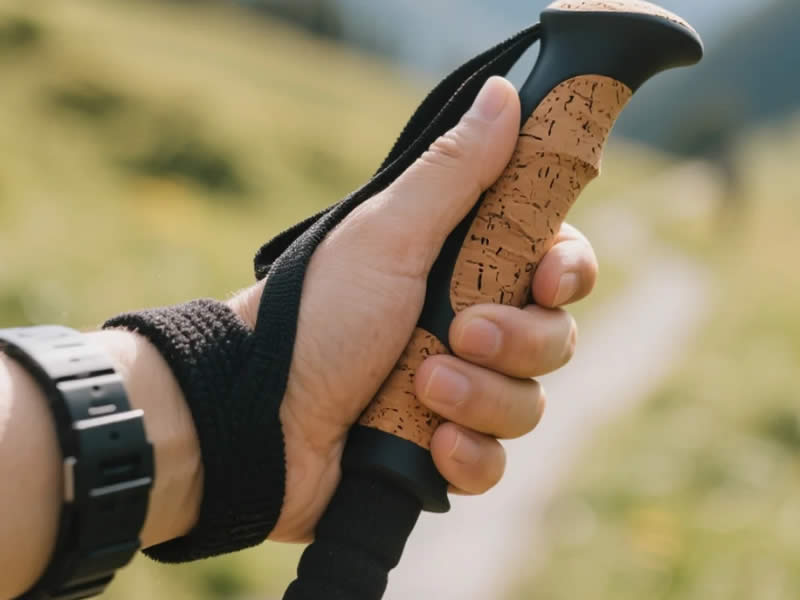
Cork grips – the natural performer
Cork is harvested from the bark of cork oak trees, primarily in Portugal and Spain. It's been used for centuries in products ranging from wine stoppers to flooring, and it brings several unique properties to trekking poles:
1. Sweat absorption and moisture management
Cork is naturally porous and wicking. When your hands sweat – or when the infamous British drizzle starts – cork absorbs the moisture away from your skin. This keeps your grip dry and stable even during prolonged exertion. Unlike rubber or plastic, which become slippery when wet, cork actually becomes tackier – the surface friction increases with moisture. This is a huge advantage on steep descents where a slipped pole could mean a stumble.
2. Conforms to your hand
One of cork's most celebrated qualities is its ability to compress and mould slightly to the shape of your hand over time. After a few long walks, the grip begins to match your unique palm contour, reducing pressure points and increasing comfort. This is a form of passive customisation that foam simply cannot replicate – foam is static; it will always feel the same as the day you bought it.
3. Thermal comfort
Cork has low thermal conductivity – it doesn't feel cold in winter or hot in summer. Your hands stay at a more stable temperature compared to foam, which can feel chilly in cold wind or clammy in heat.
4. Durability
High‑quality cork grips, when properly maintained, can last many years. The surface may darken with sweat and dirt, but the material doesn't degrade quickly. Unlike foam, which can split or compress into a hard, flattened shape, cork retains its integrity and resilience.
5. Environmental credentials
Cork is a renewable, biodegradable material. The bark is harvested every 9‑12 years without harming the tree, making it one of the most sustainable outdoor materials available. If environmental impact matters to you, cork has a clear edge.
Foam grips – the lightweight alternative
Foam grips (usually made from EVA – ethylene‑vinyl acetate) are found on many lightweight and budget‑oriented poles. They have their own set of strengths:
1. Lightweight
Foam is significantly lighter than cork – a foam grip might weigh 20‑30g less than a cork grip of the same size. For ultralight backpackers and trail runners counting every gram, this difference matters. If you're doing a multi‑day fastpacking trip, the weight saving across two poles (40‑60g) can be a factor.
2. Initial softness and comfort
Fresh foam grips have a plush, soft feel that many users find immediately comfortable. They require no "break‑in" period – they feel cushioned from the first step. For short walks or occasional use, this can be a genuine advantage.
3. Warmth in cold weather
Foam insulates better than cork. On a freezing winter morning, foam grips are noticeably warmer to the touch – your hands are less likely to feel the chill through the grip.
4. Cost
Foam grips are cheaper to manufacture, which means they're often found on poles under £40. If you're on a tight budget or buying poles for occasional use, foam allows you to get a functional pole at a lower price.
The downside of foam – why it can let you down in the UK
Despite its initial appeal, foam has several limitations that become apparent over time and in wet conditions:
- Slippery when wet – once soaked, foam becomes slick. Your hand can rotate on the grip, reducing control on descents. Some foams have a textured surface to mitigate this, but none match cork's wet‑weather tackiness.
- Less durable – foam compresses with use. After a season of regular walking, the grip may flatten and lose its cushioning. After two or three seasons, it may crack or split at the seams. Cork, in contrast, can last a decade.
- Absorbs sweat and odour – foam is essentially an open‑cell sponge. It holds moisture, which can lead to a musty smell over time. Cork's cellular structure is more resistant to bacterial growth.
- Sticky when humid – in hot, humid conditions (rare in the UK, but possible), foam can become slightly sticky and uncomfortable against the palm.
Head‑to‑head comparison
| Feature | Cork | Foam |
|---|---|---|
| Weight | Slightly heavier | Lighter |
| Wet‑weather grip | Excellent (becomes tacky) | Poor (becomes slippery) |
| Moulds to your hand | Yes (over time) | No (static shape) |
| Durability | High (years) | Moderate (seasons) |
| Initial comfort | Good (improves with use) | Excellent (soft from day one) |
| Cost | Higher | Lower |
| Environment | Renewable, biodegradable | Petroleum‑based, non‑biodegradable |
| Sweat absorption | Good (wicking) | Poor (absorbs and holds) |
Real‑world UK perspective
In the damp, rainy conditions of the Lake District, the Peak District, or the Scottish Highlands, cork's wet‑weather performance is a standout advantage. You'll be grateful for that tacky grip when you're descending a slippery, rocky path with a full pack. Foam, on the other hand, can turn into a hazard – you may find yourself gripping tighter just to hold the pole, which leads to hand fatigue and blisters.
I've used both extensively. On a dry, dusty summer trail, foam feels fine. But as soon as the rain starts – and it always does – cork becomes the friend I trust. Many long‑distance walkers in the UK echo this sentiment: once you've used cork in the rain, you'll never go back.
Is cork always better? The nuance
- If you're a weekend walker in dry, mild weather – foam will serve you well. The weight and cost savings are genuine.
- If you hike year‑round, in variable UK conditions – cork is the safe, proven choice.
- If you're a trail runner – foam's lightweight might win, but consider a foam grip that has an extended upper section (allowing you to choke up) – that's more important than the material itself.
- If you have sensitive skin or allergies – cork is naturally hypoallergenic; foam may cause irritation in some people.
How to maintain your grips
- Cork – occasionally wipe with a damp cloth. You can use fine sandpaper to restore the surface if it becomes glossy and smooth. Do not use soap or oil – it degrades the grip.
- Foam – wash with mild soap and water to remove sweat and dirt. Dry thoroughly. Replace if it becomes flattened or cracked.
Final verdict – which should you choose?
For the vast majority of UK hillwalkers, cork grips are superior. They provide better wet‑weather grip, conform to your hand for lasting comfort, and outlast foam by years. The slightly higher cost and weight are a small price to pay for a secure, reliable hold in British conditions.
Foam remains a good choice for ultralight pursuits, summer‑only walking, or budget‑conscious beginners. But if you plan to walk regularly, in any weather, and you want poles that will still feel great after a decade – choose cork.
Over to you
Next time you're in a shop, hold a cork‑gripped pole in one hand and a foam‑gripped one in the other. Close your eyes. Feel the texture, the weight, the way your palm meets the material. Imagine it in the rain. That tactile test, combined with the facts above, will give you your answer. For most, that answer will be cork – and your hands will thank you for it.




