




Leki vs Black Diamond trekking poles: which is better?
If you're a serious hillwalker, you've likely narrowed your choice down to two giants: Leki and Black Diamond. Both are German‑engineered (Leki) or American‑designed with Swiss/Asian manufacturing (Black Diamond), and both dominate the premium pole market. The question isn't which is objectively "better" – they're both outstanding. The real question is: which is better for you? This guide compares their locking systems, grip designs, materials, weight, durability, and UK‑specific performance, so you can make a confident choice.
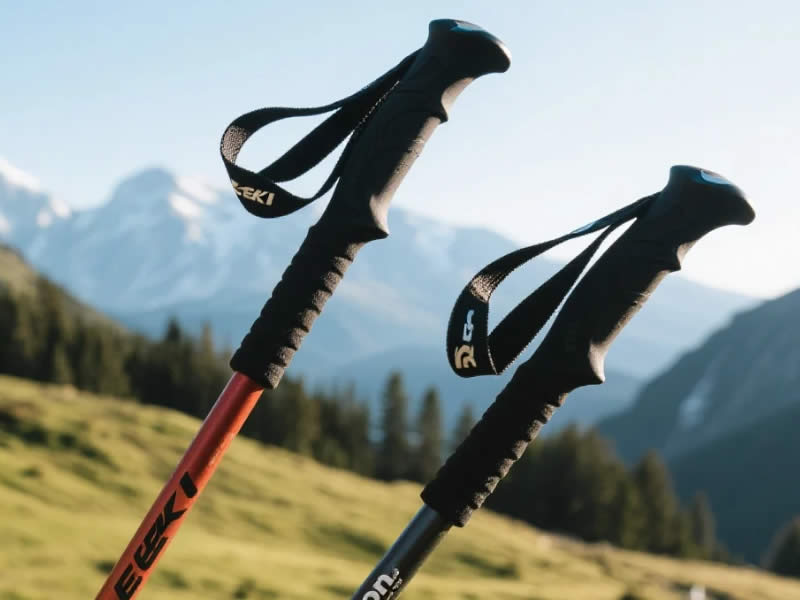
The locking systems – the heart of the pole
Black Diamond – FlickLock
Black Diamond's signature FlickLock is an external lever that clamps directly onto the outer shaft. It's tool‑free, easy to adjust even with thick gloves, and famously reliable in mud, grit, and rain. The mechanism is robust and field‑serviceable – if a lever breaks, you can replace it with a simple Allen key.
Pros:
- Bombproof – never slips, even under heavy load.
- Easy to use – flip, slide, flip back.
- Works in wet, muddy conditions – grit doesn't penetrate.
- Clear, positive engagement – you feel it click into place.
Cons:
- Slightly heavier than Leki's SpeedLock (adds a few grams per pole).
- The lever protrudes slightly – some walkers find it catches on vegetation (rare).
Leki – SpeedLock
Leki's SpeedLock (now in its 2nd generation) is also an external lever mechanism, but it operates with a push‑button release. It's lighter, more compact, and offers a wide adjustment range.
Pros:
- Lighter and more streamlined – sleek design.
- Quick adjustments – one‑handed operation.
- Wide compatibility – fits most shaft diameters.
Cons:
- Slightly more prone to grit ingress than FlickLock – requires occasional cleaning.
- The release button can be fiddly with very cold hands (though most users adapt).
Verdict: Both are excellent. FlickLock is the more rugged, muddy‑terrain champion – ideal for UK wet conditions. SpeedLock is lighter and sleeker, perfect for fastpacking and long, dry trails. For UK hillwalking, FlickLock's extra reliability in mud gives it a slight edge.
Grip and strap design – comfort over miles
Black Diamond – ergonomic cork with soft‑top extension
Black Diamond's cork grips are naturally sweat‑wicking and mould to your hand over time. They feature a soft‑touch rubberised upper extension – a ribbed section below the handle that lets you choke up on steep scrambles without gripping bare metal. The grip shape is slightly curved, encouraging a natural wrist angle.
The wrist straps are wide, padded, and adjustable – but they're a standard loop design.
Leki – ergonomic foam or cork with trigger‑release straps
Leki offers both foam and cork grips (the Aergon and Aergon Air ranges). Their grips are often narrower and more anatomically shaped, with a pronounced "step" that supports the palm. Many users find them instantly comfortable.
The standout feature is Leki's trigger‑release strap – a quick‑release buckle that lets you drop the pole instantly by pressing a button. This is a game‑changer for gates, camera work, or scrambling sections where you need to free your hands without fully stowing the pole.
Verdict: If you frequently pass through gates or like to take photos, Leki's trigger strap is a huge convenience. Black Diamond's cork feels more natural in wet conditions (it stays tacky), but Leki's foam options are lighter and warm in winter. Try both – it's a very personal feel.
Shaft materials and weight
| Model | Material | Weight (per pole) |
|---|---|---|
| Black Diamond Trail Ergo Cork | 7075 aluminium | ~240g |
| Black Diamond Carbon Cork | Carbon | ~160g |
| Leki Makalu Lite | 7075 aluminium | ~250g |
| Leki Ultralight TI | Titanium/carbon hybrid | ~190g |
Black Diamond offers a clear split: robust aluminium for UK durability, or featherweight carbon for long‑distance racing. The aluminium models are tough and forgiving – they bend rather than snap.
Leki offers more variety in materials – from classic aluminium to carbon and even titanium‑hybrid options. Their top‑end models are slightly lighter than Black Diamond's equivalent aluminium poles. However, Leki's aluminium poles are generally a little heavier than BD's aluminium offerings.
Verdict: For rocky UK terrain, aluminium is safer – both brands offer excellent quality. For weight‑weenies, Leki's ultralight range edges out BD's carbon offerings.
Price and value
| Model | Typical UK price |
|---|---|
| Black Diamond Trail Ergo Cork | £120‑140 |
| Black Diamond Distance Carbon Z | £150‑170 |
| Leki Makalu Lite | £120‑140 |
| Leki Ultratrail FX.One | £130‑150 |
Both brands sit in the premium bracket – £120‑160 for their popular models. You won't find a significant price difference; both represent good value for their longevity and performance. Sales and discounts (via SportPursuit, Go Outdoors, or Cotswold outlet) can bring either brand down to £90‑100.
UK‑specific performance – rain, mud, and rock
Black Diamond's FlickLock is a standout in UK conditions. Mud and grit don't affect it – you can wipe it clean with a finger and it keeps working. The cork grips stay tacky in persistent drizzle, and the aluminium shafts can handle being jammed between rocks on a Welsh scramble. Many UK hillwalkers consider BD the benchmark for reliability in wet, abrasive terrain.
Leki's SpeedLock is also reliable, but the release button can become gritty and needs cleaning after a muddy Peak District walk. The trigger strap – while brilliant for gates – can freeze up in winter conditions (though it's rare). The foam grips, while comfortable, become slippery when wet (cork options are better). For UK wet weather, Leki's cork‑gripped models are the better choice within their range.
Repairability and spare parts
- Black Diamond – FlickLock levers are available as spare parts (£10‑15). Tips and baskets are widely stocked in UK shops. Shaft sections are not easily replaceable (you'd need a new pole).
- Leki – SpeedLock levers, straps, and tips are all replaceable. Shaft sections are also available for some models. Leki's spare parts network is extensive across Europe.
Verdict: Leki edges ahead in repairability – you can keep a pair going for many years.
Which should you choose? – a decision matrix
| Your priority | Choose |
|---|---|
| Maximum wet‑weather reliability and durability | Black Diamond (FlickLock + aluminium) |
| Lightest possible weight for long distances | Leki (Ultralight or carbon models) |
| Convenience for gates and quick transitions | Leki (trigger‑release strap) |
| Cork grip performance in rain | Black Diamond (cork is superior to Leki's foam) |
| Ease of spare parts and long‑term repairability | Leki |
| Rocky, technical UK hills | Black Diamond (aluminium + FlickLock) |
| Budget‑conscious premium | Either – wait for sales on both |
The ultimate test – try before you buy
Specs and reviews only take you so far. The feel of the grip in your hand, the action of the lock, and the way the strap sits on your wrist are subjective. Visit a shop (Cotswold, Ellis Brigham, Decathlon) and test both brands side‑by‑side. Hold a Black Diamond Trail Ergo in one hand and a Leki Makalu in the other. Adjust them, walk a few paces, and see which one feels like an extension of your arm.
Final verdict
There is no universal winner – both Leki and Black Diamond produce world‑class trekking poles. For the typical UK hillwalker tackling wet, rocky, muddy mountains, Black Diamond's aluminium poles with FlickLock and cork grips have a slight advantage in reliability and grip. For long‑distance walkers who prioritise weight and strap convenience, Leki's ultralight models with trigger‑release are a joy to use.
If I had to choose one for year‑round UK use, I'd pick the Black Diamond Trail Ergo Cork – it's durable, reliable in wet conditions, and built to survive the abuse of British hills. But I'd keep a Leki on my shortlist for its brilliant strap system. Ultimately, the better pole is the one that feels right in your hands and gives you confidence on the steepest descents.




