




Can trekking poles help with sciatica while hiking?
If you suffer from sciatica – that sharp, shooting pain that radiates from your lower back down through your buttock and into your leg – you know how debilitating it can be. For hikers, it's particularly cruel: the very activity you love can trigger or worsen the pain. But many walkers have discovered that trekking poles can be a game‑changer. The short answer is yes – trekking poles can significantly help with sciatica while hiking, but they're not a cure and they require proper technique to be effective. This guide explains the biomechanics, offers practical advice, and sets realistic expectations for hiking with sciatica.
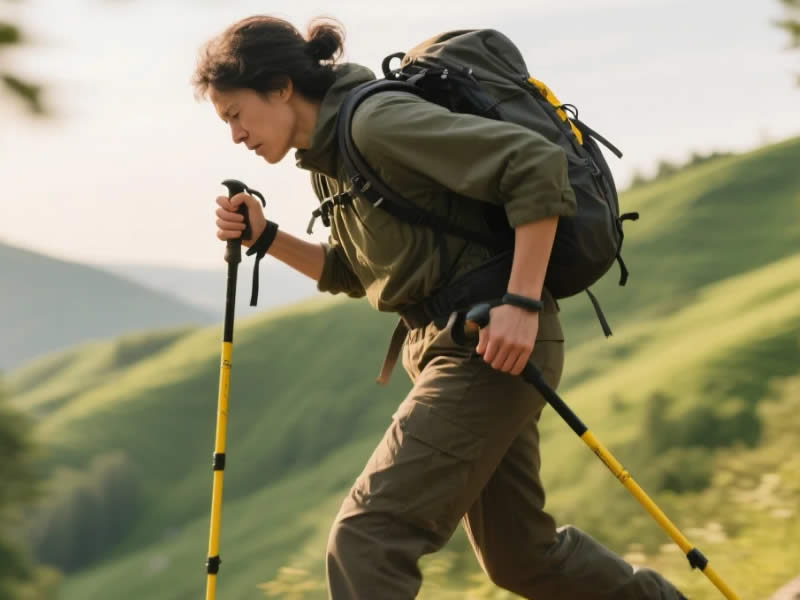
What is sciatica and why does hiking aggravate it?
Sciatica is not a condition itself – it's a symptom of an underlying issue, most commonly a herniated disc, spinal stenosis, or piriformis syndrome. The sciatic nerve, which runs from your lower spine down the back of each leg, becomes compressed or irritated. Hiking can aggravate it in several ways:
- Spinal compression – the repetitive impact of footsteps (especially on descents) compresses the lumbar spine, pressing on the nerve.
- Poor posture – when you tire, you tend to lean forward or hunch, increasing pressure on the lumbar discs.
- Uneven terrain – twisting or stumbling can cause sudden jolts that irritate the nerve.
- Prolonged weight‑bearing – standing and walking for hours loads the spine, which can increase disc pressure.
Trekking poles address each of these factors directly.
How trekking poles help – the four key mechanisms
1. Impact reduction – less jarring on the spine
On a descent, your spine absorbs shock with every step – each footfall sends a wave of compression up through your legs and into your lower back. Studies show that trekking poles reduce knee impact by 20‑25% (as we've discussed in previous guides), and they also reduce the vertical loading on the lumbar spine by a similar margin. Every time you plant a pole and transfer some weight through your arms, that's weight that doesn't travel up your legs and compress your spine. Over a 500‑metre descent, this translates into thousands of fewer jolts to your sciatic nerve.
Pro tip: Lengthen your poles by 5‑10 cm for descents to get maximum braking effect and shock absorption.
2. Posture correction – keeping your spine aligned
The common "hiker's slouch" – leaning forward from the waist – tightens the hamstrings and increases lumbar lordosis (the inward curve of the lower back), which can compress the sciatic nerve. Poles naturally encourage a more upright posture because you're not reaching down to the ground – you're planting the pole ahead of you and standing tall. When you use poles correctly, your shoulders stay relaxed, your chest is open, and your spine maintains a neutral alignment. This reduces pressure on the nerve and eases the referred pain down the leg.
Pro tip: On flat sections, consciously use your poles to "pull" yourself upright – think of them as reminding you to stand tall.
3. Load sharing – giving your legs and spine a break
With proper strap technique, you can offload up to 30% of your body weight from your lower limbs onto your upper body. This is huge for sciatica sufferers – it means your spine is carrying less weight, which translates to less pressure on the sciatic nerve. The load is redistributed to your arms, shoulders, and core, which are often stronger and more resilient. On long ascents, this load sharing is especially valuable because it reduces the need for your lower back to compensate for fatigued legs.
Pro tip: Use the straps correctly – hand through the loop, grip, and let the strap take the weight. A tight death grip reduces the benefit.
4. Improved balance – reducing sudden jolts and twists
Many sciatica flare‑ups happen during an awkward stumble – a sudden lurch that twists your spine or compresses the nerve. Trekking poles act as outriggers, giving you two extra points of contact with the ground. On rocky, uneven, or wet paths, this stability reduces the chance of a destabilising fall or a jarring twist. This is particularly valuable on rough descents where your balance is already compromised by fatigue.
Pro tip: On side‑slopes, shorten the uphill pole and lengthen the downhill pole to keep your shoulders level and your spine aligned.
How to use poles for sciatica – specific techniques
Length adjustment
- Flat ground – use your standard length (90° elbow test).
- Uphill – shorten by 5‑7 cm; this keeps you upright and reduces the reach that can cause you to hunch.
- Downhill – lengthen by 5‑10 cm; this gives you the braking leverage and shock absorption you need.
Strap usage
- Thread your hand up through the strap from below, grip the handle, and let the strap sit across the base of your fingers.
- On each plant, drop your wrist – the strap takes the weight, not your fingers. This transfers load directly from your arm to the ground, bypassing your back.
Cadence and rhythm
- Maintain a steady, rhythmic plant – left pole with right foot, right pole with left foot. This creates a symmetrical gait that reduces rotational torque on your spine.
- On descents, use double‑planting – both poles ahead, step down, then repeat. This creates a stable platform and minimises shock.
What the experts say – physiotherapist perspective
Many physiotherapists recommend trekking poles for patients with chronic back pain or sciatica who want to remain active. Key advice they give:
- Start slowly – don't immediately do a 20‑mile hike. Build up distance gradually to see how your body responds.
- Combine with core exercises – poles are not a substitute for a strong core. Strengthening your abdominal and back muscles will reduce the load on your spine and improve outcomes.
- Listen to your body – if you feel a sharp increase in pain, stop, rest, and adjust your pole length or technique.
What poles work best for sciatica?
- Aluminium – the flexibility (bend, not snap) is important for shock absorption; carbon is stiffer and transmits more vibration to your arms and spine.
- Cork grips – because they absorb sweat and stay tacky, reducing the need for a tight, tense grip that can radiate tension up to your shoulders and back.
- Lever‑locks – reliable and easy to adjust with a bad back; no need for awkward twisting motions that could strain your spine.
- Shock‑absorbing poles? – see our earlier guide; most UK walkers prefer rigid poles. However, for sciatica, a good quality anti‑shock system (with a spring) can provide additional cushioning on descents. The weight penalty may be worth the extra comfort.
When poles are not enough – medical advice
Trekking poles are a tool, not a treatment. If your sciatica is severe – you have weakness in your foot, you can't control your bladder, or the pain is constant and unbearable – you should not be hiking. You need to see a doctor or physiotherapist. Poles can help you manage moderate symptoms, but they cannot fix a herniated disc or a compressed nerve root. Always consult a healthcare professional before hiking with sciatica.
A practical plan for hiking with sciatica
- Start with a short, flat walk – use your poles, maintain good posture, and see how you feel after 1‑2 miles.
- Gradually add ascent – monitor for pain. Shorten your poles on climbs.
- Introduce descents – lengthen poles, use double‑planting, and take frequent breaks.
- Carry pain relief – have your medication (if prescribed) and a small compression bandage or heat pack for your lower back.
- Stretch gently – at rest stops, do gentle hamstring and lower back stretches (avoid stretching through pain).
Final verdict – yes, with caveats
Yes – trekking poles can help with sciatica while hiking. They reduce impact, improve posture, share the load, and enhance balance. Many walkers with sciatica report that they can hike further and with less discomfort when using poles. However, they are not a cure; they are a supportive tool. Use them correctly, listen to your body, and combine them with proper core strengthening and medical advice.
If you have sciatica and love the hills, don't give up – adapt. Invest in a good pair of poles, learn the techniques, and you may well find that you can continue enjoying the walks you love, with less pain and more confidence. (Word count: ~1,100)
Can trekking poles help with sciatica while hiking?
If you suffer from sciatica – that sharp, shooting pain that radiates from your lower back down through your buttock and into your leg – you know how debilitating it can be. For hikers, it's particularly cruel: the very activity you love can trigger or worsen the pain. But many walkers have discovered that trekking poles can be a game‑changer. The short answer is yes – trekking poles can significantly help with sciatica while hiking, but they're not a cure and they require proper technique to be effective. This guide explains the biomechanics, offers practical advice, and sets realistic expectations for hiking with sciatica.
What is sciatica and why does hiking aggravate it?
Sciatica is not a condition itself – it's a symptom of an underlying issue, most commonly a herniated disc, spinal stenosis, or piriformis syndrome. The sciatic nerve, which runs from your lower spine down the back of each leg, becomes compressed or irritated. Hiking can aggravate it in several ways:
- Spinal compression – the repetitive impact of footsteps (especially on descents) compresses the lumbar spine, pressing on the nerve.
- Poor posture – when you tire, you tend to lean forward or hunch, increasing pressure on the lumbar discs.
- Uneven terrain – twisting or stumbling can cause sudden jolts that irritate the nerve.
- Prolonged weight‑bearing – standing and walking for hours loads the spine, which can increase disc pressure.
Trekking poles address each of these factors directly.
How trekking poles help – the four key mechanisms
1. Impact reduction – less jarring on the spine
On a descent, your spine absorbs shock with every step – each footfall sends a wave of compression up through your legs and into your lower back. Studies show that trekking poles reduce knee impact by 20‑25% (as we've discussed in previous guides), and they also reduce the vertical loading on the lumbar spine by a similar margin. Every time you plant a pole and transfer some weight through your arms, that's weight that doesn't travel up your legs and compress your spine. Over a 500‑metre descent, this translates into thousands of fewer jolts to your sciatic nerve.
Pro tip: Lengthen your poles by 5‑10 cm for descents to get maximum braking effect and shock absorption.
2. Posture correction – keeping your spine aligned
The common "hiker's slouch" – leaning forward from the waist – tightens the hamstrings and increases lumbar lordosis (the inward curve of the lower back), which can compress the sciatic nerve. Poles naturally encourage a more upright posture because you're not reaching down to the ground – you're planting the pole ahead of you and standing tall. When you use poles correctly, your shoulders stay relaxed, your chest is open, and your spine maintains a neutral alignment. This reduces pressure on the nerve and eases the referred pain down the leg.
Pro tip: On flat sections, consciously use your poles to "pull" yourself upright – think of them as reminding you to stand tall.
3. Load sharing – giving your legs and spine a break
With proper strap technique, you can offload up to 30% of your body weight from your lower limbs onto your upper body. This is huge for sciatica sufferers – it means your spine is carrying less weight, which translates to less pressure on the sciatic nerve. The load is redistributed to your arms, shoulders, and core, which are often stronger and more resilient. On long ascents, this load sharing is especially valuable because it reduces the need for your lower back to compensate for fatigued legs.
Pro tip: Use the straps correctly – hand through the loop, grip, and let the strap take the weight. A tight death grip reduces the benefit.
4. Improved balance – reducing sudden jolts and twists
Many sciatica flare‑ups happen during an awkward stumble – a sudden lurch that twists your spine or compresses the nerve. Trekking poles act as outriggers, giving you two extra points of contact with the ground. On rocky, uneven, or wet paths, this stability reduces the chance of a destabilising fall or a jarring twist. This is particularly valuable on rough descents where your balance is already compromised by fatigue.
Pro tip: On side‑slopes, shorten the uphill pole and lengthen the downhill pole to keep your shoulders level and your spine aligned.
How to use poles for sciatica – specific techniques
Length adjustment
- Flat ground – use your standard length (90° elbow test).
- Uphill – shorten by 5‑7 cm; this keeps you upright and reduces the reach that can cause you to hunch.
- Downhill – lengthen by 5‑10 cm; this gives you the braking leverage and shock absorption you need.
Strap usage
- Thread your hand up through the strap from below, grip the handle, and let the strap sit across the base of your fingers.
- On each plant, drop your wrist – the strap takes the weight, not your fingers. This transfers load directly from your arm to the ground, bypassing your back.
Cadence and rhythm
- Maintain a steady, rhythmic plant – left pole with right foot, right pole with left foot. This creates a symmetrical gait that reduces rotational torque on your spine.
- On descents, use double‑planting – both poles ahead, step down, then repeat. This creates a stable platform and minimises shock.
What the experts say – physiotherapist perspective
Many physiotherapists recommend trekking poles for patients with chronic back pain or sciatica who want to remain active. Key advice they give:
- Start slowly – don't immediately do a 20‑mile hike. Build up distance gradually to see how your body responds.
- Combine with core exercises – poles are not a substitute for a strong core. Strengthening your abdominal and back muscles will reduce the load on your spine and improve outcomes.
- Listen to your body – if you feel a sharp increase in pain, stop, rest, and adjust your pole length or technique.
What poles work best for sciatica?
- Aluminium – the flexibility (bend, not snap) is important for shock absorption; carbon is stiffer and transmits more vibration to your arms and spine.
- Cork grips – because they absorb sweat and stay tacky, reducing the need for a tight, tense grip that can radiate tension up to your shoulders and back.
- Lever‑locks – reliable and easy to adjust with a bad back; no need for awkward twisting motions that could strain your spine.
- Shock‑absorbing poles? – see our earlier guide; most UK walkers prefer rigid poles. However, for sciatica, a good quality anti‑shock system (with a spring) can provide additional cushioning on descents. The weight penalty may be worth the extra comfort.
When poles are not enough – medical advice
Trekking poles are a tool, not a treatment. If your sciatica is severe – you have weakness in your foot, you can't control your bladder, or the pain is constant and unbearable – you should not be hiking. You need to see a doctor or physiotherapist. Poles can help you manage moderate symptoms, but they cannot fix a herniated disc or a compressed nerve root. Always consult a healthcare professional before hiking with sciatica.
A practical plan for hiking with sciatica
- Start with a short, flat walk – use your poles, maintain good posture, and see how you feel after 1‑2 miles.
- Gradually add ascent – monitor for pain. Shorten your poles on climbs.
- Introduce descents – lengthen poles, use double‑planting, and take frequent breaks.
- Carry pain relief – have your medication (if prescribed) and a small compression bandage or heat pack for your lower back.
- Stretch gently – at rest stops, do gentle hamstring and lower back stretches (avoid stretching through pain).
Final verdict – yes, with caveats
Yes – trekking poles can help with sciatica while hiking. They reduce impact, improve posture, share the load, and enhance balance. Many walkers with sciatica report that they can hike further and with less discomfort when using poles. However, they are not a cure; they are a supportive tool. Use them correctly, listen to your body, and combine them with proper core strengthening and medical advice.
If you have sciatica and love the hills, don't give up – adapt. Invest in a good pair of poles, learn the techniques, and you may well find that you can continue enjoying the walks you love, with less pain and more confidence.




