




Can I use one trekking pole instead of two?
You're standing at the trailhead, two poles in hand, and you wonder: do I really need both? The short answer is yes, you can use one trekking pole instead of two – but the longer answer involves a careful weighing of benefits and compromises. A single pole is better than none, but it's not a full substitute for a pair. This guide explains when one pole works, what you sacrifice, and how to decide what's right for your walk.
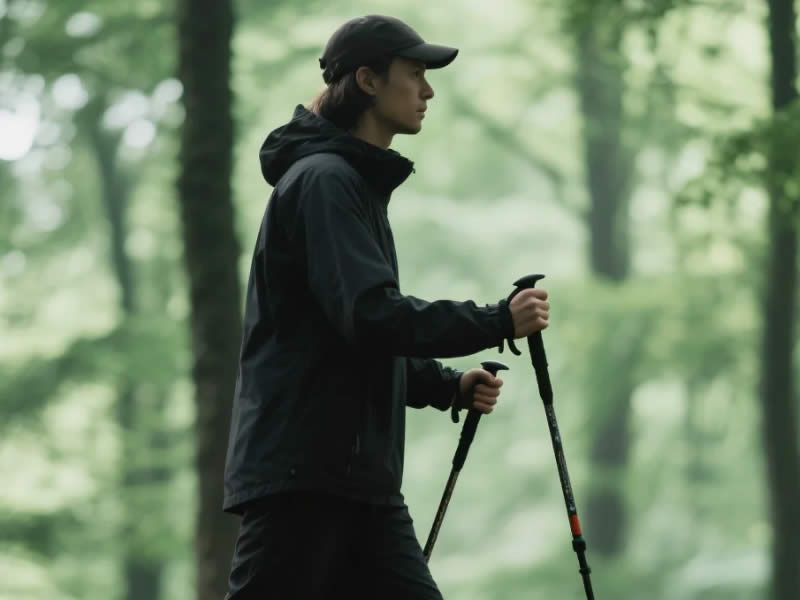
The science of two poles – why pairs are standard
Two poles offer a suite of biomechanical advantages that a single pole cannot replicate:
1. Symmetrical support
With two poles, you distribute weight and effort evenly across both sides of your body. This symmetrical gait reduces the risk of overuse injuries on one side and keeps your spine aligned. On long descents, two poles share the braking load, reducing impact on both knees by 20‑25%.
2. Rhythm and cadence
Two poles establish a natural, rhythmic pattern – left pole with right foot, right pole with left foot. This cadence improves walking efficiency, especially on flat or gently undulating terrain, where the rhythm helps you maintain a steady pace without conscious effort.
3. Stability on uneven ground
On rocky, boggy, or side‑sloped terrain, two poles act as outriggers, giving you four points of contact with the ground. This dramatically improves balance, reduces the risk of stumbles, and provides a stable platform for testing uncertain footing (like a boggy patch or a loose stone).
4. Propulsion on steep ascents
Two poles allow you to push with both arms, taking significant load off your legs. On steep, sustained climbs, this makes a tangible difference – your legs stay fresher, and you can maintain a steadier pace.
What you gain with one pole – the advantages
A single pole has its place, and for certain walkers and conditions, it's the preferred choice:
1. A free hand for other tasks
One pole leaves your other hand free for map reading, camera operation, eating a snack, holding a dog lead, or using a smartphone. This is the most common reason walkers choose a single pole – it's a practical convenience on gentler sections.
2. Lighter weight
A single pole weighs about 240‑280g – half the weight of a pair. On a long, flat walk where you don't need much support, this weight saving is noticeable. For fastpackers and ultralight walkers, a single pole can be a strategic choice.
3. Simplicity on gentle terrain
If you're walking on well‑maintained, flat paths (e.g., canal towpaths, forest roads, or coastal promenades), a single pole is perfectly adequate. You don't need symmetrical support when the ground is even and your knees are not under stress.
4. Useful for minor injuries
If you have a minor injury (e.g., a slightly sore knee or a mild ankle sprain), a single pole can provide targeted support on the affected side. It allows you to offload weight from the injured leg without overcomplicating your gait.
5. Transitions on scrambles
On rocky scrambles where you need one hand free for holds, a single pole can be used as a balance aid on the approach and then stowed. Using one pole reduces the clutter of a pair while still giving you some support.
What you lose with one pole – the compromises
The trade‑offs are significant, especially on challenging terrain:
- Less knee protection – with only one pole, the impact reduction is asymmetrical. The knee on the pole side gets some relief, but the other knee bears the full brunt of descents. Over a long walk, this can lead to fatigue and pain on the unsupported side.
- Reduced balance – on rocky, boggy, or side‑sloped sections, a single pole provides only one extra point of contact. You lose the "outrigger" effect that makes two poles so stable.
- Asymmetrical muscle engagement – using one pole favours one side of your body. Over time, this can lead to muscle imbalances, potentially causing back or hip pain.
- No backup – if your single pole breaks or gets stuck, you have no support. With two poles, you have a spare if one fails.
When one pole is a good idea – practical scenarios
- Gentle, flat walks – canal paths, beach promenades, or short woodland loops.
- Very short walks – under 5 miles on even ground.
- Walking with a dog – you need one hand for the lead.
- Photography – you need one hand for a camera.
- Navigation – you're using a map and compass and need a hand free.
- Trying poles for the first time – a single pole is a low‑commitment introduction.
When one pole is a bad idea – avoid if...
- Steep, rocky descents – the knee impact is too high for single‑pole protection.
- Boggy, uneven moorland – balance is critical; a single pole is not enough.
- Long‑distance walking (over 10 miles/day) – the asymmetrical load will cause fatigue.
- Heavy pack – more weight means more stress on your knees and back; two poles are safer.
- Any history of knee or back issues – symmetrical support is essential.
- Unstable terrain – side slopes, loose scree, or wet rock demand two poles.
How to use a single pole effectively
If you decide on one pole, use it wisely:
- Hold it on the side of your dominant hand – this feels most natural.
- Alternate hands occasionally – swap the pole between hands every few miles to balance the load.
- Use it on the downhill side – when descending, hold the pole on the downhill side to brake and stabilise.
- Set the length for the terrain – shorten slightly for uphills, lengthen for downhills.
- Use the strap properly – the strap should bear the weight, not your grip.
The "one pole on the flat, two on the hills" strategy
Many walkers use a pragmatic compromise: carry two poles but use only one on flat sections, stowing the other on the pack. Then, when you hit a steep ascent or descent, retrieve the second pole and use both. This gives you the convenience of a free hand on easy terrain and the protection of two poles on the challenging sections. It's a bit more faff, but it delivers the best of both worlds.
What if you already have a pair – should you leave one behind?
If you already own a pair of poles, don't leave one at home – bring both and simply use one when you want a free hand. The weight penalty of carrying a stowed pole is minimal (about 250g), and the option to use two on a difficult section is invaluable. You'll never regret having a spare.
Final verdict – one or two?
| Situation | Recommendation |
|---|---|
| Gentle, flat walks under 5 miles | One pole is fine |
| Moderate hills, mixed terrain | Two – you'll appreciate the balance and knee protection |
| Steep, rocky, or boggy terrain | Two – essential |
| Long‑distance walking (10+ miles/day) | Two – for asymmetrical load and fatigue management |
| Photography or dog walking | One pole on the flat, two on the hills (carry both) |
| Anyone with knee or back issues | Two – non‑negotiable |
The verdict: One pole is a valid choice for specific situations, but for most UK hillwalking – with its wet, rocky, and variable terrain – two poles are safer, more efficient, and kinder to your body. If you're only going to buy one, buy a pair – and use them as a pair on the hills. Your knees will thank you.




