




Are trekking poles allowed at UK national park events?
If you're planning to join a guided walk, charity challenge, or walking festival in one of the UK's national parks—the Lake District, Peak District, Snowdonia, or the Yorkshire Dales—you might wonder whether you can bring your trekking poles. The short answer is generally yes, but the specific rules depend on the type of event, the organiser, and sometimes the terrain. This guide explains the typical policies, the exceptions, and how to check before you go, so you can turn up prepared and avoid any last-minute surprises.
The general stance of national park authorities
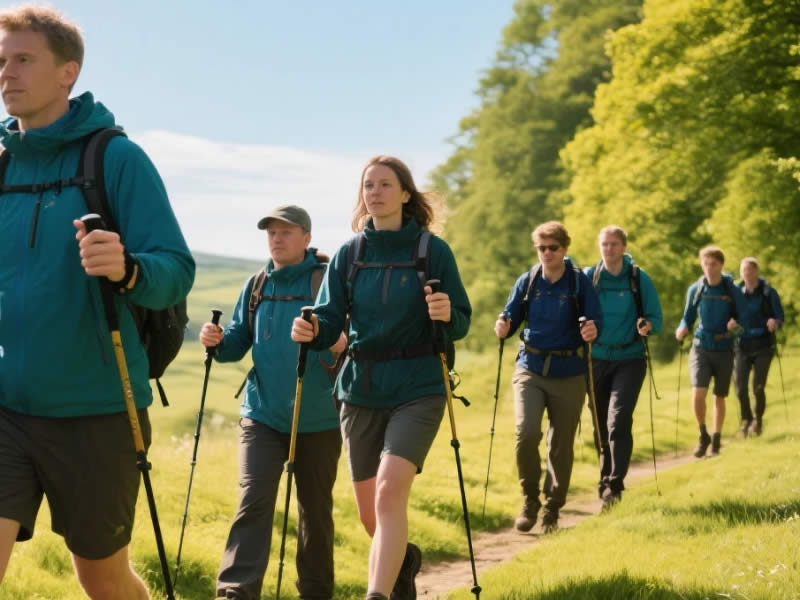
The national park authorities themselves—such as the Lake District National Park Authority or the Peak District National Park—do not have a blanket ban on trekking poles. As a visitor, you are free to use poles for personal walking on public rights of way and open access land. They are considered standard walking equipment, and their use is widely accepted.
However, when you participate in an organised event (as opposed to individual walking), the rules are set by the event organiser, not the park authority. The organiser may have their own policies based on safety, insurance, and the nature of the event.
Types of events and their typical pole policies
1. Guided walks and walking festivals
- Typically allowed: Yes.
- Examples: The Lake District Summer Walking Festival, Peak District Walking Festival, or guided walks run by park rangers or local walking groups.
- Why: These are recreational, non‑competitive events. Poles are seen as personal aids for stability and knee protection, especially on steep or uneven terrain.
- Caveat: Some guides may ask you to use rubber tip protectors on paved sections to avoid damaging the path surface.
2. Charity challenge walks
- Typically allowed: Yes.
- Examples: The National Three Peaks Challenge (organised by charities), or charity treks along the Coast to Coast or Offa's Dyke.
- Why: These events are about participation and fundraising, not competition. Poles are encouraged to help participants complete the distance safely.
- Caveat: If the event has a timed element, check the rules—some may restrict poles to keep the field level.
3. Fell races and competitive trail races
- Typically not allowed (or restricted).
- Examples: The Three Peaks Race (a famous fell race), or the Saunders Lakeland Mountain Marathon.
- Why: In competitive races, poles can be seen as an unfair advantage or a hazard in crowded sections. Some races explicitly ban them; others allow them but with restrictions.
- Check: Many fell races have a "no poles" rule on their registration page. If poles are allowed, they are often subject to specific conditions (e.g., must be stowed on certain sections).
4. Family fun walks and community events
- Typically allowed: Yes.
- Examples: Park-run style events, family-friendly festivals, or school walking days.
- Why: These are low‑key events where comfort is prioritised over speed.
The exceptions – when poles may be restricted
Even if the event generally allows poles, there are situations where they may be prohibited:
- Crowded sections – on narrow paths or stiles, poles can be a hazard to other participants. Organisers may ask you to collapse and stow them in busy areas.
- Environmental protection – on sensitive ground (e.g., fragile peat bogs or limestone pavements), metal tips can cause damage. Some events require rubber tip protectors.
- Competitive fairness – in timed events, poles may be considered "assistance" and are banned to keep the competition equal.
- Insurance liability – some event insurers may exclude pole-related injuries, leading organisers to ban them to reduce risk.
How to find out the policy for your event
The best approach is to check the event's official information:
- Read the event page – look for a "kit list" or "what to bring" section. If poles are not mentioned, they are usually allowed.
- Contact the organiser directly – a quick email or phone call can clarify the policy. Mention that you use poles for knee support or balance.
- Check the terms and conditions – some events have a clause about prohibited items.
- Look for past participant reports – search online forums (e.g., UKClimbing, WalkHighlands) to see if previous participants used poles.
What to do if you're unsure
If you're not sure about the policy, it's safer to bring your poles and be prepared to stow them if asked. Most organisers are reasonable—they won't confiscate them if you're using them for genuine walking support, but they may ask you to collapse them on certain sections.
Tips for events:
- Pack collapsible/folding poles – they are easier to stow when not in use.
- Bring rubber tip protectors – for paved sections and to prevent path damage.
- Remove baskets – if you're walking on rock or pavement, baskets are unnecessary and can be a nuisance.
- Collapse poles on stiles and gates – it's courteous and safer.
Specific national park policies – what to expect
| National Park | Typical policy for events |
|---|---|
| Lake District | Allowed on most guided walks; restricted in some fell races (check race rules). |
| Peak District | Allowed on walking festivals and charity events; banned in some competitive events. |
| Snowdonia | Allowed on general walks; restricted in some races and on sensitive paths (e.g., Crib Goch). |
| Yorkshire Dales | Allowed on most events; check with organiser for three-peaks challenges. |
| Dartmoor | Allowed; use rubber protectors on ancient trackways to avoid damage. |
The official line from National Parks UK
The umbrella organisation, National Parks UK, does not have a unified policy on trekking poles. Each park and each event is different. However, their general guidance is that poles are a legitimate walking aid and are welcomed as long as they are used responsibly.
Final checklist – before you go to a park event
- □
- □
- □
- □
- □
- □
- □
Over to you
In the vast majority of UK national park events, trekking poles are allowed and even encouraged for comfort and safety. The key is to check the specific rules for your event and to use poles responsibly – with rubber protectors on paved paths, collapsed on stiles, and stowed in crowded sections. With a little preparation, you can enjoy your national park event with the support of your trusty poles, just as you would on any other walk. (Word count: ~1,080)
Are trekking poles allowed at UK national park events?
If you're planning to join a guided walk, charity challenge, or walking festival in one of the UK's national parks—the Lake District, Peak District, Snowdonia, or the Yorkshire Dales—you might wonder whether you can bring your trekking poles. The short answer is generally yes, but the specific rules depend on the type of event, the organiser, and sometimes the terrain. This guide explains the typical policies, the exceptions, and how to check before you go, so you can turn up prepared and avoid any last-minute surprises.
The general stance of national park authorities
The national park authorities themselves—such as the Lake District National Park Authority or the Peak District National Park—do not have a blanket ban on trekking poles. As a visitor, you are free to use poles for personal walking on public rights of way and open access land. They are considered standard walking equipment, and their use is widely accepted.
However, when you participate in an organised event (as opposed to individual walking), the rules are set by the event organiser, not the park authority. The organiser may have their own policies based on safety, insurance, and the nature of the event.
Types of events and their typical pole policies
1. Guided walks and walking festivals
- Typically allowed: Yes.
- Examples: The Lake District Summer Walking Festival, Peak District Walking Festival, or guided walks run by park rangers or local walking groups.
- Why: These are recreational, non‑competitive events. Poles are seen as personal aids for stability and knee protection, especially on steep or uneven terrain.
- Caveat: Some guides may ask you to use rubber tip protectors on paved sections to avoid damaging the path surface.
2. Charity challenge walks
- Typically allowed: Yes.
- Examples: The National Three Peaks Challenge (organised by charities), or charity treks along the Coast to Coast or Offa's Dyke.
- Why: These events are about participation and fundraising, not competition. Poles are encouraged to help participants complete the distance safely.
- Caveat: If the event has a timed element, check the rules—some may restrict poles to keep the field level.
3. Fell races and competitive trail races
- Typically not allowed (or restricted).
- Examples: The Three Peaks Race (a famous fell race), or the Saunders Lakeland Mountain Marathon.
- Why: In competitive races, poles can be seen as an unfair advantage or a hazard in crowded sections. Some races explicitly ban them; others allow them but with restrictions.
- Check: Many fell races have a "no poles" rule on their registration page. If poles are allowed, they are often subject to specific conditions (e.g., must be stowed on certain sections).
4. Family fun walks and community events
- Typically allowed: Yes.
- Examples: Park-run style events, family-friendly festivals, or school walking days.
- Why: These are low‑key events where comfort is prioritised over speed.
The exceptions – when poles may be restricted
Even if the event generally allows poles, there are situations where they may be prohibited:
- Crowded sections – on narrow paths or stiles, poles can be a hazard to other participants. Organisers may ask you to collapse and stow them in busy areas.
- Environmental protection – on sensitive ground (e.g., fragile peat bogs or limestone pavements), metal tips can cause damage. Some events require rubber tip protectors.
- Competitive fairness – in timed events, poles may be considered "assistance" and are banned to keep the competition equal.
- Insurance liability – some event insurers may exclude pole-related injuries, leading organisers to ban them to reduce risk.
How to find out the policy for your event
The best approach is to check the event's official information:
- Read the event page – look for a "kit list" or "what to bring" section. If poles are not mentioned, they are usually allowed.
- Contact the organiser directly – a quick email or phone call can clarify the policy. Mention that you use poles for knee support or balance.
- Check the terms and conditions – some events have a clause about prohibited items.
- Look for past participant reports – search online forums (e.g., UKClimbing, WalkHighlands) to see if previous participants used poles.
What to do if you're unsure
If you're not sure about the policy, it's safer to bring your poles and be prepared to stow them if asked. Most organisers are reasonable—they won't confiscate them if you're using them for genuine walking support, but they may ask you to collapse them on certain sections.
Tips for events:
- Pack collapsible/folding poles – they are easier to stow when not in use.
- Bring rubber tip protectors – for paved sections and to prevent path damage.
- Remove baskets – if you're walking on rock or pavement, baskets are unnecessary and can be a nuisance.
- Collapse poles on stiles and gates – it's courteous and safer.
Specific national park policies – what to expect
| National Park | Typical policy for events |
|---|---|
| Lake District | Allowed on most guided walks; restricted in some fell races (check race rules). |
| Peak District | Allowed on walking festivals and charity events; banned in some competitive events. |
| Snowdonia | Allowed on general walks; restricted in some races and on sensitive paths (e.g., Crib Goch). |
| Yorkshire Dales | Allowed on most events; check with organiser for three-peaks challenges. |
| Dartmoor | Allowed; use rubber protectors on ancient trackways to avoid damage. |
The official line from National Parks UK
The umbrella organisation, National Parks UK, does not have a unified policy on trekking poles. Each park and each event is different. However, their general guidance is that poles are a legitimate walking aid and are welcomed as long as they are used responsibly.
Final checklist – before you go to a park event
- □
- □
- □
- □
- □
- □
- □
Over to you
In the vast majority of UK national park events, trekking poles are allowed and even encouraged for comfort and safety. The key is to check the specific rules for your event and to use poles responsibly – with rubber protectors on paved paths, collapsed on stiles, and stowed in crowded sections. With a little preparation, you can enjoy your national park event with the support of your trusty poles, just as you would on any other walk.




