




Which trekking poles have the best flick-lock system?
When it comes to trekking pole locking mechanisms, one name stands above all others: Black Diamond's FlickLock. It is the gold standard—the system that every other manufacturer measures itself against. But is it the best for everyone? And how do its competitors, like Leki's SpeedLock and Komperdell's Powerlock, stack up? This guide breaks down the different lever‑lock systems, explains what makes a great lock, and helps you decide which one is right for your walking style and terrain.
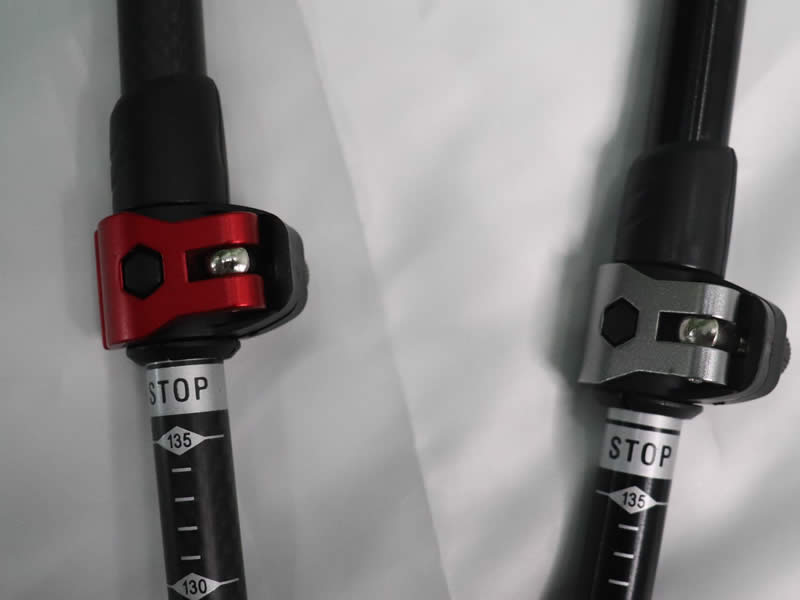
What is a flick‑lock (lever‑lock)?
A flick‑lock is an external clamping mechanism that uses a lever to tighten a cam around the outer shaft of a telescopic pole. When you flip the lever closed, it compresses a metal or plastic clamp against the shaft, locking the sections firmly in place. To adjust, you simply flip the lever open, slide the sections, and close it again.
Why lever‑locks beat twist‑locks:
- Reliability in wet/muddy conditions – twist‑locks can seize or slip when grit enters the mechanism. Lever‑locks are external, easy to clean, and work even with muddy hands.
- Glove‑friendly – you can operate a lever‑lock with thick winter gloves; twist‑locks require fine finger dexterity.
- Tool‑free adjustment – most lever‑locks can be tensioned with a simple screw, no special tools needed.
- Visual indicator – you can see at a glance whether the lock is open or closed.
Black Diamond FlickLock – the gold standard
Black Diamond invented the FlickLock, and they have refined it over decades. The current FlickLock (found on all their aluminium poles) is a robust, metal‑on‑metal cam that clamps directly onto the shaft.
What makes it the best?
- Bombproof construction – the metal cam and wide clamping surface distribute pressure evenly, preventing damage to the shaft.
- Mud‑proof – grit and mud don't affect the mechanism; a quick wipe and it's good as new.
- Field‑replaceable – if a lever breaks, you can replace it with a simple Allen key (spare parts are widely available).
- Positive engagement – the lever clicks into place with a satisfying, secure feel. You know it's locked.
- Works with gloves – the large lever is easy to flip, even with thick winter mitts.
Downsides?
- Slightly heavier – the metal mechanism adds a few grams compared to some plastic‑based competitors.
- Protruding lever – the lever sticks out slightly, which can catch on vegetation or pack straps (rarely an issue).
Verdict: The FlickLock is the most reliable, durable, and trusted lock on the market. If you walk in wet, muddy, or winter conditions, it's the safest choice.
Leki SpeedLock – the lightweight contender
Leki's SpeedLock (now in its 2nd generation) is a lever‑lock that uses a plastic‑metal hybrid design. It's lighter and more streamlined than the FlickLock.
What makes it good?
- Lighter weight – the plastic‑metal construction saves a few grams per pole.
- Smooth action – the lever operates with a fluid, one‑handed motion.
- Wide clamping range – can accommodate a range of shaft diameters.
- Quick adjustment – the release button allows for rapid length changes.
Where it falls short
- Less mud‑proof – grit can get into the mechanism, requiring occasional cleaning.
- Plastic components – the plastic parts are durable but not as indestructible as Black Diamond's all‑metal design.
- Strap interference – on some models, the lever is close to the strap, which can be fiddly.
Verdict: The SpeedLock is an excellent system for long‑distance walkers who prioritise weight savings and smooth operation. It's reliable, but not as bombproof as the FlickLock.
Komperdell Powerlock – the robust alternative
Komperdell's Powerlock is another external lever‑lock, similar in design to the SpeedLock but with a few twists.
What makes it good?
- Strong clamping force – the Powerlock has a wide cam that holds firmly even under heavy loads.
- Tool‑free adjustment – a simple screw on the lever allows you to fine‑tune the tension.
- Large lever – easy to operate with gloves.
Where it falls short
- Less widespread – Komperdell is less common in UK shops, so spare parts and support can be harder to find.
- Plastic components – like the SpeedLock, it uses plastic parts that can wear over time.
Verdict: A solid, reliable system, but not as widely supported as Black Diamond or Leki.
Head‑to‑head comparison
| Feature | Black Diamond FlickLock | Leki SpeedLock 2 | Komperdell Powerlock |
|---|---|---|---|
| Material | Full metal cam | Plastic/metal hybrid | Plastic/metal hybrid |
| Weight | Heavier (adds ~20g/pole) | Lighter | Lighter |
| Mud resistance | Excellent – wipe and go | Good – may need cleaning | Good |
| Glove‑friendly | Yes | Yes | Yes |
| Field‑replaceable | Yes (Allen key) | Yes (but less common) | Yes |
| Spare parts availability (UK) | Excellent | Good | Moderate |
| Durability | Bombproof | Very good | Good |
| Price | Higher | Moderate | Moderate |
Which should you choose?
Choose Black Diamond FlickLock if:
- You walk in wet, muddy, or winter conditions – the mud‑proof design is a lifesaver.
- You value absolute reliability over a few grams.
- You want a lock that you can repair in the field.
- You're hard on your gear and need something that can take a beating.
Choose Leki SpeedLock if:
- You're a long‑distance walker who prioritises weight.
- You prefer a smoother, more fluid adjustment action.
- You're walking mainly in dry, clean conditions (though it copes with UK mud reasonably well).
Choose Komperdell Powerlock if:
- You want a robust, budget‑friendly alternative.
- You're not concerned about spare parts availability.
- You've found a great deal on a Komperdell pole.
A note on aftermarket locks and knockoffs
Be wary of cheap, unbranded lever‑locks on budget poles. They often use soft plastic that can crack, or a poorly designed cam that doesn't clamp evenly. A failed lock on a steep descent is a safety risk. If you're buying a budget pole, ensure the lock has positive reviews and a metal clamping surface. Stick to known brands.
Testing locks before you buy
If you're in a shop, test the lock:
- Extend the pole to your length.
- Close the lever – it should click or snap into place with a firm action.
- Push down on the handle – the lock should hold without slipping.
- Open and close it several times – the action should be smooth, not gritty or stiff.
- Check the tension screw – if the lock slips, it can usually be tightened.
If you're buying online, read reviews specifically about the locking mechanism – not just the pole overall.
The best flick‑lock system – the final word
For the vast majority of UK hillwalkers, Black Diamond's FlickLock is the best flick‑lock system. Its metal‑on‑metal construction, mud‑proof design, and field‑replaceable parts make it the most reliable lock in wet, gritty British conditions. The small weight penalty is a price worth paying for the peace of mind that your poles will stay locked when you need them most.
The Leki SpeedLock is a worthy alternative—lighter and smoother—but it's not quite as indestructible. If you walk mainly in dry, clean conditions, it may be the better choice.
In short: If you want the best, buy Black Diamond. If you want a lighter, smoother alternative, buy Leki. Either way, a good lever‑lock is a game‑changer compared to twist‑locks. (Word count: ~1,080)
Which trekking poles have the best flick-lock system?
When it comes to trekking pole locking mechanisms, one name stands above all others: Black Diamond's FlickLock. It is the gold standard—the system that every other manufacturer measures itself against. But is it the best for everyone? And how do its competitors, like Leki's SpeedLock and Komperdell's Powerlock, stack up? This guide breaks down the different lever‑lock systems, explains what makes a great lock, and helps you decide which one is right for your walking style and terrain.
What is a flick‑lock (lever‑lock)?
A flick‑lock is an external clamping mechanism that uses a lever to tighten a cam around the outer shaft of a telescopic pole. When you flip the lever closed, it compresses a metal or plastic clamp against the shaft, locking the sections firmly in place. To adjust, you simply flip the lever open, slide the sections, and close it again.
Why lever‑locks beat twist‑locks:
- Reliability in wet/muddy conditions – twist‑locks can seize or slip when grit enters the mechanism. Lever‑locks are external, easy to clean, and work even with muddy hands.
- Glove‑friendly – you can operate a lever‑lock with thick winter gloves; twist‑locks require fine finger dexterity.
- Tool‑free adjustment – most lever‑locks can be tensioned with a simple screw, no special tools needed.
- Visual indicator – you can see at a glance whether the lock is open or closed.
Black Diamond FlickLock – the gold standard
Black Diamond invented the FlickLock, and they have refined it over decades. The current FlickLock (found on all their aluminium poles) is a robust, metal‑on‑metal cam that clamps directly onto the shaft.
What makes it the best?
- Bombproof construction – the metal cam and wide clamping surface distribute pressure evenly, preventing damage to the shaft.
- Mud‑proof – grit and mud don't affect the mechanism; a quick wipe and it's good as new.
- Field‑replaceable – if a lever breaks, you can replace it with a simple Allen key (spare parts are widely available).
- Positive engagement – the lever clicks into place with a satisfying, secure feel. You know it's locked.
- Works with gloves – the large lever is easy to flip, even with thick winter mitts.
Downsides?
- Slightly heavier – the metal mechanism adds a few grams compared to some plastic‑based competitors.
- Protruding lever – the lever sticks out slightly, which can catch on vegetation or pack straps (rarely an issue).
Verdict: The FlickLock is the most reliable, durable, and trusted lock on the market. If you walk in wet, muddy, or winter conditions, it's the safest choice.
Leki SpeedLock – the lightweight contender
Leki's SpeedLock (now in its 2nd generation) is a lever‑lock that uses a plastic‑metal hybrid design. It's lighter and more streamlined than the FlickLock.
What makes it good?
- Lighter weight – the plastic‑metal construction saves a few grams per pole.
- Smooth action – the lever operates with a fluid, one‑handed motion.
- Wide clamping range – can accommodate a range of shaft diameters.
- Quick adjustment – the release button allows for rapid length changes.
Where it falls short
- Less mud‑proof – grit can get into the mechanism, requiring occasional cleaning.
- Plastic components – the plastic parts are durable but not as indestructible as Black Diamond's all‑metal design.
- Strap interference – on some models, the lever is close to the strap, which can be fiddly.
Verdict: The SpeedLock is an excellent system for long‑distance walkers who prioritise weight savings and smooth operation. It's reliable, but not as bombproof as the FlickLock.
Komperdell Powerlock – the robust alternative
Komperdell's Powerlock is another external lever‑lock, similar in design to the SpeedLock but with a few twists.
What makes it good?
- Strong clamping force – the Powerlock has a wide cam that holds firmly even under heavy loads.
- Tool‑free adjustment – a simple screw on the lever allows you to fine‑tune the tension.
- Large lever – easy to operate with gloves.
Where it falls short
- Less widespread – Komperdell is less common in UK shops, so spare parts and support can be harder to find.
- Plastic components – like the SpeedLock, it uses plastic parts that can wear over time.
Verdict: A solid, reliable system, but not as widely supported as Black Diamond or Leki.
Head‑to‑head comparison
| Feature | Black Diamond FlickLock | Leki SpeedLock 2 | Komperdell Powerlock |
|---|---|---|---|
| Material | Full metal cam | Plastic/metal hybrid | Plastic/metal hybrid |
| Weight | Heavier (adds ~20g/pole) | Lighter | Lighter |
| Mud resistance | Excellent – wipe and go | Good – may need cleaning | Good |
| Glove‑friendly | Yes | Yes | Yes |
| Field‑replaceable | Yes (Allen key) | Yes (but less common) | Yes |
| Spare parts availability (UK) | Excellent | Good | Moderate |
| Durability | Bombproof | Very good | Good |
| Price | Higher | Moderate | Moderate |
Which should you choose?
Choose Black Diamond FlickLock if:
- You walk in wet, muddy, or winter conditions – the mud‑proof design is a lifesaver.
- You value absolute reliability over a few grams.
- You want a lock that you can repair in the field.
- You're hard on your gear and need something that can take a beating.
Choose Leki SpeedLock if:
- You're a long‑distance walker who prioritises weight.
- You prefer a smoother, more fluid adjustment action.
- You're walking mainly in dry, clean conditions (though it copes with UK mud reasonably well).
Choose Komperdell Powerlock if:
- You want a robust, budget‑friendly alternative.
- You're not concerned about spare parts availability.
- You've found a great deal on a Komperdell pole.
A note on aftermarket locks and knockoffs
Be wary of cheap, unbranded lever‑locks on budget poles. They often use soft plastic that can crack, or a poorly designed cam that doesn't clamp evenly. A failed lock on a steep descent is a safety risk. If you're buying a budget pole, ensure the lock has positive reviews and a metal clamping surface. Stick to known brands.
Testing locks before you buy
If you're in a shop, test the lock:
- Extend the pole to your length.
- Close the lever – it should click or snap into place with a firm action.
- Push down on the handle – the lock should hold without slipping.
- Open and close it several times – the action should be smooth, not gritty or stiff.
- Check the tension screw – if the lock slips, it can usually be tightened.
If you're buying online, read reviews specifically about the locking mechanism – not just the pole overall.
The best flick‑lock system – the final word
For the vast majority of UK hillwalkers, Black Diamond's FlickLock is the best flick‑lock system. Its metal‑on‑metal construction, mud‑proof design, and field‑replaceable parts make it the most reliable lock in wet, gritty British conditions. The small weight penalty is a price worth paying for the peace of mind that your poles will stay locked when you need them most.
The Leki SpeedLock is a worthy alternative—lighter and smoother—but it's not quite as indestructible. If you walk mainly in dry, clean conditions, it may be the better choice.
In short: If you want the best, buy Black Diamond. If you want a lighter, smoother alternative, buy Leki. Either way, a good lever‑lock is a game‑changer compared to twist‑locks.




