




Should I use trekking poles with duck feet for boggy ground?
If you've ever crossed a peat bog on a British moor, you'll know the sinking feeling—literally. Your boot disappears into black, sucking mud, and your trekking pole plunges deep, robbing you of support. This is where "duck feet" (the colloquial name for large, wide mud baskets) come into their own. The short answer is yes—if you are walking on boggy ground, duck feet (or large mud baskets) are essential equipment. However, like all specialised gear, they have a specific purpose, and they are not a universal answer for every trail.
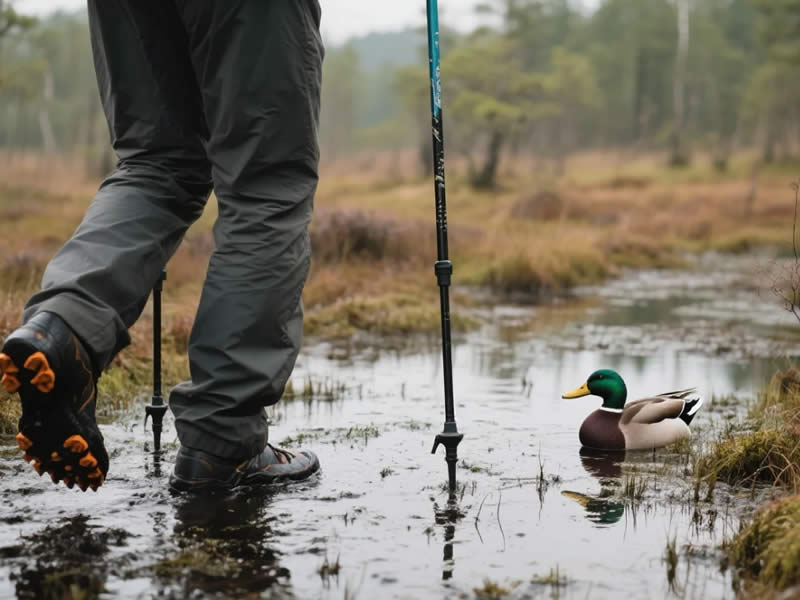
The Problem: Why Standard Baskets Fail in Bogs
Standard mud baskets are designed for moderate soft ground—they stop the pole from sinking a few inches into a grassy field. But on a true bog, where the top layer is a floating mat of peat and vegetation over deep water, standard baskets are useless. They are too small, acting like a tiny raft on a vast ocean; they sink, and you lose the benefit of the pole's support.
- You sink deeper – a pole that sinks 15 cm provides far less leverage and stability.
- You get stuck – pulling a pole out of deep, thick mud creates a powerful suction, which can be tiring and awkward.
Duck feet are specifically designed to solve this. They are wide, often 10 cm or more in diameter, and have open slots or a flat shape that spreads the load, preventing the pole from sinking.
What Are "Duck Feet" Baskets?
"Duck feet" is a term used by UK hikers to describe the largest, widest mud baskets available. They are shaped to look a bit like a duck's webbed foot—broad and flat. Their key features are:
- Large Surface Area: The wide diameter spreads the weight of the pole over a larger area of soft ground, preventing it from plunging through the top layer of peat.
- Semi-Solid or Slotted Design: They often have a semi-solid design with large slots. This allows water and mud to pass through the basket, reducing suction and preventing them from becoming clogged.
- Extreme Floatation: The primary goal is to keep the pole tip on the surface of the bog, providing a stable platform for your weight.
The Benefits of Duck Feet on Boggy Ground
1. Floatation on Deep Peat
On the deep, black peat of the Pennine moors or the wide-open bogs of the Flow Country, you need floatation. Duck feet are large enough to sit on the surface of the peat, giving you a solid, stable platform to push off from.
2. Reduced Fatigue
When your pole sinks, you have to work harder to pull it out. The suction of deep mud can be exhausting over a long day. Duck feet, with their slotted design, resist this suction, allowing you to plant and lift your poles with far less effort.
3. Improved Stability and Confidence
Knowing that your pole isn't going to disappear into a black hole gives you confidence. You can plant the pole with conviction, using it to test the ground ahead and maintain your balance on the most treacherous, wobbling sections of bog.
4. Aids Navigation
In featureless, flat boggy terrain, navigation can be difficult. Your poles become your eyes on the ground. Duck feet allow you to test the ground ahead of you, helping you find firmer footing.
The Drawbacks: When Duck Feet are a Hindrance
While essential for boggy ground, duck feet have significant downsides that make them unsuitable for all-day use on mixed terrain.
1. They Create Drag
On firm ground, a large, flat basket catches on rocks, grass, and heather. You'll find yourself dragging the pole back, which is tiring and frustrating. They are noisy and can catch on roots and vegetation.
2. They Catch on Scrambles
On rocky ground or a steep, boulder-strewn path, duck feet catch on the edges of rocks and can trip you up. They are a hazard when you're trying to find stable footing.
3. They are Bulkier to Carry
They take up more space in your pack when not in use, and they are more easily broken if you jam them into a rocky crack.
The Solution: Carry Them and Swap
The most practical approach for UK hillwalking, where terrain can change from bog to rock in a single walk, is to carry your duck feet and swap them on the fly.
- For the Bog: Fit the duck feet before you step onto the soft ground.
- For the Rock: As soon as you reach firm, rocky ground, remove the duck feet and switch to standard mud baskets or bare tips (with rubber protectors for travel).
Pro Tip: Most baskets are designed to be swapped quickly, even with cold hands. Practice doing this at home so it becomes a fast, easy routine on the hill.
Choosing the Right Duck Feet
When shopping for large mud baskets, look for:
- Compatibility: They must be compatible with your pole brand.
- Diameter: Aim for the largest baskets you can find. 7-10 cm is a good target.
- Slotted Design: Look for large, open slots to reduce suction.
- Stiffness: The plastic should be stiff enough to hold its shape under load.
Top Options
- Black Diamond Power Baskets: These are the gold standard—large, robust, and designed for heavy use.
- Leki Mud Baskets: Leki offers large, slotted baskets that are compatible with their entire range.
- Komperdell "Moor" Baskets: Specifically designed for European bogs, they offer excellent floatation.
What About Snow Baskets?
Snow baskets are even larger than mud baskets, designed for deep powder. While they would float on a bog, they are a poor choice. The solid design creates huge suction, and they can easily crack on rocks.
The Verdict
Should you use trekking poles with duck feet for boggy ground? Absolutely yes. If you are walking on deep, wet peat, they are a game-changer. They will save your energy, improve your balance, and give you the confidence to tackle the most difficult, waterlogged sections of your route.
However, you should not use them on firm, rocky terrain. For mixed routes, carry them in your pack and be ready to swap them on the hill. This simple, flexible approach ensures you get the best performance from your poles on any surface the British weather and terrain throws at you. (Word count: ~1,080)
Should I use trekking poles with duck feet for boggy ground?
If you've ever crossed a peat bog on a British moor, you'll know the sinking feeling—literally. Your boot disappears into black, sucking mud, and your trekking pole plunges deep, robbing you of support. This is where "duck feet" (the colloquial name for large, wide mud baskets) come into their own. The short answer is yes—if you are walking on boggy ground, duck feet (or large mud baskets) are essential equipment. However, like all specialised gear, they have a specific purpose, and they are not a universal answer for every trail.
The Problem: Why Standard Baskets Fail in Bogs
Standard mud baskets are designed for moderate soft ground—they stop the pole from sinking a few inches into a grassy field. But on a true bog, where the top layer is a floating mat of peat and vegetation over deep water, standard baskets are useless. They are too small, acting like a tiny raft on a vast ocean; they sink, and you lose the benefit of the pole's support.
- You sink deeper – a pole that sinks 15 cm provides far less leverage and stability.
- You get stuck – pulling a pole out of deep, thick mud creates a powerful suction, which can be tiring and awkward.
Duck feet are specifically designed to solve this. They are wide, often 10 cm or more in diameter, and have open slots or a flat shape that spreads the load, preventing the pole from sinking.
What Are "Duck Feet" Baskets?
"Duck feet" is a term used by UK hikers to describe the largest, widest mud baskets available. They are shaped to look a bit like a duck's webbed foot—broad and flat. Their key features are:
- Large Surface Area: The wide diameter spreads the weight of the pole over a larger area of soft ground, preventing it from plunging through the top layer of peat.
- Semi-Solid or Slotted Design: They often have a semi-solid design with large slots. This allows water and mud to pass through the basket, reducing suction and preventing them from becoming clogged.
- Extreme Floatation: The primary goal is to keep the pole tip on the surface of the bog, providing a stable platform for your weight.
The Benefits of Duck Feet on Boggy Ground
1. Floatation on Deep Peat
On the deep, black peat of the Pennine moors or the wide-open bogs of the Flow Country, you need floatation. Duck feet are large enough to sit on the surface of the peat, giving you a solid, stable platform to push off from.
2. Reduced Fatigue
When your pole sinks, you have to work harder to pull it out. The suction of deep mud can be exhausting over a long day. Duck feet, with their slotted design, resist this suction, allowing you to plant and lift your poles with far less effort.
3. Improved Stability and Confidence
Knowing that your pole isn't going to disappear into a black hole gives you confidence. You can plant the pole with conviction, using it to test the ground ahead and maintain your balance on the most treacherous, wobbling sections of bog.
4. Aids Navigation
In featureless, flat boggy terrain, navigation can be difficult. Your poles become your eyes on the ground. Duck feet allow you to test the ground ahead of you, helping you find firmer footing.
The Drawbacks: When Duck Feet are a Hindrance
While essential for boggy ground, duck feet have significant downsides that make them unsuitable for all-day use on mixed terrain.
1. They Create Drag
On firm ground, a large, flat basket catches on rocks, grass, and heather. You'll find yourself dragging the pole back, which is tiring and frustrating. They are noisy and can catch on roots and vegetation.
2. They Catch on Scrambles
On rocky ground or a steep, boulder-strewn path, duck feet catch on the edges of rocks and can trip you up. They are a hazard when you're trying to find stable footing.
3. They are Bulkier to Carry
They take up more space in your pack when not in use, and they are more easily broken if you jam them into a rocky crack.
The Solution: Carry Them and Swap
The most practical approach for UK hillwalking, where terrain can change from bog to rock in a single walk, is to carry your duck feet and swap them on the fly.
- For the Bog: Fit the duck feet before you step onto the soft ground.
- For the Rock: As soon as you reach firm, rocky ground, remove the duck feet and switch to standard mud baskets or bare tips (with rubber protectors for travel).
Pro Tip: Most baskets are designed to be swapped quickly, even with cold hands. Practice doing this at home so it becomes a fast, easy routine on the hill.
Choosing the Right Duck Feet
When shopping for large mud baskets, look for:
- Compatibility: They must be compatible with your pole brand.
- Diameter: Aim for the largest baskets you can find. 7-10 cm is a good target.
- Slotted Design: Look for large, open slots to reduce suction.
- Stiffness: The plastic should be stiff enough to hold its shape under load.
Top Options
- Black Diamond Power Baskets: These are the gold standard—large, robust, and designed for heavy use.
- Leki Mud Baskets: Leki offers large, slotted baskets that are compatible with their entire range.
- Komperdell "Moor" Baskets: Specifically designed for European bogs, they offer excellent floatation.
What About Snow Baskets?
Snow baskets are even larger than mud baskets, designed for deep powder. While they would float on a bog, they are a poor choice. The solid design creates huge suction, and they can easily crack on rocks.
The Verdict
Should you use trekking poles with duck feet for boggy ground? Absolutely yes. If you are walking on deep, wet peat, they are a game-changer. They will save your energy, improve your balance, and give you the confidence to tackle the most difficult, waterlogged sections of your route.
However, you should not use them on firm, rocky terrain. For mixed routes, carry them in your pack and be ready to swap them on the hill. This simple, flexible approach ensures you get the best performance from your poles on any surface the British weather and terrain throws at you.




