




How do I stop the sections on my trekking poles from slipping?
A slipping trekking pole is one of the most frustrating and potentially dangerous issues you can encounter on a walk. You plant the pole, lean your weight on it, and instead of a solid, stable support, it collapses—often just a few centimetres, but enough to throw you off balance. The short answer is that a slipping pole is almost always a fixable problem, and it usually comes down to a dirty or poorly adjusted locking mechanism. This guide covers the specific fixes for both lever-locks and twist-locks, the maintenance routines that prevent the problem, and the simple field fixes that can save your walk.
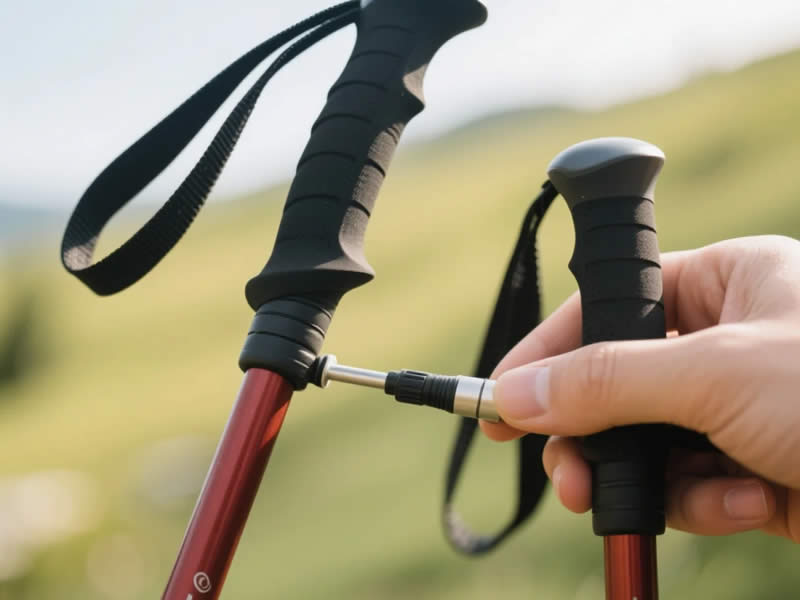
Understanding Why Poles Slip
Before you can fix the problem, it helps to understand why it happens. The sections of a trekking pole are held together by friction created by a locking mechanism. That friction can be compromised by:
- Dirt and Grit: Mud and sand act as a lubricant, reducing the friction between the locking mechanism and the shaft.
- Moisture: Water can reduce the grip of the wedge on the inner wall.
- Wear and Tear: Over time, the plastic wedge or the metal cam can wear down, reducing the clamping force.
- Incorrect Tension: The lock is simply not tight enough to grip the shaft.
Lever-Locks (FlickLock, SpeedLock, Powerlock) – The Common Fix
Lever-locks are generally more reliable than twist-locks, but they are not immune to slipping. The most common cause is a loss of tension in the cam mechanism.
Step 1: Clean the Contact Surface
The first thing to check is dirt. The lever-lock operates by clamping a metal or plastic cam onto the outer shaft. If there is mud or grit on the cam or the shaft, the lock won't grip properly.
- Flip the lever open.
- Wipe the inside of the cam with a clean cloth.
- Wipe the shaft where the cam touches it.
- Close the lever and test it.
Step 2: Adjust the Tension Screw
If cleaning doesn't work, the lock needs more clamping pressure. Most lever-locks have a small tension screw on the side of the lever (usually needing a 3mm or 4mm Allen key).
- Flip the lever open.
- Using an Allen key, turn the screw clockwise by a quarter-turn. This increases the clamping pressure.
- Close the lever and test it. It should now feel firmer to close. If it still slips, repeat the adjustment.
- The "Firm Feel" Test: The lever should close with a reassuring, firm resistance. If it closes too easily, it's too loose. If it's impossible to close, you've over-tightened it—loosen it slightly.
Step 3: The "Bite" Test
A classic trick for a slipping lever-lock is to roughen the surface of the shaft slightly.
- Open the lever and slide the lower section to your desired length.
- Use a coarse piece of sandpaper or a rock to roughen a small section of the shaft where the cam clamps.
- Close the lock. The rough surface will provide more friction, stopping the slip.
Warning: This method is effective but will wear down the clamp over time. Use it as a temporary fix or on a pair of cheap, emergency poles.
Twist-Locks – The Stubborn Fix
Twist-locks are more prone to slipping than lever-locks, as they rely on an internal expanding wedge.
Step 1: Clean the Wedge and Inner Tube
Dirt and grit are the primary causes of slippage in twist-locks.
- Unscrew the lower section completely to remove it from the upper section.
- Inspect the plastic wedge. It will likely have a layer of black, greasy dirt on it.
- Clean the wedge with a cloth and some isopropyl alcohol or mild soapy water.
- Clean the inside of the upper tube using a cloth or a long brush.
- Dry everything thoroughly.
Step 2: The "Boiling Water" Trick
If the wedge is still slippery, you can create more friction.
- Boil a kettle of water.
- Submerge the plastic wedge in the hot water for 30-60 seconds. This softens the plastic slightly.
- Dry the wedge and immediately reassemble the pole.
- Tighten the lock firmly while the wedge is still slightly warm and expanded. As it cools, it will grip the inner tube more securely.
Step 3: The "Tape" Trick
If the wedge is worn and no longer expands enough, you can add a tiny amount of material to increase its diameter.
- Wrap a single, thin layer of electrical tape or plumber's tape around the wedge (the part that expands).
- Reassemble the pole and test the lock. This effectively increases the diameter of the wedge, improving the grip.
Field Fixes – When You're on the Hill
If your pole slips mid-walk, you can often make a temporary fix.
The "Rocks" Trick
- Find a small, flat pebble.
- Place it between the shaft and the lever-lock cam. This acts as a wedge, increasing the clamping pressure.
- Close the lever. It will be tight, but it should hold.
The "Grip" Trick
- Extend the pole to its correct length.
- Squeeze the locking mechanism with a cloth or glove.
- Try to twist the sections. This can sometimes improve the grip.
Maintenance to Prevent Slipping
The best way to deal with a slipping pole is to prevent it.
- Clean After Every Muddy Walk: Rinse the locks and shafts with clean water. Dried mud is abrasive and acts as a lubricant.
- Dry Thoroughly: Moisture reduces friction. Store your poles extended and dry.
- Check Tension Before Each Walk: Give the locks a quick test. If they feel loose, adjust them.
- Lubricate the Right Parts: Use a tiny amount of silicone grease on the threads of a twist-lock (not the wedge) and on the pivot point of a lever-lock (not the cam).
When to Give Up and Replace
If you have tried all the fixes—cleaning, adjusting, tape, and boiling water—and the pole still slips, it's time to replace it. A slipping pole is a safety hazard. It can collapse on a descent, causing a fall. If the plastic wedge is worn down, or the metal cam is deformed, no amount of cleaning will fix it.
A quick fix is worth a try, but a broken lock is a broken lock. If it's a cheap pole, replacing it is the safest option. If it's a premium pole, check the manufacturer's spare parts—you can often replace just the lock mechanism.
Final Checklist
- □
- □
- □
- □
- □
- □
Over to You
A slipping trekking pole is a fixable problem, but it requires the right diagnosis. Lever-locks usually need a tension adjustment or a clean. Twist-locks often need a thorough clean of their internal mechanism. By understanding these two systems and keeping them maintained, you can prevent the frustration of a collapsing pole and keep your walking safe and enjoyable.




