




Should I buy trekking poles with or without shock absorbers for Kilimanjaro training?
Preparing for Kilimanjaro is a significant undertaking. The "Roof of Africa" is a high‑altitude, multi‑day trek that demands stamina, mental fortitude, and smart gear choices. A common question that arises during training is whether you should invest in trekking poles with shock absorbers (also known as anti‑shock systems). The short, definitive answer is no – for Kilimanjaro training, you should buy trekking poles without shock absorbers. This guide explains why, weighing the biomechanics, the specific terrain you'll face, and the practical realities of a high‑altitude trek.
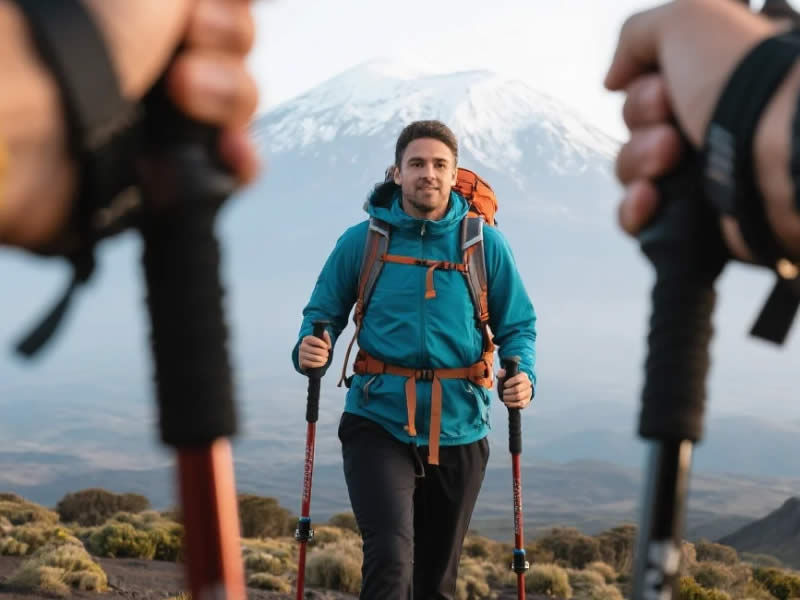
The Case Against Shock Absorbers
Shock absorbers—internal springs or elastomers designed to cushion the impact of each plant—sound like a sensible idea for protecting your joints. However, for the steep, prolonged, and varied terrain of a mountain like Kilimanjaro, they introduce significant drawbacks.
1. Energy Loss on the Ascent
Every time you plant a pole and push, a shock‑absorbing system compresses. This compression absorbs some of the energy you are trying to transfer into forward motion. On a long, grinding ascent, this energy loss is cumulative. You will be working harder to move the same distance. Kilimanjaro is a test of endurance; you want to conserve energy, not waste it on compressing a spring.
2. Reduced Control on Descents
On the descent, you rely on your poles for braking and stability. A shock absorber can make the pole feel "mushy" and unpredictable. When you plant the pole, the spring compresses and then rebounds, potentially causing the tip to lift off the ground at the wrong moment. This can be unsettling on steep, loose scree, where you need precise, solid, predictable contact with the ground.
3. Added Weight and Complexity
Shock absorbers add weight to each pole. On a multi‑day trek, every gram counts. The mechanical spring mechanism is also an additional component that can fail. Mud and grit can work their way into the mechanism, causing it to jam or squeak. On a remote mountain, a broken shock absorber is a failure you can't fix.
4. The "Mushy" Feel
Experienced walkers often describe shock‑absorbing poles as feeling "mushy." They lack the crisp, direct feedback of a rigid pole. This can make you feel less connected to the terrain, which is not ideal when you're navigating technical sections.
The Case for Rigid Poles (Without Shock Absorbers)
For the specific demands of Kilimanjaro and your training, rigid poles are the clear winner.
1. Direct Power Transfer
A rigid pole transfers every joule of your effort directly into forward motion. There is no energy lost to a spring. You push, and the ground propels you forward. This is crucial on the steep, extended climbs of Kilimanjaro, where efficiency is paramount.
2. Simplicity and Reliability
A rigid pole is a simpler piece of equipment. There are fewer moving parts to fail. You don't need to worry about a spring jamming with grit or freezing in cold conditions. This reliability is invaluable when you are far from any repair shop.
3. Weight Savings
Rigid poles are lighter than their shock‑absorbing equivalents. This weight saving might be marginal on a single use, but over the course of a 6‑8 day Kilimanjaro trek, it becomes significant. Less weight in your hands means less fatigue and more energy for the summit push.
Kilimanjaro Terrain – Why Rigid Poles Excel
The path on Kilimanjaro is not a smooth, paved road. It's a mix of:
- Steep, Rocky Scree: The terrain is often composed of loose, shifting stones. On this surface, you need a pole that you can plant with confidence. A rigid pole provides the stability you need to push up and avoid slipping back.
- Long, Stepped Ascents: The various routes (especially the Machame and Lemosho) feature long, stepped sections known as the "Barranco Wall" and "Kibo's" scree. A rigid pole allows you to use your arms effectively to pull yourself up each step, taking the load off your legs.
- Soft, Volcanic Sand: You will also walk through stretches of soft, volcanic sand. A rigid pole is easier to pull out of this softer ground without the complication of a spring.
Training Specifics – What to Practice With
Your training should be as specific as possible to the challenge you face. This means you should be training with the poles you will use on the mountain.
- Use Rigid Poles in Training: If you buy shock‑absorbing poles for your training but plan to use rigid poles on the mountain, you will have to learn a new technique. Practice with the equipment you will use on the day.
- Develop Your Technique: Without shock absorbers, you will need to develop a more refined, controlled planting technique. Your arms will become the shock absorbers. This is a good thing—it engages your muscles and teaches you to walk more efficiently.
Other Key Features for Kilimanjaro Poles
While we've established that you should avoid shock absorbers, here are the other essential features to look for:
- Material: 7075 aluminium. It's durable, bends rather than snaps, and is a reliable choice for the rocky terrain.
- Locking Mechanism: Lever‑locks. They are reliable, easy to use with gloves, and unaffected by mud.
- Grip: Cork. It stays tacky when wet, moulds to your hand, and provides a comfortable, secure hold.
- Baskets: Mud/snow baskets. Essential for the soft, volcanic sand and any snow you might encounter near the summit.
- Tips: Carbide. Standard carbide tips are fine, but consider a pair of ice tips if you're trekking during the wetter season.
The Verdict
| Feature | Shock‑Absorbing Pole | Rigid Pole |
|---|---|---|
| Energy Efficiency | Poor (energy lost to spring) | Excellent (direct transfer) |
| Control on Scree | Mushy, less predictable | Precise, stable |
| Weight | Heavier | Lighter |
| Reliability | More moving parts to fail | Simple, reliable |
| Biomechanics | Cushioned but less connected | Connected, efficient |
Final Recommendation
Do not buy trekking poles with shock absorbers for Kilimanjaro training.
Choose a pair of lightweight, rigid, 7075 aluminium poles with reliable lever‑locks, comfortable cork grips, and large baskets. They will be lighter, more efficient, and more reliable than their shock‑absorbing counterparts. By training with the poles you'll use on the mountain, you'll develop the right technique and build the specific endurance you need for a successful summit. Your knees, your arms, and your summit chances will thank you.




