




How to secure trekking poles on a pack without them dangling?
There's nothing more irritating on a long walk than the relentless, rhythmic thumping of a pair of trekking poles swinging against your pack. It's not just annoying—it's tiring, it disrupts your rhythm, and it can cause your poles to snag on branches or even get damaged. The short answer to securing your poles is use your pack's compression straps in a diagonal or vertical configuration, but the real key is mastering the technique and understanding the specific attachment points on your rucksack. This guide covers the most effective methods, the gear you need, and the pro tips that will keep your poles rock‑solid and silent.
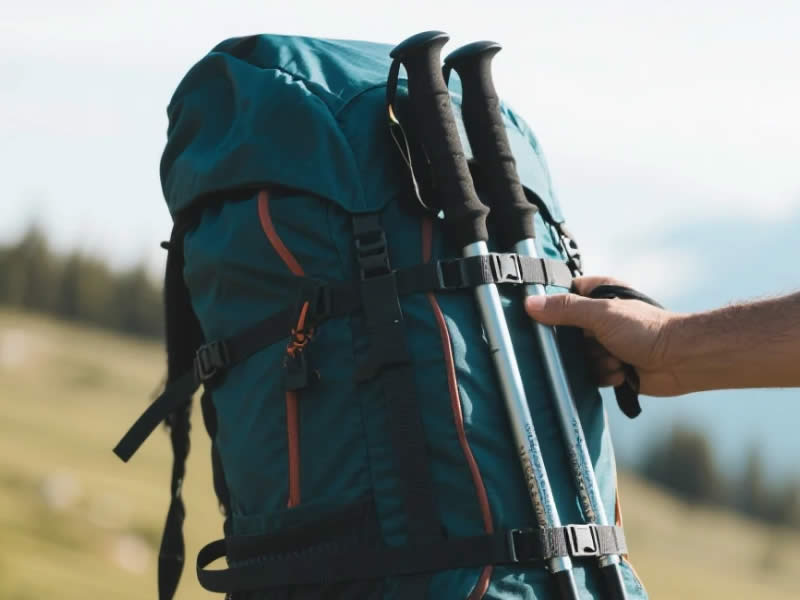
Why Poles Dangle and How to Stop It
A dangling pole is a pendulum. It swings because it's only secured at one point, or because the straps holding it are too loose. The solution is always to create two points of contact with the pack. The more secure the attachment, the less it will swing.
The fundamental principle is friction. You want the poles to be held tightly against the pack, using the tension of the straps to create enough friction to prevent them from moving up, down, or sideways.
Method 1: The Diagonal Carry – The Gold Standard
This is the most common and effective method for securing poles on a rucksack, especially for day walks and multi‑day treks.
How to Do It:
- Collapse Your Poles: Ensure your poles are fully collapsed to their shortest length.
- Position Them: Place the poles diagonally across the back of your pack. The general rule is to position the handles at your shoulder and the tips at your hip.
- Secure the Top: Use the top compression strap (or the top loop) on your pack to secure the handles. Thread the strap through the handle loop or around the top section.
- Secure the Bottom: Use the bottom compression strap (or the lower loop) on your pack to secure the tips. Thread the strap around the lower section.
Why It Works:
The diagonal position creates a natural, stable shape. It stops the poles from swinging sideways or up and down.
Pro Tips:
- Bundle Them First: Before you attach the poles, use a Velcro strap or a rubber band to hold the two poles together. This transforms them from two separate, wobbly items into a single, rigid unit.
- Tighten Firmly: The straps need to be pulled tight. You should be able to give the poles a shake and feel that there is no movement.
- Check the Tip Protectors: Always fit rubber tip protectors. They prevent the sharp tips from snagging on your pack fabric or against your body.
Method 2: The Vertical Side Carry – The Minimalist Approach
This is a common method on packs without a dedicated diagonal system. It uses the side compression straps.
How to Do It:
- Collapse the Poles.
- Bundle Them: Strap the two poles together.
- Thread Under Straps: Slide the bundled poles vertically down the side of your pack, threading them under the side compression straps.
- Secure the Top: The top strap should secure the handles.
- Secure the Bottom: The bottom strap should secure the lower section, just above the tips.
Pro Tips:
- Two Straps Minimum: Ensure you are using at least two points of contact. A single strap will allow the poles to pivot and swing.
- Tighten the Straps: These side straps need to be very tight to prevent the poles from falling out.
- Watch for Sway: On a side carry, the poles can sometimes swing into your arm as you walk. If this happens, angle them slightly backwards.
Method 3: The Front Carry (Running Vests) – The Quick‑Draw Approach
This is the method used by trail runners and fastpackers.
How to Do It:
- Collapse the Poles.
- Locate the Loops: Most running vests have small elastic loops on the front shoulder straps.
- Slide Them In: Insert the poles vertically through the loops. The handles should point upwards and the tips downwards.
- Secure the Tips: The tips should rest in small fabric pockets or be secured by a lower bungee cord near the base of the shoulder strap.
Why It Works:
It keeps the poles stable and prevents them from bouncing because they are held close to your centre of gravity. This is the most secure method for running.
The Dedicated Pole Holder – The Ultimate Solution
If your pack doesn't have adequate attachment points, you can buy a dedicated pole holder.
Types:
- Elastic Holder: A simple bungee cord system that attaches to your pack's daisy chains.
- Pole Quiver: A fabric sleeve that holds the poles securely on the back of your pack.
Pros:
- They are designed specifically to stop dangling.
- They often feature a drawstring or clip to cinch the poles in place.
The "Bundle and Tuck" Trick
If you are caught without a full set of straps or the straps are not long enough, you can use the "bundle and tuck" trick:
- Collapse the poles and strap them together.
- Slide them horizontally under the top compression strap of your pack.
- Tuck the tips into the side pocket or under the side compression strap.
- Secure the handles to the pack's haul loop with a carabiner.
This is a bodge, but it will prevent your poles from swinging loose.
The "Elastic Band" Method
A simple, cheap, and effective fix:
- Collapse the poles.
- Attach a long, thin bungee cord (or a piece of shock cord) to your pack's daisy chain.
- Place the poles against the pack in your preferred diagonal or vertical position.
- Wrap the bungee cord around the poles and the pack, hooking it onto the opposite daisy chain.
This is a simple, adjustable system that works well for holding poles in place.
How to Test Your Attachment
Once you've attached the poles, give your pack a good shake:
- Check for Up/Down Movement: If the poles slide up or down, your straps are too loose.
- Check for Side-to-Side Movement: If the poles swing from side to side, you may need a second strap.
- Check for Rotation: If the poles twist around the strap, you need a wider contact point.
Why the "Dangling" Problem Matters
A dangling pole is more than an annoyance. It is:
- Tiring: Your body is constantly compensating for the unexpected, swinging weight.
- Noisy: The "clack‑clack" of poles against your pack is distracting.
- A Snag Hazard: The poles can catch on branches or rock edges, pulling you off balance.
- A Damage Risk: A loose pole can scratch your pack, your poles, or your face.
Final Checklist
- □ Poles collapsed to shortest length.
- □ Bundled together with a Velcro strap or elastic band.
- □ Rubber tip protectors fitted.
- □ Positioned diagonally or vertically on the pack.
- □ Secured with at least two points of contact.
- □ Straps are tight enough to prevent movement.
- □ Checked for any swinging by giving the pack a shake.
The Verdict
Securing your trekking poles on a pack without them dangling is a simple skill that makes a huge difference to your walking comfort. The diagonal carry is the gold standard, but the vertical side carry and front carry are also effective. By using at least two points of contact, bundling the poles together, and tightening the straps, you can eliminate that irritating thump and keep your poles secure and silent. A few seconds of adjustment at the start of your walk will save you hours of annoyance.




