




Can I fly with trekking poles in hold baggage only?
Yes, you can—and you must. All UK airlines, including British Airways, Ryanair, easyJet, and Jet2, permit trekking poles in checked hold luggage. However, there's a crucial catch: they are banned from cabin baggage. This guide covers everything you need to know about flying with your poles, from the official policies and packing techniques to weight limits and alternatives if you're travelling with hand luggage only.
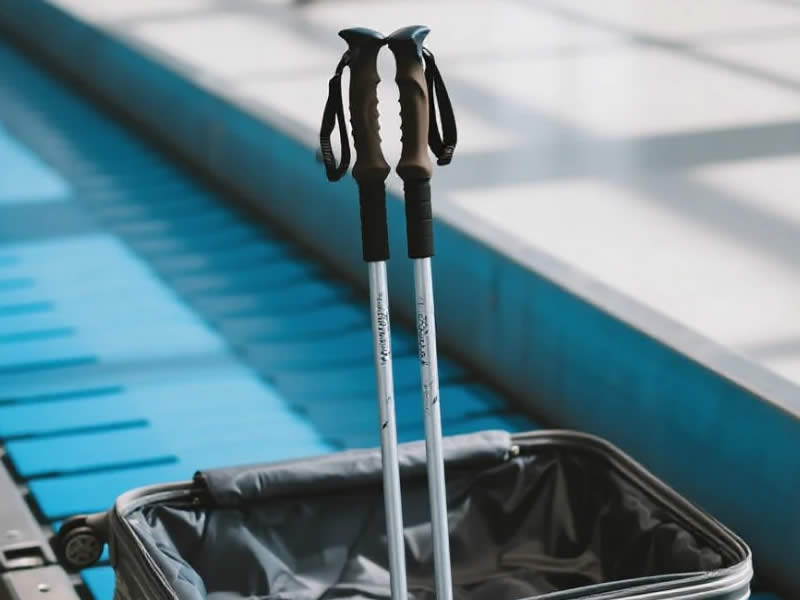
The Definitive Answer
The short answer is a clear yes. Trekking poles are allowed in your hold baggage on any UK airline. They are not treated as special or oversized sports equipment, so they don't incur any extra fees as long as they're within your standard luggage weight allowance.
However, the answer is also a firm no for cabin baggage. Security regulations classify trekking poles as potential blunt instruments, making them prohibited in the aircraft cabin. There are no exceptions, regardless of whether the poles are collapsible, made of lightweight materials, or sheathed in a protective cover.
Why They're Banned from the Cabin
The ban is a security measure. The Civil Aviation Authority (CAA) and all UK airlines classify trekking poles as items that could be used as a weapon. The X‑ray machine at security will easily detect them, even if they are buried deep inside your rucksack. The result is simple: they will be confiscated, and you will lose them.
The Only Reliable Method: Check Them In
The only way to get your trekking poles to your destination is to pack them in your checked hold luggage. Here's the step‑by‑step process to ensure they travel safely.
1. Collapse Them Fully
- For telescopic poles, unlock each section, slide them together, and re‑lock them gently. A tight lock is not needed—you just want to prevent them from rattling.
- For folding Z‑poles, fold them into their compact bundle.
2. Protect the Tips
- Carbide tips are sharp. They can easily puncture your suitcase or rucksack and damage your other gear.
- Fit the rubber tip protectors that came with your poles. If you've lost them, wrap each tip in a thick sock or a few layers of duct tape.
- For extra protection, place the wrapped tips inside a small plastic container or a hard‑shell case (like a glasses case).
3. Bundle the Pair Together
- Place the two poles side‑by‑side and secure them with Velcro straps, cable ties, or a couple of strong rubber bands.
- This prevents them from rattling, shifting, and scratching each other.
4. Position in the Centre of Your Bag
- Place the bundled poles in the centre of your suitcase or rucksack.
- Surround them with soft clothing—jumpers, fleeces, towels, or a sleeping bag. This acts as a shock absorber, protecting them from the rough handling your luggage will inevitably receive.
- Avoid placing them near the edges of your bag or against hard items like cooking stoves or water bottles.
5. Loosen the Locks
- This is a crucial pro tip. Before you pack, loosen your twist‑locks or lever‑locks by a quarter‑turn.
- Why? The pressure changes in the aircraft hold can cause locks to seize or become over‑tightened. A loose lock prevents this and ensures your poles will be easy to adjust when you land.
6. Check Your Weight
- A pair of trekking poles weighs about 500‑600g (0.5‑0.6 kg). This counts towards your checked luggage allowance.
- For most airlines, this is a 20‑23kg allowance. For budget airlines like Ryanair or easyJet, you may have booked a 15kg or 10kg bag. Ensure your total luggage weight is within the limit to avoid excess baggage fees.
What to Do If You're Flying with Hand Luggage Only
If you've booked a ticket without checked luggage, you have a few alternative options.
1. Add a Checked Bag
- This is the simplest and most reliable solution.
- You can add a checked bag online before your flight. It's almost always cheaper to do it online than at the airport.
- For Ryanair and easyJet, adding a 20kg bag typically costs £15‑30 each way.
2. Ship Your Poles Ahead
- Use a courier service like SendMyBag or ParcelHero to ship your poles to your accommodation.
- This is a great option if you want to avoid baggage fees entirely. It can cost roughly £20‑40 each way.
3. Rent at Your Destination
- Many outdoor shops in popular walking areas (like the Alps, the Lake District, or Scotland) offer pole rentals.
- For a short trip (2‑3 days), the cost of renting a pair may be less than the cost of checking luggage.
4. Buy Cheap Poles Locally
- For a budget option, you can buy a cheap pair of poles at a Decathlon or other outdoor retailer near your destination. A basic pair might cost £20‑30, which could be cheaper than paying for checked luggage.
Airline‑Specific Notes
| Airline | Cabin Policy | Checked Policy | Weight Allowance |
|---|---|---|---|
| British Airways | Banned | Permitted | 23kg (standard) |
| Ryanair | Banned | Permitted | 10kg, 15kg, or 20kg |
| easyJet | Banned | Permitted | 15kg or 23kg |
| Jet2 | Banned | Permitted | 22kg (standard) |
The Golden Rule: Always check the airline's latest prohibited items list before you fly. Policies can change, and it's your responsibility to be informed.
How to Pack Your Poles (The Visual Checklist)
Here's a quick visual checklist to run through before you zip up your bag:
- □
- □
- □
- □
- □
- □
On Arrival – Unpacking and Resetting
When you collect your bag at baggage reclaim:
- Unwrap the tips – remove the socks or rubber covers.
- Tighten the locks – they may have loosened slightly during transit.
- Extend the poles – set them to your flat‑terrain length.
- Test the locks – push down on the handle to ensure they are secure.
The Financial Angle: Cost of Checking vs. Shipping
| Option | Typical Cost | Best For |
|---|---|---|
| Add a Checked Bag | £15‑30 each way | Short trips, frequent travellers |
| Ship Ahead | £20‑40 each way | Avoiding baggage fees, peace of mind |
| Rent | £5‑15 per day | Short trips with minimal gear |
| Buy Cheap | £20‑30 | One‑off trips, budget travellers |
Final Verdict
Yes, you can—and must—fly with trekking poles in hold baggage only. The airlines are clear: checked baggage is the only option. By following the simple packing steps—collapsing, bundling, protecting the tips, and cushioning them with clothing—you can ensure your poles arrive safely at your destination. If you're travelling with hand luggage only, plan ahead: add a checked bag, ship your poles, rent them, or buy a cheap pair at your destination.
A little preparation will save you the heartache of confiscation and the cost of buying new poles on the trail.




