




Can I use trekking poles for trail running in the Peak District?
The short answer is yes – and for many runners, they are a game-changer. The Peak District is a trail runner's paradise, but its gritstone edges, boggy moorland, and steep, technical descents can be brutal on your legs. Trekking poles are increasingly common on the fells of the Peak District, and for good reason. However, using them effectively for running requires a different approach than hillwalking—you need the right type of pole, the right technique, and a plan for stowing them when you don't need them. This guide covers everything you need to know.
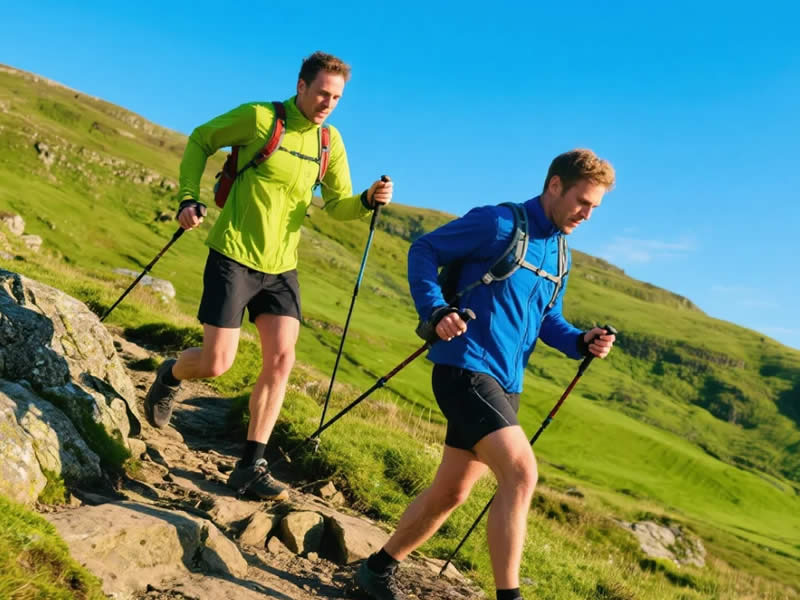
The Peak District Terrain: Why Poles Work
The Peak District is not a gentle, rolling landscape. It offers a unique mix of challenges that make poles a valuable tool:
- Gritstone Edges: The rocky outcrops of Stanage Edge or Burbage Valley are unforgiving. The ground is uneven, and a misplaced foot can lead to a nasty fall.
- Flagstone Paths: The famous Peak District flagstones are notoriously slippery when wet—which is most of the time. Poles provide two extra points of contact, giving you significantly more stability.
- Boggy Moorland: The peat bogs of Bleaklow and Kinder Scout are legendary. They can be energy-sapping and treacherous. Poles allow you to test the ground ahead, maintaining your balance and rhythm.
- Steep Climbs: The likes of Mam Tor, Win Hill, and the climbs out of Edale require serious leg power. Poles help you pull yourself up, taking some of the load off your quads.
- Knee-Jarring Descents: The descents are often steep and technical. Poles act as brakes, reducing the impact on your knees. Studies show that using poles can reduce knee impact by up to 25% on descents. This is a huge benefit for anyone running the Edale Skyline or the Trigger.
The Right Pole for Trail Running
You can't just use a pair of heavy, telescopic hillwalking poles for running. They are too heavy, too slow to adjust, and a pain to stow. You need a pole designed for the fast, dynamic movement of trail running.
Key Features:
- Folding (Z-Pole) Design: These poles collapse to 35-40cm, small enough to fit in a running vest or strap to the side. They are quick to deploy and easy to stow.
- Lightweight: Aim for 150-180g per pole. Carbon fibre is the material of choice for running poles, offering an excellent strength-to-weight ratio. Aluminium is heavier but more robust—a personal choice.
- Quick Deployment: The best running poles feature a system that allows you to unfold and lock them in seconds. Practice this at home—it should be muscle memory.
- Mud Baskets: For the Peak District bogs, mud baskets are essential. They prevent the pole from sinking into the peat and provide a stable platform.
- Comfortable Grips: Foam grips are often preferred for running as they are lightweight and absorb sweat.
Top Picks for the Peak District:
- Black Diamond Distance Carbon Z: The benchmark for lightweight, folding poles. Reliable, quick to deploy, and built to last.
- LEKI Ultratrail FX.One: A fantastic alternative with the excellent SpeedLock 2 system. The trigger-release strap is a great feature.
- Gossamer Gear LT5: For the weight-obsessed, this is the lightest option at 132g per pole. It uses a twist-tension system, which is less reliable in wet conditions than a lever-lock, but its weight is unmatched.
Technique: Running, Not Walking
Using poles for running is different from using them for walking.
- The Rhythm: The rhythm is the same—left pole with right foot—but the cadence is faster. Your arm swing needs to be quicker and more fluid.
- The Plant: Plant the pole ahead of your foot. In running, the plant is often more of a gentle tap than a heavy push. You are using the pole for rhythm and efficiency, not just for support.
- Uphill: On a steep climb, actively pull yourself up. This is where you can really feel the benefit—you are using your arms to help your legs.
- Downhill: On a descent, use the poles for braking. Plant them firmly ahead of you to slow your momentum and reduce the impact on your knees.
- The Stow: This is the skill that separates a good runner from a great one. You need to be able to stow and deploy your poles without breaking stride. Most running vests have dedicated pole loops on the front straps, allowing for a quick "stow and go."
The "No Poles" Rule in Some Races
It's important to note that many UK trail running events and fell races ban trekking poles. This is often for safety reasons (avoiding tripping in a crowded pack) or for competitive fairness. If you are planning to enter a race, always check the rules. For a local "fell race" like the Edale Skyline, poles are generally not permitted. For a less competitive "trail run" or for your own training, they are a great tool.
Etiquette on the Trail
If you're using poles on a popular Peak District trail, be mindful of other runners and walkers:
- Don't Swing Them: Keep your poles close to your body and under control.
- Be Aware on Narrow Paths: Be prepared to stow them or slow down for others.
- Respect the "No Poles" Rule: If the event rules say no poles, do not use them.
The Verdict
Yes, you can and should use trekking poles for trail running in the Peak District. They will save your knees on the descents, give you extra power on the climbs, and provide crucial stability on the rocky and boggy sections.
Choose a lightweight, folding pair, practice your technique, and you'll quickly find they become an essential part of your Peak District running kit. Just remember to check the rules of any event you're entering, and always be considerate to other users on the trail.




