




Are Z-poles better than three-section trekking poles for travel?
Yes, for most travellers, Z-poles (folding poles) are the better choice. They collapse to a compact 35‑40cm, making them significantly easier to pack and transport than traditional three‑section telescopic poles, which typically collapse to 60‑70cm. However, there's a crucial catch: while they physically fit in a carry‑on, airlines still ban them from the cabin. This guide breaks down the pros and cons, the packing differences, and helps you decide which is right for your travel needs.
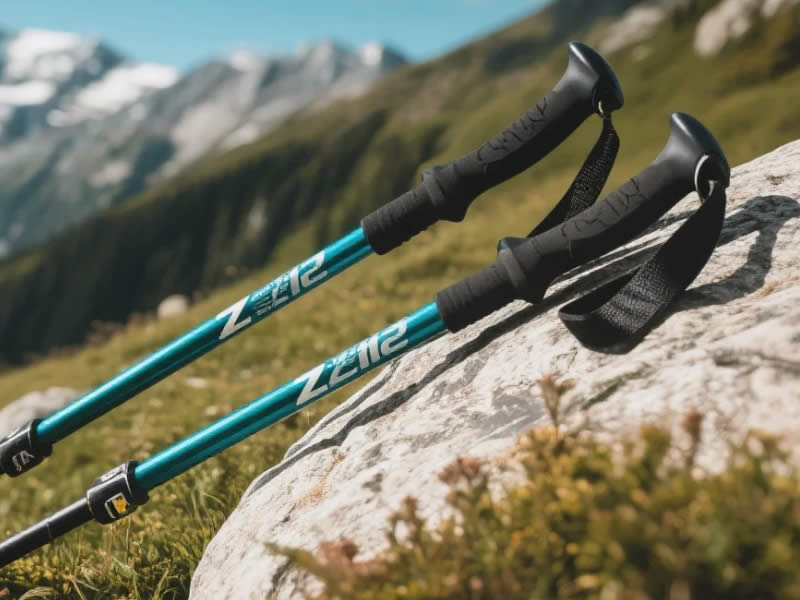
The Core Difference: Packed Size
This is the most significant advantage of Z‑poles for travel.
- Z‑Poles (Folding): Collapse to 35‑40cm. They are a small, neat bundle that can fit inside a suitcase, attach to the side of a backpack, or even fit in a large daypack.
- Three‑Section Telescopic Poles: Collapse to 60‑70cm. They are longer and more cumbersome. They require a larger suitcase or need to be strapped to the outside of a pack, making them more awkward for travel.
The Verdict: Z‑poles are far easier to pack and carry.
The "Carry‑On" Illusion
This is the most common misconception. Many travellers buy Z‑poles specifically because they think they can take them as carry‑on luggage.
- The Reality: Even if they fit in your bag, all UK and international airlines ban trekking poles from the cabin. They are classified as potential blunt instruments, and security will confiscate them.
- The Exception: The only exception is for mobility aids with a doctor's note.
The Verdict: Z‑poles are a more compact piece of checked luggage, but they are still a piece of checked luggage.
Durability vs. Compactness
The design difference between the two types directly affects their durability.
Z‑Poles
- Structure: They have thin‑walled sections held together by an internal cord. This makes them lighter and more compact.
- Durability: They are more fragile. A sideways impact on a rocky surface can snap a carbon fibre Z‑pole. They are best suited for well‑maintained trails.
- Travel Risk: They can be damaged during baggage handling if not packed securely.
Three‑Section Telescopic
- Structure: The sections overlap, creating a thicker, more robust shaft.
- Durability: They are significantly tougher. An aluminium telescopic pole will bend under stress, giving you a chance to straighten it. They are a safer choice for rocky, unpredictable terrain.
- Travel Risk: The longer packed length makes them more susceptible to being bent or crushed in a suitcase.
The Verdict: Telescopic poles are more durable, but Z‑poles are lighter and more compact.
Speed of Assembly and Adjustment
Z‑Poles
- Assembly: Unfold and pull. The sections click into place in seconds.
- Adjustment: They are usually fixed‑length. You choose a size when you buy. You cannot adjust the length on the trail.
Three‑Section Telescopic
- Assembly: Slide the sections out and lock them. This takes a few seconds longer.
- Adjustment: You can adjust the length for different terrains (shorten for uphills, lengthen for downhills). This is a significant advantage on variable terrain.
The Verdict: Z‑poles are faster to set up. Telescopic poles are more versatile.
Weight Comparison
- Z‑Poles: Typically 150‑180g per pole. Extremely lightweight.
- Telescopic Poles: Typically 240‑280g per pole. Heavier, but the extra weight comes from the thicker, more durable shafts.
The Verdict: Z‑poles are significantly lighter, which is a major advantage for long‑distance travel where every gram counts.
Best for Which Type of Travel?
Choose Z‑Poles If...
- You are a fastpacker or ultralight traveller who needs to pack as light as possible.
- You are travelling to well‑maintained trails (e.g., the Camino de Santiago, long‑distance European trails).
- You are willing to accept the fragility of carbon for the weight saving.
- You need a pole that can be packed into a small suitcase or daypack.
Choose Telescopic Poles If...
- You are travelling to rocky, unpredictable terrain (e.g., the Alps, the Himalayas, or UK winter mountains).
- You need to adjust the length for different terrains on the same walk.
- You prioritise durability over a few grams of weight saving.
- You don't mind the longer packed length and have a larger suitcase.
A Quick Comparison Table
| Feature | Z‑Poles | Telescopic Poles |
|---|---|---|
| Packed Length | 35‑40cm | 60‑70cm |
| Weight | 150‑180g | 240‑280g |
| Durability | Fragile | Robust |
| Length Adjustment | Fixed | Adjustable |
| Speed of Assembly | Very Fast | Fast |
| Best For | Ultralight, well‑maintained trails | Rocky, variable terrain |
The Verdict
For travel, Z‑poles are the better choice for most people. Their compact size and light weight make them far easier to pack and carry than telescopic poles. However, you must still check them in as hold luggage, and you must be aware of their fragility.
If you are a fastpacker or a long‑distance walker on well‑maintained trails, the Black Diamond Distance Z is the gold standard. If you are heading to rocky, unpredictable terrain, the extra weight and length of a telescopic pole are a price worth paying for the added durability. Choose the pole that best suits your travel style.




