




Quick-Draw vs Standard Hiking Pole Locking Mechanisms?
The locking mechanism is the heart of any adjustable trekking pole. Its reliability directly impacts your safety and comfort on the trail. The debate between modern "quick-draw" levers and traditional "standard" twist locks is central to choosing your gear. Understanding their fundamental differences, performance in various conditions, and long-term reliability is key to selecting the right tool for your adventures.
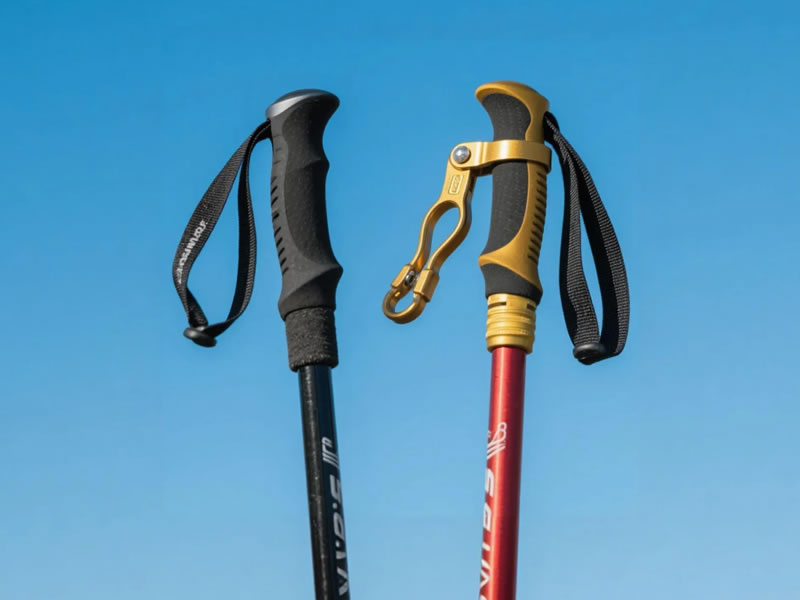
Recommended trekking pole purchase link: https://s.click.aliexpress.com/e/_c4M7OWaN
Defining the Mechanisms
1. Quick-Draw Mechanisms (External Lever Locks):
This category includes systems like Black Diamond's FlickLock/FlickLock Pro and LEKI's SpeedLock/SpeedLock 2. They operate via an external lever that, when engaged, cinches a metal or reinforced collar tightly around the pole shaft. Adjustment is tool-free: flip the lever to loosen, slide the section, and flip it back to lock.
2. Standard Mechanisms (Internal Twist Locks):
Often called "spin locks" or "twist locks," these work by rotating the shaft section to tighten an internal expander collar against the inner wall of the adjacent section. There is no external lever; friction from the tightened collar holds the pole in place.
Head-to-Head Performance Comparison
| Feature | Quick-Draw Lever Lock | Standard Twist Lock |
|---|---|---|
| Ease of Use | Excellent. Easy to operate with gloves, cold hands, or limited dexterity. | Poor. Requires a firm, bare-handed grip and can be difficult with gloves. |
| Adjustment Speed | Fast. One-handed, on-the-move adjustment is possible. | Slow. Requires two-handed twisting, often stopping to adjust. |
| Security & Reliability | Superior. Provides a visible, mechanical clamp. Less prone to gradual slippage under load. | Variable. Prone to slippage over time as internal components wear or get dirty. |
| Durability & Maintenance | Excellent. External parts are serviceable. Dirt/mud can be wiped clean. Mechanisms are robust. | Fair. Internal threads and expanders can corrode, collect grit, and wear out. Difficult to clean. |
| Performance in Wet/Cold | Excellent. Levers function consistently. Water and ice have minimal impact. | Poor. Can freeze shut or fail to grip when wet. Metal-on-metal can become very cold. |
| Weight | Slightly heavier due to lever hardware. | Slightly lighter due to fewer external components. |
| Field Repairability | Good. Failure is usually obvious and can often be temporarily secured. | Poor. Internal failure is difficult to diagnose or fix without tools. |
Deep Dive: The Critical Failure Modes
Twist Locks: The Slippery Slope of Friction
The primary flaw of twist locks is their reliance on consistent, perfect friction. Several factors degrade this:
- Dirt and Grit: Sand or silt inside the shaft acts as a lubricant, preventing the expander from getting a solid grip.
- Wear: The plastic expander collar wears down with use, reducing its diameter and clamping force.
- Temperature: Metal contracts in the cold, potentially loosening the grip. In freezing conditions, moisture inside can literally freeze the sections together.
- Overtightening: Users often over-torque twist locks to prevent slipping, which can strip the threads or crack the internal collar.
Quick-Draw Levers: The Mechanical Clamp
Lever locks function as a mechanical vice. The lever provides significant mechanical advantage to clamp the collar with force far exceeding what hand-tightening can achieve. Security is visual and tactile—you see and feel the lever lock into place. While not indestructible, their failure modes (e.g., a broken lever spring) are less common and often don't cause catastrophic collapse during use.
Which Mechanism is Right for You?
Choose Quick-Draw Lever Locks If:
- You hike in variable weather (rain, cold, mud).
- You need to make frequent adjustments for uphill/downhill sections.
- You wear gloves while hiking.
- You carry a heavy backpack and need absolute confidence in your poles' stability.
- You prioritize long-term reliability and ease of maintenance.
- Recommended Models: Black Diamond Trail Pro (FlickLock Pro), LEKI Micro Vario (SpeedLock 2), REI Co-op Flash series.
A Standard Twist Lock Might Suffice If:
- You are a fair-weather, casual day hiker on predictable terrain.
- Minimizing weight and cost is your absolute top priority (common in ultra-budget poles).
- You set your pole length once per hike and rarely adjust it.
- Important: If you choose twist locks, inspect them regularly for wear and clean the internal mechanisms.
The Professional and Thru-Hiking Consensus
The preference in demanding outdoor communities is overwhelmingly clear. Backpacking guides, mountaineers, and long-distance thru-hikers almost universally prefer and recommend lever-lock systems. The reason is simple: in environments where gear failure can lead to injury or expedition compromise, the proven reliability of a lever lock is non-negotiable. The minor weight penalty is considered a wise trade for unwavering security.
Final Verdict: A Clear Winner for Most Hikers
While twist locks have a place in the lightest and most budget-conscious gear niches, quick-draw lever locks are objectively superior for the vast majority of hikers in terms of reliability, safety, and user experience.
The ability to make quick, secure adjustments in all conditions provides not just convenience, but also greater ergonomic benefit (properly adjusted poles protect joints better) and safety. Investing in a pole with a quality lever-lock system from a reputable brand is an investment in peace of mind, ensuring that your poles will function as dependable partners for thousands of trail miles, regardless of what the trail throws at you.




