




Best Way to Shorten or Lengthen Hiking Poles While on the Move?
Mastering the art of adjusting your trekking poles without breaking stride is a hallmark of an experienced hiker. It transforms your poles from static sticks into dynamic extensions of your body, allowing you to instantly optimize efficiency and joint protection as the terrain changes. The "best way" combines the right equipment, practiced technique, and situational awareness to make adjustments safely and fluidly.
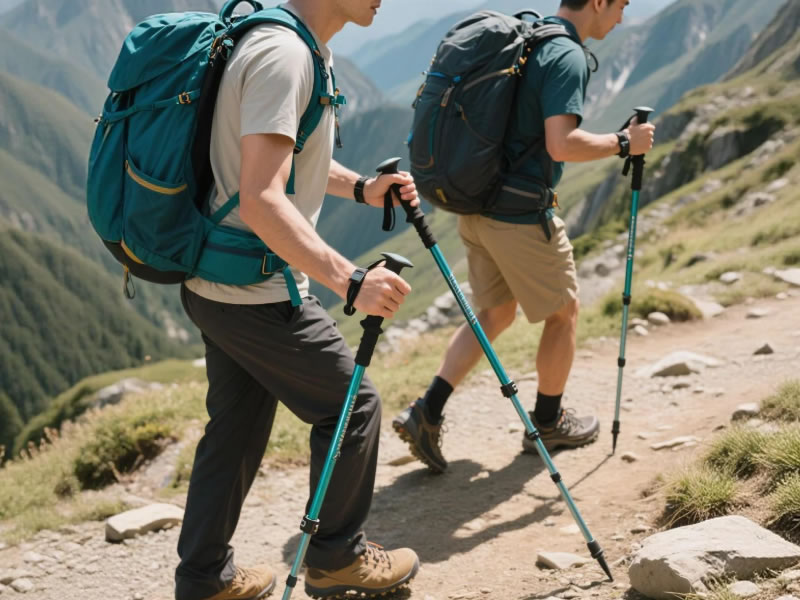
Recommended trekking pole purchase link: https://s.click.aliexpress.com/e/_c4M7OWaN
The Foundational Requirement: The Right Locking Mechanism
You cannot efficiently adjust on the move with subpar hardware. External lever locks (flip locks) are the only type suitable for this.
- Why Lever Locks Win: They allow single-handed operation—flip the lever with your thumb, adjust, and re-lock with a positive click. They provide visual and tactile confirmation.
- Why Twist Locks Fail: They require two-handed twisting, are prone to slipping if not perfectly tightened, and are difficult to operate with cold, wet, or gloved hands.
Top systems for on-the-move adjustment: Black Diamond's FlickLock Pro, LEKI's SpeedLock 2, and Komperdell's Powerlock.
Core Techniques for Fluid Adjustment
The general principle is to adjust just before you need the new length—at the base of a climb or the top of a descent.
1. How to Shorten for an Uphill (The Easier, One-Handed Move)
This is the most seamless adjustment.
- Timing: As you approach the incline.
- Action: Without stopping, slightly slow your rhythm. With the pole in the air during its forward swing, use your thumb to flip the lever(s) open. As you plant the pole, let your body weight gently collapse it to the desired shorter length. Use your other hand to quickly press the lever(s) closed as you push off. With practice, this becomes a single, continuous motion.
- Pro Tip: Pre-mark your common uphill length with a tiny dot of colored tape on the shaft for a visual guide.
2. How to Lengthen for a Downhill (Requires More Care)
This is more critical for safety and warrants a brief pause.
- Timing: At the top of the descent, before you start down.
- Action:Plant your other pole firmly for stability.Open the lever(s) on the pole you're adjusting.Extend the section to your pre-marked downhill length (typically +5-10cm from flat ground).Firmly re-lock the lever(s). Tug-test the section to ensure it's secure.Repeat for the second pole.
- Why the Pause: A downhill pole bears tremendous impact. An insecure lock can collapse catastrophically, leading to a fall. Taking 10 seconds to ensure they are right is non-negotiable.
The "On-the-Move" Workflow: A Scenario
Imagine approaching a steep hill:
- Anticipate: See the hill 20 meters ahead.
- Shorten: Use the one-handed technique to shorten both poles during your last few strides on flat ground.
- Climb: Power up the hill with efficient, shorter poles.
- Anticipate Again: At the crest, see the downhill.
- Pause & Lengthen: Stop at the top. Secure your stance and methodically lengthen both poles to your downhill setting. Double-check locks.
- Descend: Proceed down with confidence, using the longer poles for braking and stability.
Advanced Tips for Ultimate Efficiency
- Adjust One Pole Per Stride: Don't try to adjust both at once. Adjust the right pole as the left foot is forward, then switch.
- Use Your Body Weight: To shorten, a light press against the ground is easier than trying to collapse the pole with your hands.
- Know Your Numbers: Have your standard flat, uphill, and downhill lengths memorized or marked. This eliminates guesswork.
- Practice on Easy Terrain: Dial in the muscle memory on a flat, safe trail before relying on it in complex terrain.
What to Avoid: Critical Safety Errors
- Never Adjust Under Full Load: Don't open the lock while the pole is planted and bearing your full weight at a steep angle.
- Don't Rush the Downhill Lengthening: Speed here is the enemy of security.
- Avoid Adjusting in Hazardous Terrain: If you're on a narrow ledge, in a stream, or on very loose scree, find a secure, stable spot first.
- Don't Ignore Wear: Worn-out lever mechanisms can fail. Maintain your gear.
The Verdict: A Skill That Elevates Your Hiking
The best way to adjust poles on the move is a blend of pre-emptive action, trust in your lever-lock system, and a disciplined pause for critical downhill adjustments. It turns your poles into active, responsive tools.
By mastering this skill, you ensure you're always leveraging optimal biomechanics: shorter poles for efficient propulsion uphill, longer poles for joint-preserving braking downhill. This not only makes your hiking more enjoyable and less fatiguing but also significantly reduces long-term wear and tear on your knees and hips. Remember, fluid adjustment isn't about showing off—it's about hiking smarter, safer, and stronger with every step.




