




Best Hiking Poles for Canyoneering or Technical Terrain?
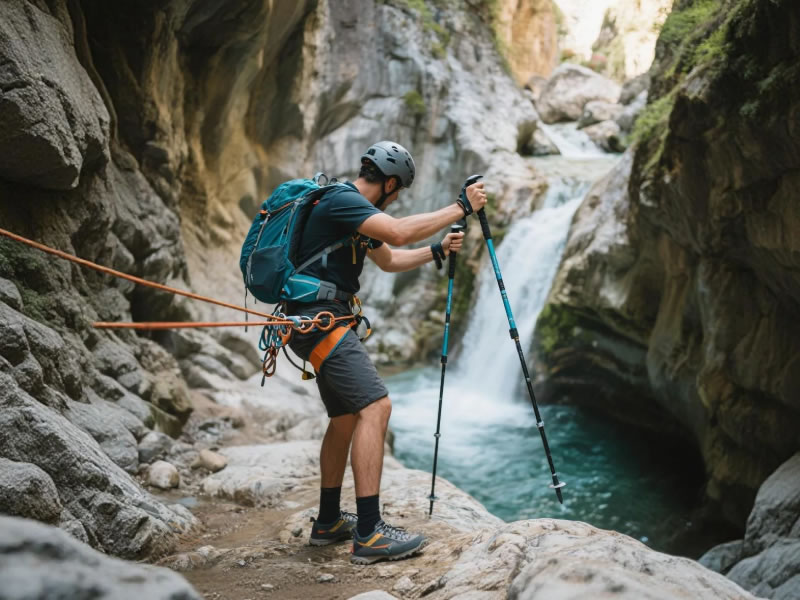
Canyoneering and advanced technical hiking represent the extreme end of trekking pole use. This discipline combines scrambling, climbing, wading, and rappelling in environments where gear is subjected to water, sand, abrasive rock, and high-impact forces. A standard hiking pole will quickly fail here. The best poles for this purpose are specialized tools defined by absolute durability, simple reliability, and corrosion resistance, prioritizing survival over weight savings.
Recommended trekking pole purchase link: https://s.click.aliexpress.com/e/_c4M7OWaN
The Unique Demands of Canyoneering & Technical Terrain
- Water & Grit Immersion: Poles will be fully submerged, filled with sand and silt, and used in wet conditions. Mechanisms must withstand this.
- High-Impact and Leverage: Poles are used to probe deep pools, brace against currents, and are often subjected to sideways leverage during scrambles.
- Abrasion: Constant contact with sandstone, granite, and pack straps wears on shafts and grips.
- Packability: In narrow canyons or during climbing sections, poles must collapse and stow securely without snagging.
Critical Features for Canyoneering Poles
1. Material: 7075-T6 Aluminum is Non-Negotiable
- Why: Carbon fiber is not recommended. While light, it is brittle against sharp, lateral impacts common in rock chimneys and can suffer catastrophic failure if pinched. 7075 aluminum is the choice for its superior impact resistance, bend-before-break behavior, and non-corrosive properties (when anodized). It can be jammed into cracks and used for controlled leverage with far less risk.
2. Locking Mechanism: External Flip Locks Only
- The Gold Standard: Black Diamond's FlickLock Pro. Internal twist locks are utterly unreliable when wet or gritty. You need an external lever system that can be operated with muddy, wet, or gloved hands, and whose function isn't compromised by internal silt. The mechanism should be easy to rinse and maintain.
3. Design Simplicity and Corrosion Resistance
- Minimal Internal Parts: Avoid poles with internal shock-absorption springs, which can corrode and fail when waterlogged.
- Grip Material: Rubber or dense, sealed EVA foam is best. Cork, while comfortable for dry hiking, can degrade faster when constantly wet and abraded.
- Non-Corrosive Components: Ensure all metal parts (locks, adjusters) are anodized or otherwise treated to resist rust.
4. Adjustability and Packed Size
- Three-Section Adjustable: Provides a good range for different uses (extended for deep wading, shortened for scrambling) and collapses to a manageable length (~25-28 inches) for strapping to a pack during climbs or rappels.
- Z-Pole Caution: While compact, the internal cords and smaller hinges of folding Z-poles can be vulnerable to grit and present more failure points under high leverage.
Top Recommendations for Canyoneering
1. Black Diamond Trail Pro 3
- Why It's the Benchmark: The 7075 aluminum shaft and FlickLock Pro lever system are arguably the most trusted combination for harsh environments. It's simple, field-serviceable, and built to handle extreme abuse. Its proven track record with canyoneers and guides makes it the default, top-tier choice.
2. Komperdell Powerlock Alpine
- Why It's a Contender: Komperdell's alpine heritage shines here. The Powerlock lever is exceptionally robust, and their construction is famously durable. Many models feature rubberized grips that perform well when wet. They are a slightly less common but equally capable alternative to Black Diamond.
3. MSR DynaLock Ascent or Traverse
- Why It's Unique: MSR's DynaLock system uses a durable plastic collar that tightens with a simple twist. It has fewer small metal parts to corrode and is famously easy to clean and maintain in gritty conditions. This system is highly regarded for its simplicity and mud/water resistance.
Specialized Features and Modifications
- Tips: Use sharp, replaceable carbide tips. Consider aftermarket canyoneering-specific tips that are slightly more robust. Rubber tips are useless in this environment.
- Baskets: Remove them entirely. Baskets snag on rocks, in cracks, and on rappel ropes. They serve no purpose in a canyon.
- Straps: Use removable straps or be prepared to cut them off. Straps are a major entanglement hazard during rappels, swims, and scrambles. Many canyoneers permanently remove them.
- Floatation: For canyons with deep swims, adding pool noodles or closed-cell foam to the lower section can prevent a lost pole if dropped.
What to Avoid
- Carbon Fiber Poles: Risk of catastrophic breakage.
- Twist-Lock Mechanisms: Guaranteed to fail when wet and gritty.
- Shock-Absorbing Features: Internal springs will corrode and become unreliable.
- Poles with Permanent Baskets or Complex Grips: Look for clean, simple designs.
Final Verdict: The Tool for the Task
Canyoneering doesn't allow for gear compromises. Your poles are critical safety tools for probing, stabilizing, and descending. While a Black Diamond Trail Pro 3 represents the ideal off-the-shelf solution, the core principle is selecting a pole built from corrosion-resistant 7075 aluminum with a bulletproof external locking mechanism.
Prioritize robustness over weight, simplicity over features, and reliability above all else. Invest in a pair designed for this abuse, perform regular maintenance (rinse with fresh water, check locks), and they will be trusted partners through countless technical adventures. In the world of canyoneering, the right pole isn't just about comfort—it's an integral piece of your safety system.




