




Hiking Poles for Bushwhacking and Off-Trail Navigation?
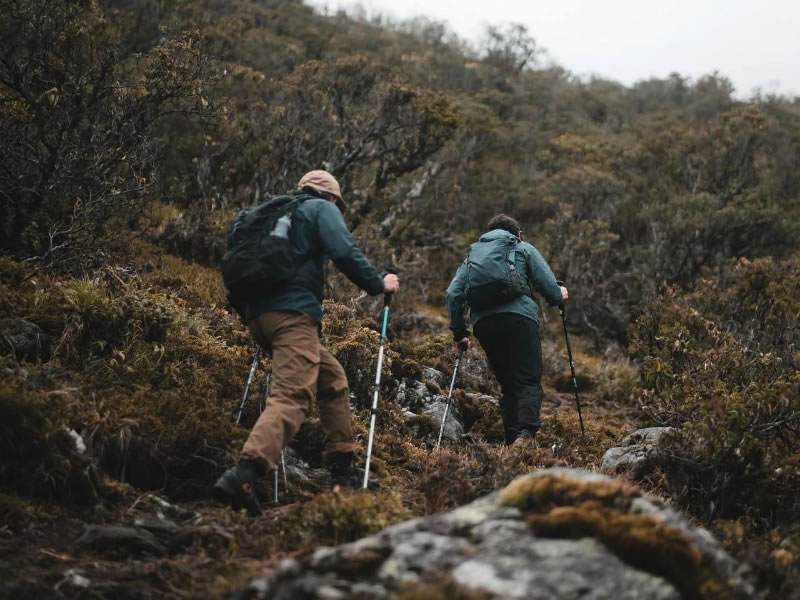
Venturing off-trail into dense brush, unmarked forests, or rugged backcountry represents the ultimate test for both navigator and gear. In these environments, hiking poles are no longer mere accessories for rhythm and joint relief; they become essential survival tools for probing, stabilizing, and clearing a path. Choosing the right poles for bushwhacking requires a focus on extreme durability, simplicity, and reliability over weight savings or comfort features.
Recommended trekking pole purchase link: https://s.click.aliexpress.com/e/_c4M7OWaN
The Demands of Bushwhacking on Gear
Bushwhacking subjects poles to unique stresses:
- Abrasive Wear: Constant contact with branches, thorns, and rock scrapes finishes and can damage shafts.
- High-Impact Leverage: Poles are used to push aside heavy brush, test unstable ground over holes or streams, and support full body weight during awkward steps.
- Snag Hazards: Straps, baskets, and complex grips can catch on vegetation, potentially yanking the pole from your hand or throwing you off balance.
- Contamination: Dirt, sap, and moisture can infiltrate mechanisms.
Essential Features for Bushwhacking Poles
1. Material: 7075-T6 Aluminum is Mandatory
Forget carbon fiber. While lightweight, it can suffer catastrophic failure (shattering) if slammed sideways into a hidden tree root or rock. 7075-T6 aluminum is the undisputed champion for its high tensile strength and "bend before break" characteristic. It can withstand being used as a lever to move branches or test mud depth. Its anodized finish also resists scratches better than paint.
2. Locking Mechanism: Bulletproof External Lever Locks
Internal twist locks are guaranteed to fail when filled with grit, dirt, or moisture. You need the most reliable external system available.
- Top Choice: Black Diamond's FlickLock Pro. Its cam-action lever provides immense clamping force and is easy to operate with gloves. It can be cleaned easily in the field.
- Excellent Alternative: Komperdell's Powerlock. Built for alpine abuse, this system is famously robust.
3. Design Simplicity and Streamlining
- Grips: Choose dense rubber or simple EVA foam. Avoid cork (it can degrade when wet and abraded) and overly contoured grips that snag. A longer foam extension below the primary grip is useful for varied hand positions.
- Straps: Remove Them. In thick brush, straps are a major entanglement hazard. They can catch on branches, causing you to drop the pole or worse, pull you off balance. Learn to use the poles without straps.
- Baskets: Remove Them. Trekking baskets serve no purpose off-trail and will constantly catch on roots and vines. Go basket-less for clean passage.
- Sections: Three-section adjustable poles offer the best compromise of adjustability and packed size. Ensure sections lock securely with zero play.
4. Tips: Sharp and Replaceable
You need aggressive, sharp, tungsten carbide tips to bite into hard-packed soil, rock, and root mats. They will wear down faster from abrasive use, so ensure they are easily replaceable.
Top Pole Recommendations for Bushwhacking
1. Black Diamond Trail Pro 3
The benchmark. Its 7075 aluminum shaft and FlickLock Pro levers are built for abuse. It's simple, field-repairable, and inspires total confidence when you need to commit weight to a pole in uncertain terrain.
2. Komperdell Powerlock Alpine
An equally durable European counterpart. The Powerlock lever is extremely robust, and the poles have a reputation for surviving decades of alpine and off-trail use. Their grips are often more bushwhacking-friendly.
3. MSR DynaLock Ascent
A unique and excellent choice. The DynaLock system uses a simple, durable plastic collar that tightens with a twist. It has fewer small metal parts to fail, is highly resistant to grit, and is incredibly easy to maintain in dirty conditions.
Bushwhacking Techniques with Poles
- Probing: Constantly use the pole tip to test the ground ahead for stability, especially in boggy areas, leaf-covered forest floors, or when crossing streams. A sudden plunge can reveal a hidden hole or unstable log.
- Parting Brush: Use a pole to push aside branches, thorns, or dense foliage before your body follows. Plant the pole firmly and use it as a pivot to move vegetation.
- Stability on Slopes: On steep, loose, or vegetated slopes, use the double-plant technique. Plant both poles securely uphill or to the side to create a stable triangular base before moving your feet.
- River & Stream Crossings: Lengthen poles for deeper water. Use them downstream for bracing against current while probing for solid footing.
Maintenance for the Long Haul
Bushwhacking is brutal on gear. After each trip:
- Rinse: Clean shafts and locks with fresh water to remove grit and sap.
- Inspect: Check for deep scratches, burrs on the shaft, and ensure locks function smoothly.
- Dry: Extend sections fully to dry interior areas to prevent corrosion.
- Replace: Keep spare carbide tips on hand.
The Final Verdict: Tools, Not Toys
For bushwhacking and serious off-trail navigation, your poles are fundamental tools for safety and progress. Compromising for lighter weight is a false economy that risks gear failure in remote settings.
Invest in the most durable 7075 aluminum poles you can find, with the most reliable external locking mechanism. Streamline them by removing baskets and straps. A pole like the Black Diamond Trail Pro 3 is not an overkill choice; it is the appropriate tool for the job. It will bear the brunt of the wilderness, allowing you to navigate with greater confidence, safety, and efficiency where there is no trail to follow.




