




Best Walking Poles for Men Over 70? A Comprehensive Guide to Safe, Comfortable, and Confidence‑Building Choices
For men over 70, walking poles are far more than optional accessories—they are essential tools for maintaining independence, preventing falls, managing joint pain, and staying active. The right poles can transform a cautious shuffle into a confident stride, enabling continued enjoyment of parks, neighborhoods, and trails. However, the needs of this age group are specific: arthritis, reduced grip strength, balance concerns, and the desire for lightweight, easy‑to‑use equipment must all be considered. This guide focuses on the best walking poles for men over 70, emphasizing safety, comfort, and reliability.
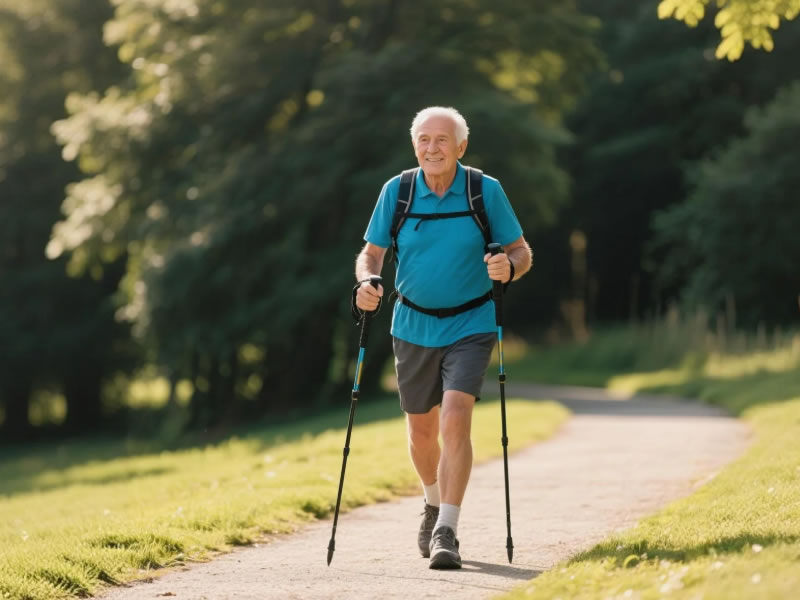
Recommended trekking pole purchase link: https://s.click.aliexpress.com/e/_c4M7OWaN
Why Men Over 70 Need Specialized Poles
| Challenge | How Poles Help | What to Look For |
|---|---|---|
| Arthritis / hand pain | Reduce need for tight grip | Ergonomic, large‑format grips; strap‑supported weight transfer |
| Balance concerns / fall risk | Provide four points of contact | Stable, reliable locks; two poles essential |
| Joint impact (knees, hips, back) | Absorb shock, reduce loading | Shock‑absorbing models; lightweight for less fatigue |
| Reduced strength and endurance | Lightweight poles minimize arm fatigue | Carbon fiber or lightweight aluminum |
| Fear of falling | Increase confidence, encourage activity | Secure tips; easy‑to‑adjust length |
Part I: Key Features for Men Over 70
1. Ergonomic, Large‑Format Grips
Standard trekking pole grips are often too small, requiring a tight fist that aggravates arthritis and causes hand fatigue. Look for:
- Oversized, contoured handles that fill the palm and distribute pressure.
- Soft, compressible materials (cork or high‑density foam) that absorb vibration and reduce hand fatigue.
- Straps designed for weight transfer – you should be able to push through the strap, not grip the handle. This is critical for those with reduced hand strength.
Top example: Urban Poling Activator grips are specifically designed by an occupational therapist and are Arthritis Foundation certified.
2. Lightweight Construction
Heavy poles cause arm fatigue, discouraging use. Aim for poles under 1 lb (450g) per pair.
- Carbon fiber is lightest and dampens vibration best, reducing fatigue on long walks.
- Lightweight aluminum (7075 alloy) offers durability with moderate weight and is often more affordable.
3. Shock Absorption
Internal springs reduce impact transmitted to wrists, elbows, shoulders, and the spine. For men with arthritis, joint replacements, or back pain, this can be transformative.
- Look for lockable shock absorption so you can disable the spring on flat terrain if desired.
4. Simple, Reliable Locks
External lever locks (FlickLocks, Speed Locks) are vastly superior to twist locks. They:
- Require minimal hand strength to operate.
- Provide visible confirmation of security.
- Can be adjusted with a hex key if they loosen over time.
- Work reliably even with cold or arthritic hands.
Avoid twist locks – they are difficult to tighten sufficiently and prone to slipping.
5. Secure Tips and Interchangeable Baskets
- Carbide tips for traction on trails and uneven ground.
- Large rubber tips for pavement and indoor use (included or available separately).
- Interchangeable baskets – small for trails, large for snow or soft ground.
6. Two Poles – Never One
For balance and fall prevention, two poles are essential. They distribute support evenly, create a stable four‑point base, and provide symmetrical joint protection.
Part II: Top Recommendations
🥇 Urban Poling Activator – The Clinically Certified Choice
Designed by: An occupational therapist and gerontologist.
Key Certification: The Arthritis Foundation Ease‑of‑Use Commendation—an independent, evidence‑based validation that the product delivers measurable benefit for people with arthritis and physical limitations.
Why It Excels:
- Proprietary ergonomic grip: The large, contoured handle supports the hand in a neutral position, reducing the need for tight finger closure. It is specifically shaped to accommodate arthritic hands.
- Shock‑absorbing internal spring: Reduces impact on wrists, elbows, shoulders, and back—ideal for those with joint pain or replacements.
- Tool‑free length adjustment: External lever locks are easy to operate even with reduced hand strength.
- Interchangeable tip system: Includes both large rubber “asphalt feet” for pavement and durable carbide tips for trails; optional snow baskets available.
- Weight capacity: 250 lbs per pole.
- Made in Canada with high‑quality 7075 aluminum.
Best For: Men with arthritis, joint replacements, back pain, or general age‑related hand weakness; those seeking a medically endorsed, high‑confidence product.
Considerations: Premium price point ($120–$150/pair). Available online and through physiotherapy clinics.
🥈 Dr. Cane Adjustable Walking Pole – The Stability Innovator
Designed by: A physician specializing in mobility aids.
Signature Feature: 360‑degree rotating base.
Why It Excels:
- Patented pivoting foot: The rubber base rotates a full 360°, maintaining full contact with the ground regardless of pole angle. This provides exceptional stability on uneven pavement and eliminates the “slipping out” sensation of fixed‑tip poles—a major confidence booster.
- Oversized, soft foam grip: Extremely comfortable for long walks; reduces hand fatigue.
- Reflective accents: Enhances visibility during low‑light walks.
- Simple push‑button adjustment: Easy to operate; discrete length settings lock securely. No twisting or lever fumbling.
- Very affordable: Typically $40–$60 per pole.
Considerations: Not shock‑absorbing. Heavier than carbon‑fibre alternatives. Carbide tip not included (optional accessory). Better suited for pavement than aggressive trails.
Best For: Men who primarily walk on paved or lightly graveled surfaces and prioritize stability, simplicity, and affordability.
🥉 LEKI Wanderfreund – The Reliable All‑Rounder
Why It Excels:
- Aergon grip: Comfortable cork material molds to the hand; available in a slightly larger size that suits most men.
- Speed Lock 2: External lever locks that are exceptionally secure and easy to adjust with arthritis or weak hands.
- Internal shock absorption: Optional on some models—look for the "Shock Stopper" version if impact reduction is a priority.
- Lightweight aluminum construction: Durable 7075 alloy.
- Interchangeable tip system: Carbide tips; rubber tips included.
Best For: Active men who walk on varied terrain (pavement and trails) and want a reliable, high‑quality pole without specialized medical design.
Considerations: Grip not as oversized as Activator; may not suit severe arthritis.
🏆 Also Worthy: Cascade Mountain Tech Aluminum with Cork Grip
Why Consider: For budget‑conscious shoppers, this pole delivers remarkable value:
- Cork grips – comfortable, moisture‑wicking, and naturally ergonomic.
- External lever locks – reliable and easy to adjust.
- Carbide tips with rubber protectors included.
- Weight: ~18 oz per pair – moderate but manageable.
- Price: Under $50.
Best For: Men who want quality features at an affordable price and do not need specialized medical design or shock absorption.
Part III: Comparison at a Glance
| Model | Grip | Shock Absorbing | Weight (pair) | Locks | Price | Best For |
|---|---|---|---|---|---|---|
| Urban Poling Activator | Oversized ergonomic | Yes | ~17 oz | Lever | $$$ | Arthritis, joint replacement, medical endorsement |
| Dr. Cane | Oversized foam | No | ~19 oz | Push‑button | $ | Pavement walking, stability, budget |
| LEKI Wanderfreund | Cork (standard) | Optional | ~17 oz | Lever | $$ | Active walking, varied terrain |
| Cascade Mountain Tech | Cork | No | ~18 oz | Lever | $ | Budget, general walking |
Part IV: How to Choose – A Decision Framework
| If you... | Recommended Pole |
|---|---|
| Have arthritis, hand pain, joint replacements, or back pain | Urban Poling Activator |
| Walk primarily on pavement and want maximum stability and simplicity | Dr. Cane |
| Are an active walker on varied terrain and want a reliable, high‑quality pole | LEKI Wanderfreund |
| Need a quality pole on a strict budget | Cascade Mountain Tech |
Part V: Essential Tips Before You Buy
- Try before you buy (if possible). Grip the handles. Simulate a walking motion. The pole should feel like an extension of your arm, not a tool you are fighting.
- Adjust to the correct length. Standing upright with the tip on the floor, your elbow should be bent at a comfortable 90° angle. Poles that are too long force shoulder elevation; too short encourage hunching.
- Check the weight. Lift the pole repeatedly. If it causes arm fatigue in the store, it will on the trail.
- Consider two poles. For balance and fall prevention, two poles are non‑negotiable.
- Consult your physician. If you have specific medical conditions (e.g., heart conditions, recent surgery), discuss pole use with your doctor or physical therapist.
- Check the return policy. Some men need a few neighborhood walks to decide if a pole truly suits them. Purchase from retailers with generous return windows.
Part VI: The Importance of Proper Technique
Even the best poles provide limited benefit if used incorrectly. For men over 70, two technique points are critical:
- Use the straps correctly. Insert your hand up through the bottom of the strap, then grip the handle. When you plant the pole, push down through the strap, not by squeezing the handle. This transfers weight through your skeleton and saves your hand muscles.
- Adjust for terrain. Shorten poles slightly for uphill walks; lengthen for downhills to reduce knee impact. Most quality poles allow quick, tool‑free adjustment.
Conclusion: Invest in Your Independence
The best walking poles for men over 70 are those that fit your hand comfortably, support your body safely, and give you the confidence to walk wherever you wish. Whether you choose the medically‑endorsed Urban Poling Activator, the stability‑focused Dr. Cane, the performance‑oriented LEKI Wanderfreund, or the budget‑friendly Cascade Mountain Tech, the most important thing is that you walk.
Walking poles are not a concession to age. They are an investment in continued mobility, in fall‑free years, in the simple joy of moving through the world under your own power.
Choose wisely. Walk confidently. And never stop exploring.




