




Using Walking Pole to Test Trail Depth (Mud/Water)? A Complete Guide to Safe Terrain Assessment
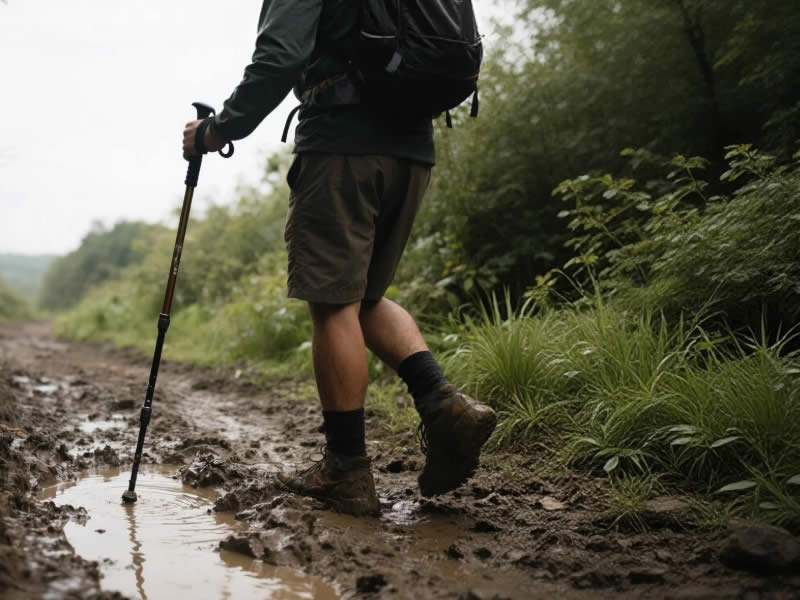
One of the most practical—and potentially life-saving—uses of a walking pole is as a depth gauge. Muddy bogs, flooded trails, and murky puddles can hide treacherous depth. What looks like a shallow puddle might swallow your boot (or worse). By using your pole to probe ahead, you let the pole take the risk. This guide covers the technique for safely testing trail depth in mud and water.
Recommended trekking pole purchase link: https://s.click.aliexpress.com/e/_c4M7OWaN
The Short Answer
Yes, use your pole as a "depth gauge" before stepping. Grip the pole normally (no wrist straps) so you can drop it if needed. Plant it vertically into the suspicious spot, not at an angle. Push down gently until you feel the bottom or the pole reaches maximum depth. Read the depth by noting how much pole disappears. If it goes past mid-shin, turn back or find another route.
For water: Murky water can hide depth. Probe methodically—a sudden drop-off can be dangerous.
For mud: If the pole sinks easily past your ankle, the mud is likely deep enough to swallow a boot. Move around the section or use rocks or tussocks for footing.
Safety rule: Never test depth with your foot first. Let the pole take the risk.
Why Probing Matters
Your eyes can deceive you. A clear-looking puddle may conceal a bottomless pit. A grassy bog may look solid until you step onto it. Mud can disguise depth, and fast-moving water can obscure the streambed entirely. By using your pole as a probe, you:
- Avoid surprises: You know before you step whether the ground is solid.
- Protect your gear: A boot full of mud or water can ruin a hike.
- Stay safe: A hidden drop-off or deep bog can cause injury or worse.
Choosing the Right Pole for Probing
Any pole works, but some features help:
- Carbide tips are durable and bite into firm ground beneath mud.
- Rubber tips are quieter and gentler on delicate surfaces but may not penetrate as well.
- Removable baskets help if the mud is soft—baskets prevent over-sinking.
- Secure locks ensure the pole doesn’t collapse when you push down.
Remove wrist straps before probing. If the pole gets stuck or you need to drop it, you must be able to let go instantly.
The Technique: Step by Step
1. Approach with Caution
Stop before the suspicious area. Take a moment to observe:
- Is the water flowing? If so, what’s the speed?
- Are there tracks around the edge? Others may have found a way around.
- Can you see the bottom? If not, treat it as unknown depth.
2. Grip the Pole Correctly
Hold the pole normally, but do not put your hand through the strap. You must be able to release the pole instantly.
3. Plant Vertically
Place the pole straight down into the mud or water, not at an angle. An angled pole will give a false reading—you want to know the depth directly below the tip.
4. Push Gently
Apply steady, gentle pressure. Let the pole sink until you feel resistance (the bottom) or the pole reaches its full length. Do not stab or jab; you want a controlled assessment.
5. Read the Depth
Look at how much of the pole has disappeared:
- Up to ankle: Generally safe for walking, but watch for slippery bottom.
- Mid-shin: Caution. Mud this deep can trap a boot; water this deep may be cold and swift.
- Knee or higher: Danger. Turn back or find a different route.
6. Test Multiple Points
One probe isn’t enough. The bottom can vary significantly in a few feet. Probe a few spots across the area you intend to cross.
Probing Different Surfaces
Mud
Mud is deceptive. A thin crust can hide bottomless muck beneath.
- If the pole sinks easily past your ankle, the mud is likely deep enough to swallow a boot. Look for a way around.
- If you feel a firm bottom within a few inches, it may be safe to cross, but test several spots.
- Pay attention to suction: If the pole is hard to pull out, mud is sticky—your boots will be too.
Standing Water (Puddles, Ponds)
Murky water hides depth.
- Probe ahead of your intended path. If the pole finds a sudden drop-off, the water may be deeper than you thought.
- If the water is above your ankle, consider whether you have waterproof boots and gaiters.
- Watch for submerged obstacles: Your pole may hit a rock or log that could trip you.
Flowing Water (Streams, Flooded Trails)
Moving water adds force to depth.
- Probe upstream of your intended crossing point. The current may have scoured deeper channels.
- If the water is above mid-shin and moving, crossing may be unsafe regardless of depth.
- Use your pole to test the bottom’s stability: If your pole sinks easily into mud, the streambed may be unstable.
Bogs and Marshes
Boggy areas often have floating mats of vegetation over deep water.
- Probe repeatedly. A mat that holds your pole may not hold your weight.
- If your pole sinks more than a few inches without hitting firm bottom, avoid stepping there.
- Look for raised tussocks or logs that offer solid footing.
What to Do If Your Pole Finds Deep Depth
- Turn back. There’s no shame in retreating.
- Find another route. Look up and downstream for shallower crossings or drier ground.
- Use rocks or logs. If the deep section is narrow, you may be able to step on exposed rocks or fallen trees.
If You Lose Your Pole
If your pole gets stuck or you drop it, let it go. A lost pole is better than a lost hiker. Carry a spare if you’re crossing risky terrain.
What Experienced Hikers Say
“I always probe before stepping into mud,” shares Michael, who hikes in boggy terrain. “A spot that looked solid turned out to be waist-deep. My pole found it before my foot did. Could have been a bad day.”
“Water crossings are where this technique is most important,” says Sarah, a guide. “I teach my groups to treat every murky puddle as potentially deep. Probe first, step second. It’s simple, but it saves so many wet boots—and worse.”
The Bottom Line
Your walking pole is not just for support—it’s a safety tool. Use it to probe hidden depths before you commit your weight. Plant vertically, push gently, read the depth, and test multiple spots. In water, flowing or still, let the pole take the risk. In mud, trust what the pole tells you. A few seconds of probing can save you from a dangerous slip, a boot full of water, or a deeper trouble.
Disclaimer: This article provides general guidance for using walking poles to assess trail conditions. Natural hazards like deep water, fast current, and unstable ground can be life-threatening. Always prioritize safety and turn back if conditions feel unsafe.




