




Protecting dogs from walking poles – safety tips?
As urban trails and Nordic walking grow in popularity, more people are taking to the paths with trekking poles, hiking staffs, and Nordic walking sticks. While this is excellent for human fitness, it introduces a new and often overlooked hazard for our canine companions. The question “Protecting dogs from walking poles – safety tips?” is not just a casual inquiry; it is a critical consideration for any responsible pet owner who enjoys the outdoors. The intersection of sharp pole tips, excitable dogs, and narrow trails can lead to serious, even life-threatening, injuries if proper precautions are not taken.
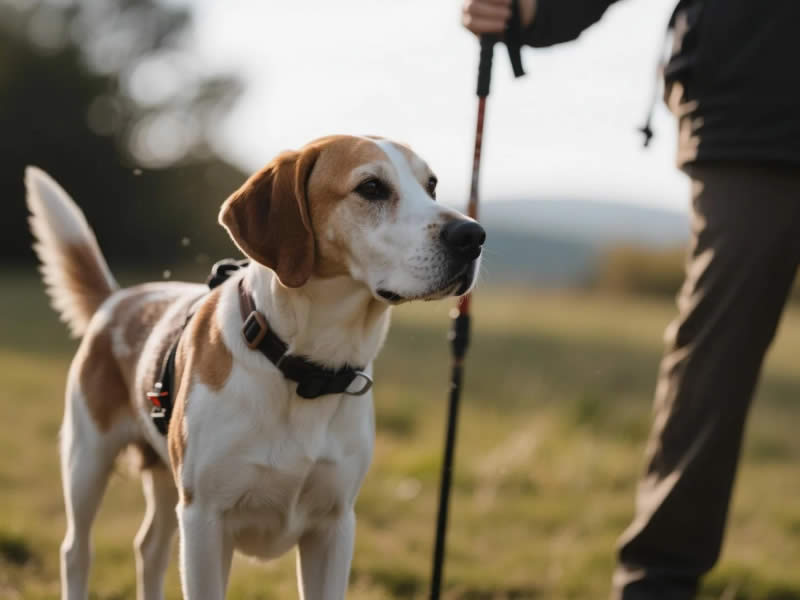
Recommended trekking pole purchase link: https://s.click.aliexpress.com/e/_c4M7OWaN
Understanding the Risk
Walking poles typically end in a tungsten carbide tip, known as a "carbide tip," designed for grip on rocks, ice, and uneven terrain. To a dog running alongside or crisscrossing a trail, these poles are invisible at eye level. The primary danger is the "impalement" risk—a dog running toward the handler or crossing in front of them can accidentally run directly onto the tip of a stationary or forward-moving pole. Common injuries include punctured mouths, eye injuries, chest trauma, and deep lacerations to the legs. Because these tips are designed to be sharp, the penetration can be deep and prone to infection.
Safety Tips for Trail Safety
To ensure your hikes remain a bonding experience rather than a frantic trip to the emergency vet, consider the following safety protocols:
1. Ditch the Wrist Straps (or Use Them Differently)
Most walking poles come with wrist straps designed to transfer energy. However, if your dog suddenly cuts in front of you, your instinct is to drop the poles. If your hands are strapped in, you cannot let go. If you must use straps, practice releasing them instantly, or simply hold the poles without strapping in when walking in tight spaces with your dog.
2. The "Two-Handed Carry" on the Trail
When walking on narrow trails or through brush where visibility is limited, adopt a defensive carrying technique. Hold both poles together in one hand, keeping them close to your body with the tips pointing backward or downward toward the ground. This turns your "weapon" into a single, manageable unit that you can quickly lift out of the way if your dog makes a sudden move.
3. Use Rubber Tips (Paw Protectors)
Most walking poles come with removable rubber "paws" or "boots" designed for use on asphalt or hard surfaces. When hiking with a dog, keep these rubber tips on, even on dirt trails. While they reduce some traction on steep slopes, they transform a sharp spear into a blunt, rounded tip, drastically reducing the risk of puncture wounds.
4. Implement "Pole Awareness" Training
Before hitting a busy trail, condition your dog to the poles. Let them sniff the poles at home. Walk with them in an open field, using verbal cues like "careful" or "watch" while moving the poles. Teach your dog to maintain a consistent "heel" position—ideally on the side opposite the poles. If you are right-handed and plant your right pole, keep your dog on your left side.
5. Master the "Static Plant"
When you stop to talk to someone, look at a map, or let your dog sniff, plant your poles. Do not hold them out horizontally or wave them. Plant the tips firmly into the ground vertically or place them across your shoulders. A moving pole is unpredictable; a stationary pole in the dirt is easy for a dog to avoid.
What to Do in an Emergency
Despite the best precautions, accidents happen. If your dog impales themselves on a pole tip:
- Do not remove the pole. If the tip is embedded, removing it can cause uncontrolled bleeding. Stabilize the pole by cutting it down to a manageable length if necessary.
- Muzzle your dog. Even the gentlest dog will bite out of pain.
- Seek immediate veterinary care. Puncture wounds require flushing, antibiotics, and often x-rays to ensure no fragments of rubber or dirt remain inside the wound.
Conclusion
Walking poles are fantastic tools for human stability and endurance, but they require a shift in awareness when we hike with our dogs. By swapping out sharp tips for rubber covers, adjusting how we carry the poles, and training our dogs to respect the space around our feet, we can mitigate the risks. Ultimately, protecting dogs from walking poles comes down to proactive habit—treating the poles not just as fitness equipment, but as the potential hazards they are. With these safety tips, you can ensure that your adventures leave behind only paw prints, not trips to the vet.




