




Carbon footprint of manufacturing Trekking Poles?
As outdoor enthusiasts, we often focus on the environmental impact of our travel—driving to trailheads, flying to distant ranges—while overlooking the gear in our hands. Trekking poles, seemingly simple tools, carry a significant carbon footprint from manufacturing. Understanding that footprint is the first step toward making more sustainable choices. From raw material extraction to assembly and global shipping, every pair of poles represents a measurable contribution to climate change. Here’s a detailed look at where those emissions come from and how you can minimize your impact.
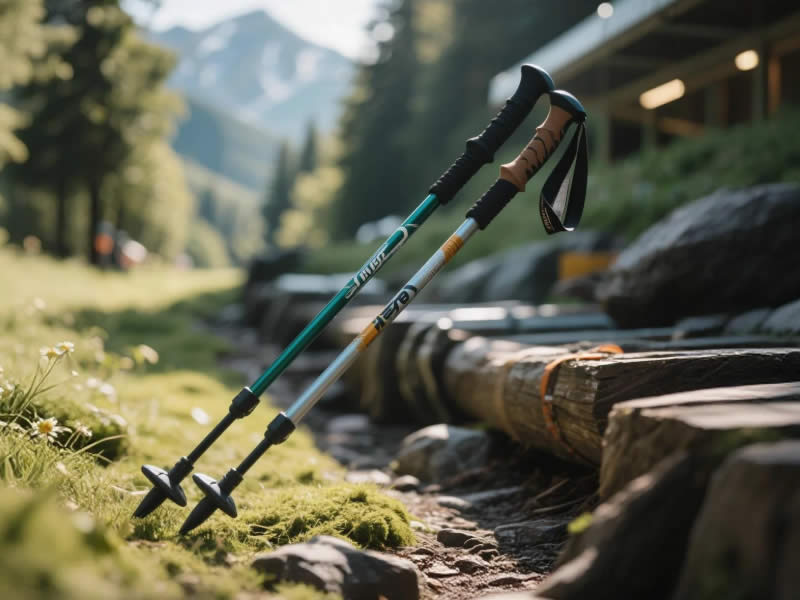
Recommended trekking pole purchase link: https://s.click.aliexpress.com/e/_c4M7OWaN
The Two Main Materials: Aluminum vs. Carbon Fiber
The largest variable in a trekking pole’s carbon footprint is the shaft material. Each has a distinct manufacturing process with vastly different energy demands.
Aluminum Poles
Aluminum production begins with bauxite mining, primarily in tropical regions. Bauxite is refined into alumina (aluminum oxide) through the energy‑intensive Bayer process, then smelted into pure aluminum via electrolysis—a process that consumes enormous amounts of electricity. Producing one kilogram of virgin aluminum generates approximately 16 kilograms of CO₂ equivalent.
A typical pair of aluminum trekking poles weighs about 500–600 grams (including grips, tips, and baskets). The aluminum content alone accounts for roughly 8–10 kg CO₂. When you add extraction, refining, manufacturing of non‑aluminum components (rubber, plastic, cork), assembly, and packaging, the total footprint for a pair of virgin aluminum poles ranges from 10–20 kg CO₂.
The critical advantage of aluminum is its recyclability. Recycled aluminum uses only about 5% of the energy required for primary production. Poles made from recycled aluminum can have a footprint as low as 2–4 kg CO₂.
Carbon Fiber Poles
Carbon fiber production is even more energy‑intensive. The process begins with a precursor material (usually polyacrylonitrile, or PAN, derived from petroleum). This precursor is stabilized, carbonized at temperatures exceeding 1,000°C, and then surface‑treated and wound into fibers. The energy intensity is substantial: producing one kilogram of carbon fiber generates approximately 20–30 kg CO₂—and that’s before weaving, impregnating with resin, and curing into pole shafts.
A pair of carbon fiber poles weighs slightly less (around 400–500 grams) but carries a significantly higher per‑kilogram footprint. Total emissions typically range from 20–35 kg CO₂ per pair. Moreover, carbon fiber is a thermoset composite that cannot be melted down and recycled like aluminum. End‑of‑life disposal—usually landfill or incineration—adds to its lifecycle impact.
Other Components: The Hidden Footprint
Beyond shafts, other components contribute:
- Rubber tips and grips – Derived from petroleum (synthetic rubber) or natural rubber. Synthetic rubber production is energy‑intensive and emits process‑related greenhouse gases.
- Plastic baskets and lock mechanisms – Injection‑molded plastics (nylon, polypropylene, ABS) require fossil fuel feedstocks and significant molding energy.
- Cork grips – Cork is a low‑carbon material when sustainably harvested; the carbon footprint of cork is minimal compared to synthetics.
- Straps – Nylon or polyester webbing, derived from petroleum, adds modest emissions.
- Packaging – Cardboard boxes, plastic bags, and inserts all contribute to the overall footprint.
Transportation: The Global Journey
Most trekking poles are manufactured in Asia—China, Taiwan, or Vietnam—then shipped to North America, Europe, and other markets. A typical shipping journey adds:
- Ocean freight – Approximately 0.02–0.05 kg CO₂ per kilogram per kilometer. For a 600‑gram pair shipped 10,000 miles, that adds roughly 2–4 kg CO₂.
- Trucking and warehousing – Additional emissions from regional distribution.
Some brands manufacture regionally (e.g., Komperdell in Austria, Pacerpole in the UK), reducing transport emissions significantly.
Brand Initiatives to Reduce Footprint
Several outdoor brands are taking steps to lower the carbon footprint of their trekking poles:
- Recycled aluminum – REI Co‑op and others use recycled aluminum for shafts, dramatically reducing upstream emissions.
- Carbon offsets – Black Diamond and others invest in verified carbon offset programs to compensate for unavoidable emissions.
- Renewable energy – Some manufacturers power factories with solar or wind energy.
- Repairability – Brands like Leki and Komperdell design poles for longevity, reducing the need for frequent replacements—the single most effective way to lower lifecycle emissions.
- Minimal packaging – Reducing plastic and using recycled cardboard cuts packaging emissions.
How You Can Reduce Your Personal Carbon Impact
Even after a pair of poles is manufactured, your choices matter:
- Repair instead of replace – Keeping poles in service for 10–20 years spreads the initial manufacturing footprint over decades. A single repair avoids the emissions of an entirely new pair.
- Choose durable materials – Aluminum poles with replaceable parts offer the best balance of low initial footprint and long lifespan.
- Look for recycled content – Seek poles made from recycled aluminum.
- Buy used – Second‑hand poles carry no new manufacturing footprint.
- Support repairable brands – Brands with spare parts availability ensure your poles can outlast their original components.
- Recycle responsibly – When poles finally wear out, recycle aluminum shafts and properly dispose of other materials.
Comparing Footprints: A Quick Reference
| Pole Type | Estimated CO₂ per pair | Recyclability | Repairability |
|---|---|---|---|
| Virgin aluminum | 10–20 kg | High | Often high |
| Recycled aluminum | 2–6 kg | High | Often high |
| Carbon fiber | 20–35 kg | Very low | Moderate |
| Bamboo (artisan) | 2–5 kg | High (compostable) | Low |
Final Thoughts
The carbon footprint of manufacturing trekking poles is not trivial—it ranges from the equivalent of driving a car 10 to 40 miles per pair. While that may seem small compared to flights or daily commuting, multiplied across millions of poles sold annually, the impact adds up. As consumers, we have the power to reduce that impact by choosing recycled materials, prioritizing repairability, and extending the life of our gear. The most sustainable trekking pole is the one you already own—used season after season, repaired when needed, and eventually recycled into the next generation of outdoor equipment.




