




Are Carabiners Safe for Climbing? An In-Depth Look at Engineering, Standards, and Human Factors
The short answer is a resounding yes—when used correctly, modern climbing carabiners are among the most reliable and thoroughly engineered safety devices in any sport. However, the complete answer is more nuanced. Their safety is not absolute; it is a function of rigorous engineering standards, informed user practice, and diligent maintenance. Understanding this interplay is crucial for every climber who trusts their life to these small metal loops.
The Foundation of Safety: Engineering and Certification
At their core, climbing carabiners are marvels of materials engineering. Made from high-strength 7075 aluminum alloy or, for specialized uses, steel, they are designed to withstand forces far beyond those encountered in typical falls.
The bedrock of their safety is independent certification. Reputable manufacturers submit their carabiners for testing by the UIAA (International Climbing and Mountaineering Federation) and/or the CE (European Conformity) mark under the EN 12275 standard. These tests verify three critical strength ratings under laboratory conditions:
- Major Axis Strength (Gate Closed): Typically 20-25 kN (roughly 4,500-5,600 lbs of force). This simulates a fall with the gate properly closed.
- Minor Axis Strength (Gate Closed): Typically 7-10 kN. This tests strength if the carabiner is loaded sideways.
- Gate Open Strength: Typically 6-9 kN. This tests a worst-case scenario where the gate is accidentally open.
These ratings incorporate a significant safety margin, as a severe climbing fall rarely generates more than 5-6 kN of force on a single carabiner. The certification process ensures consistency, traceability, and that every model from a batch meets these minimum life-saving standards.
The Human Factor: Where Safety is Truly Determined
While the carabiner itself is engineered to be safe, its real-world safety is dictated by the climber. Most incidents are not caused by gear failure but by user error.
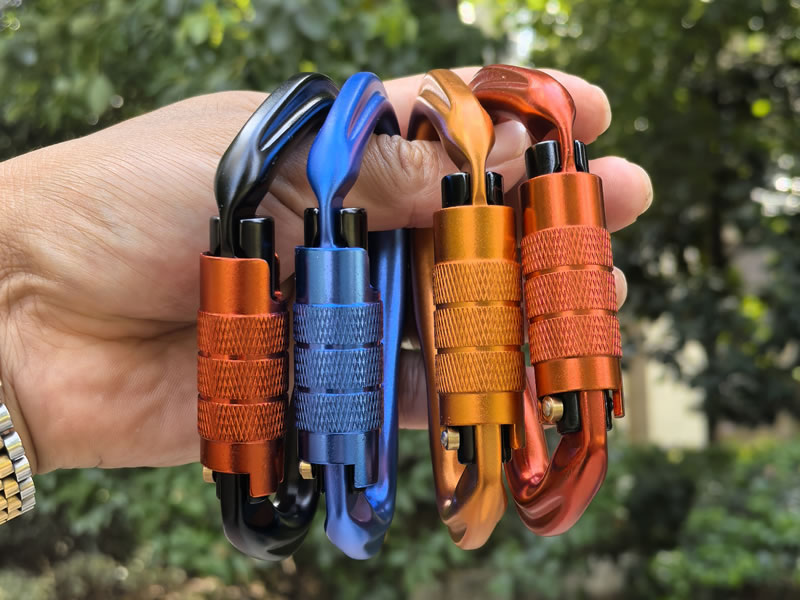
- Proper Selection and Use: A carabiner must be used for its intended purpose. Using a non-locking carabiner for a critical belay or rappel anchor is dangerously inappropriate. Locking carabiners (screw-gate, auto-locking) are mandatory for any life-critical connection where accidental gate opening could occur.
- Avoiding Dangerous Misuse: Certain actions drastically reduce a carabiner's strength and compromise safety:Cross-loading: Loading the carabiner across its minor axis (sideways) can reduce its effective strength to the 7-10 kN range.Gate Loading: Having the rope or a sling force the gate open during a fall leads to failure at the much lower gate-open strength.Three-way Loading: Loading a carabiner from three directions (e.g., at an anchor) can create complex forces and side-load the gate.
- The "Three-Point Check": Before committing weight, make it a habit to check: Is the rope/webbing IN the carabiner? Is the gate CLOSED? For lockers, is it LOCKED?
Inspection and Longevity: The Owner's Responsibility
Safety is an ongoing commitment. Carabiners must be regularly inspected and retired when necessary. Look for:
- Cracks or Deep Gouges: Especially around the nose or spine.
- Gate Malfunction: A sticky, notchy, or loose gate that doesn't open/close smoothly.
- Excessive Wear: Deep grooves worn by ropes, which can create sharp edges that cut future ropes.
- Corrosion: While aluminum oxidizes superficially, pitting corrosion is a serious concern, especially from chemical contaminants.
Any carabiner that has endured a severe fall, been dropped from significant height onto a hard surface, or shows any of the above signs should be retired immediately.
Special Considerations: Different Disciplines, Different Needs
Safety also means using the right tool for the specific type of climbing:
- Sport Climbing: Lightweight wire-gate carabiners excel for quickdraws due to reduced gate flutter.
- Traditional Climbing & Mountaineering: Often requires more versatile, robust D-shaped or pear-shaped (HMS) lockers for building anchors and belaying.
- Ice Climbing: Larger, notched nose carabiners that are easier to operate with gloved hands are often preferred.
Conclusion: A Safe Link in the Chain
Carabiners are unequivocally safe for climbing because of the immense rigor behind their design and testing. However, they are not infallible magic clips. Their safety is a partnership between impeccable engineering and an informed, disciplined climber. By insisting on UIAA/CE-certified gear, using it correctly within its intended design, and committing to proactive inspection and retirement, a climber can place absolute trust in this critical piece of equipment. Ultimately, the carabiner's safety is a reflection of the climber's knowledge and responsibility. Always complement quality gear with quality education from certified professionals or reputable climbing organizations.




