




Lightest Trekking Poles on the Market: The Pursuit of Ultralight Efficiency
In the realm of ultralight backpacking and fastpacking, every gram matters. Trekking poles, while invaluable for stability and joint protection, have historically added weight. Today, thanks to advanced materials and minimalist design, the lightest poles on the market weigh less than a standard smartphone per pair, redefining the concept of essential gear. This pursuit of minimal weight, however, comes with deliberate and significant trade-offs that every hiker must understand.
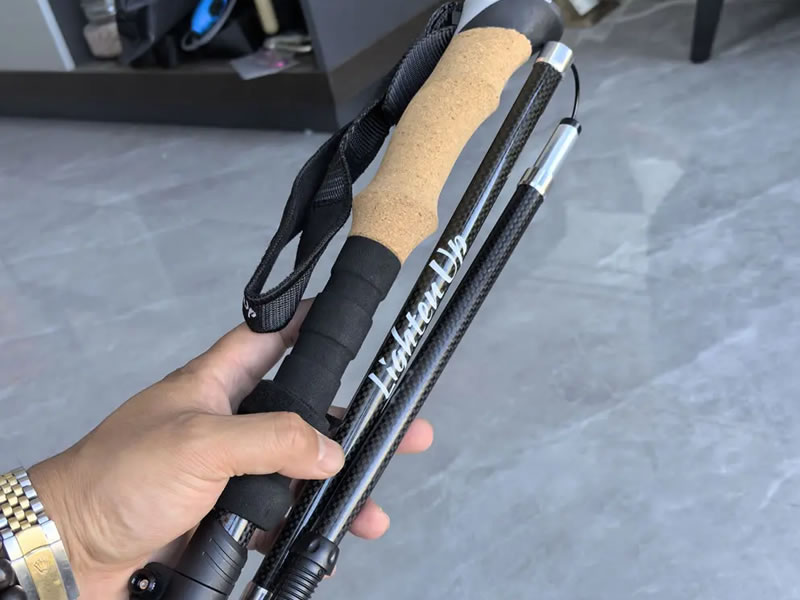
Recommended trekking pole purchase link: https://s.click.aliexpress.com/e/_c4M7OWaN
The Champions of Weight Savings: Top Contenders
The title of "lightest" is held by specialized, non-adjustable, foldable carbon fiber poles, often called "Z-poles" due to their collapse pattern. The leading models include:
- Gossamer Gear LT5s: Often cited as the absolute lightest mainstream pole. Weighing in at a remarkable ~5.8 ounces (165 grams) per pole, they are the benchmark for weight-centric hikers. Their design is brutally minimalist: three carbon fiber segments connected by an internal cord, with minimal grips and straps.
- Fizan Compact 3 / Fizan Night: These Italian-made aluminum poles challenge the notion that carbon fiber is always lighter. The Fizan Compact 3 weighs just ~6.3 ounces (179 grams) per pole, achieving its weight through incredibly thin, high-grade 7075 aluminum tubing and a simple, effective snap-lock hinge system. They offer surprising durability for their weight.
- Black Diamond Distance Carbon Z: The most popular and accessible premium option. A pair weighs approximately 10 ounces (284 grams). They offer a superb balance of low weight, reliable brand engineering, and a slightly more durable feel than the most spartan options.
- Mountain King Trail Blaze: Another ultra-light carbon Z-pole, competing directly at the top tier with weights around 6 ounces (170g) per pole, praised for its balance and strength.
How They Achieve Such Low Weight: The Design Sacrifices
These poles are light because they relentlessly eliminate anything non-essential:
- Material: High-Modulus Carbon Fiber is the gold standard, offering the best strength-to-weight ratio.
- No Adjustability: Fixed-length design removes heavy locking mechanisms and overlapping sections. You must choose the correct size and use the same length for all terrain.
- Minimalist Grips and Straps: Grips are shortened and made from thin, lightweight foam. Straps are often replaced with basic, thin webbing.
- Skeletonized Construction: Every component is scrutinized. Shaft walls are thinner, and hardware is minimal.
Critical Trade-offs: What You Give Up
Choosing the lightest poles means accepting significant compromises:
- Durability & Failure Mode: Carbon fiber is strong but brittle. A sharp side impact against a rock that would dent aluminum could crack or shatter carbon. Their failure is often sudden and catastrophic, not gradual.
- No On-Trail Adjustability: You cannot shorten poles for steep climbs or lengthen them for descents, potentially reducing their biomechanical benefit for joint protection.
- Reduced Comfort: Minimal grips and straps can cause hot spots or blisters on long, strenuous days compared to ergonomic, padded versions.
- Limited Load-Bearing Capacity: They are not designed for heavy backpacking or to be used as robust supports for trekking pole tents in high winds. Their safety margin is lower.
- Higher Cost: The advanced materials and niche manufacturing command premium prices, often exceeding $150-$200 per pair.
Who Are They For? The Ideal User Profile
These poles are not for everyone. They are a specialized tool for a specific type of hiker:
- Ultralight Backpackers & Thru-Hikers: Those whose base weight is under 10-15 pounds, for whom saving 8-12 ounces over standard poles is a meaningful percentage of their total pack weight.
- Fastpackers: Athletes covering very long distances quickly, where minimal arm swing weight is crucial for efficiency over time.
- Experienced Hikers on Established Trails: Users who understand the limitations and primarily hike on trails where sudden, severe pole impacts are less likely.
Conclusion: Lightest vs. Right
The lightest trekking poles on the market are engineering marvels that serve a vital purpose in the ultralight community. They represent the extreme end of the gear spectrum, where every decision prioritizes weight above all else.
For the general hiker or even the dedicated backpacker carrying a traditional load, a slightly heavier adjustable aluminum or carbon pole (weighing 16-20 oz per pair) will offer far greater versatility, durability, and joint-protecting functionality for a negligible weight penalty in the context of a full pack.
Therefore, the ultimate question is not "What are the lightest poles?" but "Are the lightest poles the right tool for my specific style of hiking?" If your philosophy is rooted in ultralight principles and you hike with precision and care, they are a game-changer. If your hikes are more varied, rugged, or load-bearing, the lightest option may compromise too much in reliability and function. Choose not just for the weight on the scale, but for the performance and safety you need on the trail.




