




Are Two Hiking Poles Better Than One?
The image of a hiker using a single wooden staff is iconic, but modern trekking pole design and biomechanical research present a compelling case for using two. For most hiking scenarios—especially those involving significant elevation change, heavy loads, or uneven terrain—the answer is clear: yes, two poles are fundamentally better than one. The advantages extend far beyond simple balance, offering profound benefits for efficiency, joint protection, and safety.
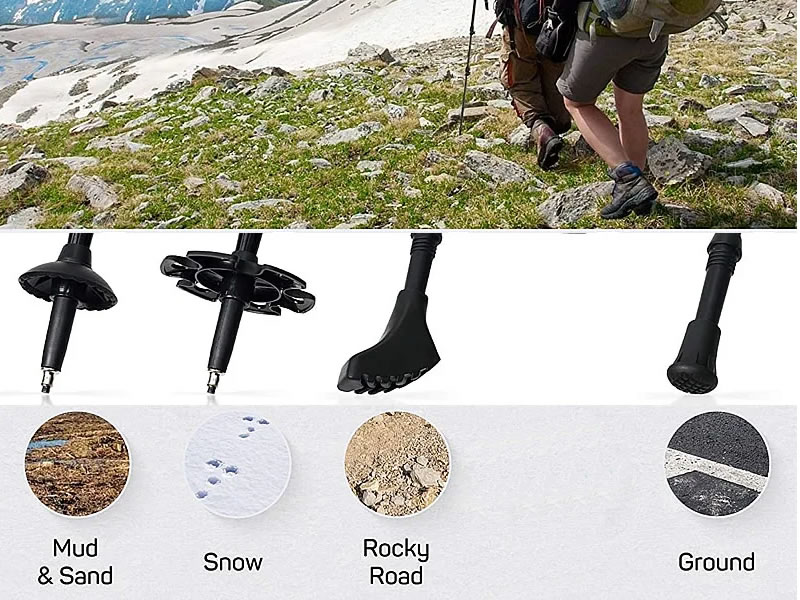
Recommended trekking pole purchase link: https://s.click.aliexpress.com/e/_c4M7OWaN
The Biomechanical Advantage: Symmetry and Efficiency
Humans walk with a natural, symmetrical gait. Using a single pole disrupts this rhythm, creating an asymmetrical movement pattern. This can lead to muscular imbalances, uneven spinal loading, and a less efficient stride. In contrast, two poles restore and enhance natural symmetry.
- Balanced Propulsion: On climbs, two poles allow you to engage both sides of your upper body equally. This creates a powerful, rhythmic "four-wheel-drive" effect where each arm push directly assists its opposite leg. This distributed effort significantly reduces cardiovascular strain and leg muscle fatigue compared to using one pole or none.
- Even Load Distribution: On descents, the impact-reducing benefits are doubled. Two poles ensure that shock absorption is shared evenly across both knees and ankles, rather than one side bearing the brunt of the force. This is critical for long-term joint health.
The Stability and Safety Argument
A single pole provides a point of contact, which is helpful. Two poles provide a stable, dynamic platform.
- Tripod Stability: At any moment, with two poles planted, you have a minimum of three points of contact with the ground (two poles and one foot). This creates a stable tripod when navigating loose rock, stream crossings, or slippery surfaces, vastly reducing the risk of a sideways fall that one pole cannot prevent.
- Confidence on Technical Terrain: On scree, talus, or steep side hills, two poles allow for deliberate, balanced movement. You can test weight distribution, probe for solid ground, and brace against slips from multiple angles simultaneously.
The Specific Case for a Single Pole
There are niche scenarios where one pole may be preferred:
- Hands-Free Needs: When you frequently need one hand free for photography, map reading, or scrambling on easy terrain.
- Lightweight, Flat Trails: For short, casual walks on even paths where the primary goal is a slight stability aid.
- Personal Preference: Some hikers simply find the asymmetrical rhythm comfortable for their specific biomechanics.
However, these are exceptions that often come at a cost. The single-pole user typically experiences more fatigue in the unsupported leg and misses out on the full kinetic benefits of dual-pole use.
The Efficiency Verdict: Power and Endurance
Research in sports physiology indicates that using two poles correctly can reduce the perceived exertion of a hike by up to 25%. This is because they allow you to leverage the larger muscle groups in your arms, shoulders, and back. This conserved energy translates directly into greater endurance and a more sustainable pace, enabling you to hike farther and feel fresher at camp. A single pole cannot offer this comprehensive, full-body efficiency boost.
Conclusion: Embracing the Modern Standard
While a single pole or staff is better than nothing, it represents a compromise. For the serious hiker focused on performance, injury prevention, and tackling diverse challenges, two poles are the unequivocal choice. They provide superior symmetrical support, enhanced power transfer for climbs, comprehensive joint protection on descents, and critical multi-directional stability. Ultimately, two poles work in harmony with your body's natural design, transforming your hike into a more efficient, balanced, and sustainable full-body activity. In the debate of one versus two, the evidence—both scientific and experiential—strongly favors a pair.




