




Trekking Pole Lock failure – which type fails least often?
Your trekking poles are your third and fourth points of contact with the ground. When you are navigating steep descents, crossing icy slopes, or carrying a heavy pack, a lock failure is not merely an inconvenience—it is a genuine safety hazard. Different locking mechanisms have vastly different reliability profiles, and understanding which type fails least often can guide you toward gear that will keep you safe for years. This comprehensive analysis examines failure rates, failure modes, and repairability across the most common trekking pole lock types.
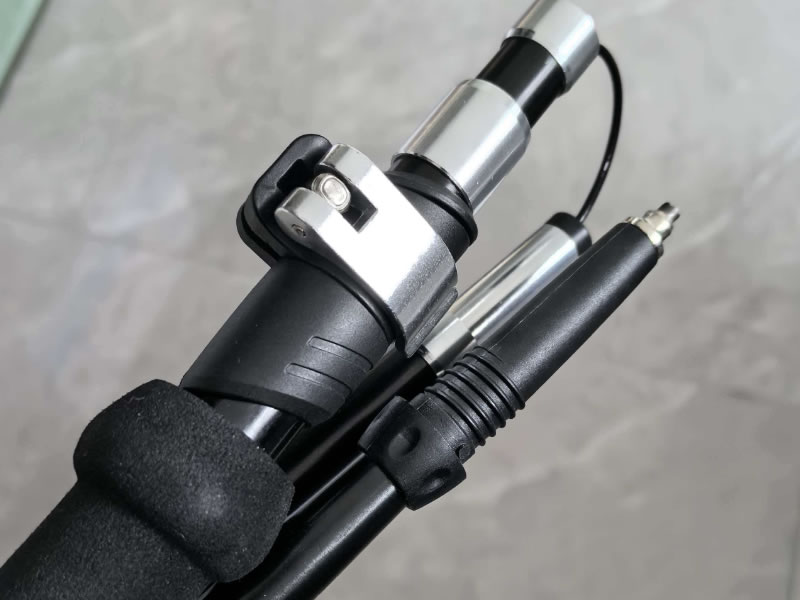
Recommended trekking pole purchase link: https://s.click.aliexpress.com/e/_c4M7OWaN
The Lock Types
Four locking mechanisms dominate the market:
- External Lever Locks (flick locks, cam locks)
- Internal Twist Locks (screw locks, expansion locks)
- Push-Button Locks (snap buttons, folding pole locks)
- Auto-Lock Systems (cord-activated, Z-pole style)
Each has distinct engineering, failure characteristics, and lifespans.
External Lever Locks (Flick Locks)
Failure Rate: Lowest
External lever locks are the gold standard for reliability. Their design is elegantly simple: a lever, a cam, a bolt, and a clamp. No internal parts to wear smooth. No springs to fatigue. No hidden mechanisms to trap grit.
Failure Mode: Gradual and predictable. Over hundreds or thousands of adjustments, the bolt may vibrate slightly loose or the cam may experience minimal wear. You will notice the lever becoming easier to close or the pole slipping incrementally. A simple turn with a screwdriver or Allen wrench restores proper tension in seconds.
Contamination Tolerance: Mud, sand, and snow have minimal impact. The clamping surfaces are visible and easily wiped clean. Debris does not become trapped inside a sealed mechanism.
Repairability: Excellent. If a lever breaks (rare, usually from a direct impact), replacement parts are available from most major manufacturers. The mechanism can be serviced indefinitely with basic tools.
Real-World Lifespan: Quality flick locks from Black Diamond, Leki, Komperdell, and REI routinely last 10+ years with minimal maintenance. Many hikers report using the same flick-lock poles for two decades.
Internal Twist Locks
Failure Rate: Moderate to High
Twist locks rely on an internal expander that presses against the inner shaft wall. Each adjustment creates friction that slowly wears both surfaces.
Failure Mode: Gradual wear with an abrupt endpoint. The expander and shaft wall polish each other over time. You compensate by twisting tighter until the thread bottoms out. At that point, the pole will no longer hold tension. Unlike flick locks, there is no adjustment—only replacement.
Contamination Vulnerability: Grit trapped inside the shaft accelerates wear dramatically and can cause the mechanism to seize. Cleaning requires disassembly, which is rarely practical in the field.
Repairability: Poor. When a twist lock fails, you typically need to replace the entire lower section or the whole pole. Replacement expanders exist for some premium brands but are difficult to install without specialized knowledge.
Real-World Lifespan: Quality twist locks (Leki, Komperdell) may last 3-5 years with moderate use. Budget twist locks often fail within 1-2 years.
Push-Button Locks
Failure Rate: Moderate (quality-dependent)
Push-button locks are common on folding poles. A spring-loaded button snaps into a hole to secure each section.
Failure Mode: Sudden. The spring may fatigue, the button may jam due to dirt, or plastic buttons may crack. Failure often occurs without warning—the button may appear engaged but release under load.
Contamination Vulnerability: Dirt, sand, and ice can enter the button mechanism, causing it to stick. A stuck button may not fully engage, leading to unexpected collapse.
Repairability: Poor. Internal springs and buttons are not field-serviceable. A failed push-button typically requires replacing the entire section.
Quality Spectrum: Premium push-button systems (Gossamer Gear, Black Diamond folding models) use metal components and durable springs. Budget versions use plastic that fails quickly.
Real-World Lifespan: Premium: 3-7 years. Budget: months to 2 years.
Auto-Lock Systems (Cord-Activated)
Failure Rate: Moderate
Auto-lock systems (like Black Diamond Z-Poles) use internal cords and cams that engage automatically when extended.
Failure Mode: Sudden and often catastrophic. A worn cam, frayed cord, or jammed mechanism can cause the pole to collapse without warning. Because the system is internal, there is little visible indication of impending failure.
Complexity: These systems have more components than any other lock type—cords, cams, springs, multiple engagement points. More complexity means more potential failure points.
Repairability: Very poor. Field repair of internal cord systems is nearly impossible. A broken cord typically requires factory service or replacement.
Real-World Lifespan: Premium auto-lock systems can last 3-5 years with careful use. Heavy use, contamination, or frequent adjustments shorten lifespan significantly.
Failure Rate Comparison
| Lock Type | Failure Rate | Failure Warning | Field Repairability | Typical Lifespan |
|---|---|---|---|---|
| External Lever | Very Low | Gradual | Excellent | 10+ years |
| Internal Twist | Moderate-High | Gradual | Poor | 2-5 years |
| Push-Button | Moderate | Sudden | Poor | 2-7 years* |
| Auto-Lock | Moderate | Sudden | Very Poor | 3-5 years |
*Highly dependent on quality
The Quality Factor
Across all lock types, quality matters enormously. A premium twist lock from a respected European brand may outlast a cheap flick lock with plastic components. However, when comparing equivalent quality levels, external lever locks consistently demonstrate the lowest failure rates and longest service lives.
The Verdict
External lever locks (flick locks) fail least often. Their mechanical simplicity, gradual failure mode, field repairability, and contamination resistance make them the most reliable locking mechanism available.
For hikers who demand maximum reliability—backpackers, thru-hikers, mountaineers, and anyone who cannot afford pole failure in critical moments—external lever locks are the clear choice. The small weight penalty is a worthwhile trade for a mechanism that can last a decade or more with simple maintenance.
Your safety depends on reliable gear. Choose locks that fail least often, and fail gracefully when they do.




